Table of Contents

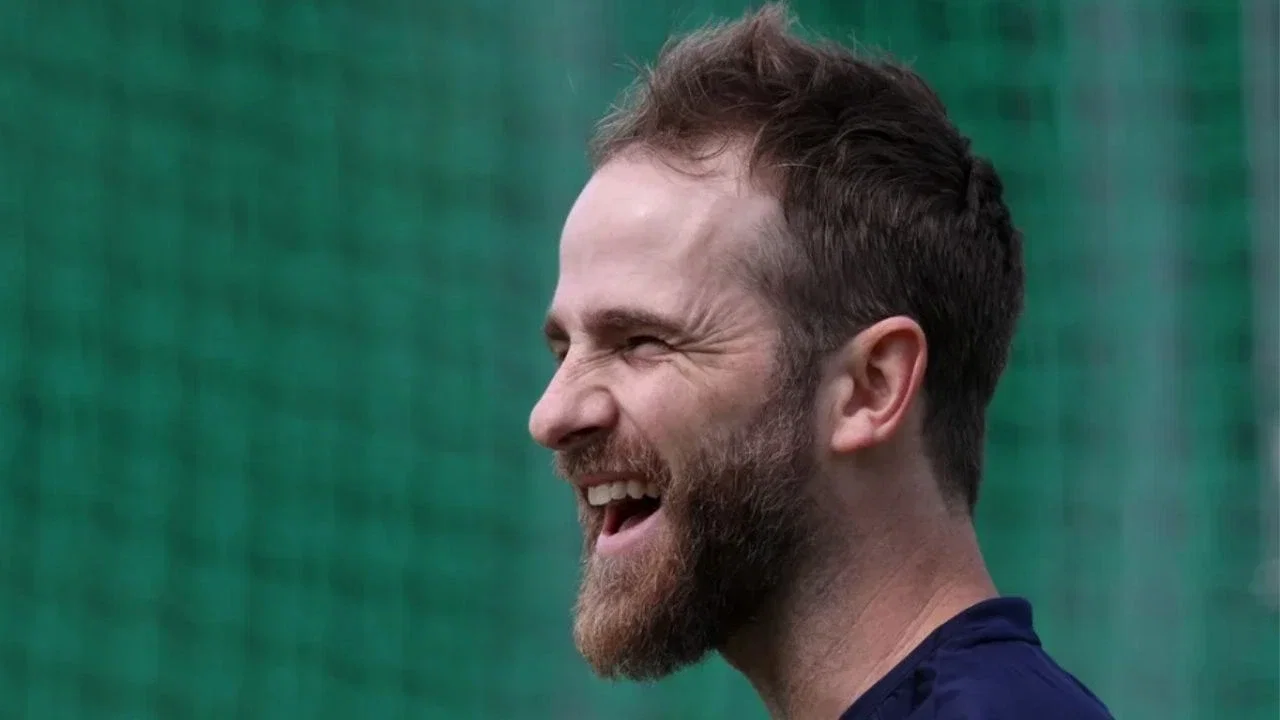
On a grey morning in England, with two Tests still left to play, New Zealand cricket’s greatest batter walked away.
After 16 years at the international level, 378 matches, 19,346 runs and 48 centuries, Kane Williamson announced his retirement from international cricket, bringing an end to one of the finest careers the sport has seen. For more than a decade and a half, Williamson was the face of New Zealand cricket, a batter who carried expectations without ever appearing burdened by them and a captain who led with calm rather than confrontation.
“I’ve always felt a strong drive and hunger for international cricket, and I take pride in knowing I’ve given it my all in every match I’ve played for New Zealand.”
From a century on debut to lifting the World Test Championship mace in 2021, Williamson’s journey was defined by consistency, humility and excellence. This is the complete story of a career that redefined batting for New Zealand.
Quick Facts
|
Category  |
Details |
|
Full name |
Kane Stuart Williamson |
|
Date of birth |
August 8, 1990 |
|
Age at retirement |
35 |
|
International debut |
2010 |
|
Retirement date |
June 12, 2026 |
|
Total international runs |
19,346 |
|
Total centuries |
48 |
|
Test average |
54.06 |
|
Tests played |
110 |
|
ODIs played |
175 |
|
T20Is played |
93 |
|
Test captaincy record |
22 wins, 10 losses, 8 draws (40 Tests) |
|
Major title |
WTC 2021 |
The numbers that define a 16-year career
The raw numbers alone place Kane Williamson among cricket’s all-time greats. He retires as New Zealand’s highest international run-scorer with 19,346 runs across formats. He played 378 international matches and scored 48 centuries while becoming the benchmark for batting excellence in New Zealand cricket.
The most remarkable part of his record came in Test cricket. Williamson finished with 9,515 Test runs in 110 matches at an outstanding average of 54.06. His tally includes 33 centuries and 38 fifties, while six of those centuries were converted into double hundreds. He ends his career just 485 runs short of the coveted 10,000-run mark.
In ODIs, Williamson scored 7,256 runs from 175 matches at an average of 48.69. He registered 15 centuries and 47 half-centuries while serving as the backbone of New Zealand’s middle order across multiple World Cup cycles.
His T20I career yielded 2,575 runs in 93 matches at an average of 33.44, including 18 half-centuries. He stepped away from the format in November 2025 to focus on franchise commitments and the final stages of his international career.
These numbers are significant not only because of their volume but because of the era in which they were achieved. Kane Williamson spent most of his career competing against Virat Kohli, Steve Smith and Joe Root in what became known as the Fab Four era. While each built a unique legacy, Williamson ensured New Zealand had a place in every major cricketing conversation.
The WTC 2021 final – the moment that defines his captaincy
Every great captain has one defining moment. For Kane Williamson, it came in Southampton in June 2021.
New Zealand entered the inaugural World Test Championship final against India as underdogs. By the end of six days, they had become world champions.
Williamson’s contribution extended beyond the unbeaten 52 that sealed the chase. His first-innings 49 came on a difficult surface where batting was far from straightforward. More importantly, his captaincy throughout the match was exceptional.
He rotated Trent Boult, Tim Southee and Kyle Jamieson expertly, constantly forcing India onto the defensive. New Zealand controlled the contest from the outset and completed an eight-wicket victory that remains the greatest achievement in Black Caps history.
Kane Williamson’s captaincy record reflected that success. He led New Zealand in 40 Tests, winning 22 and losing only 10. In ODIs, he captained the side in 91 matches and recorded 46 victories. Also, in T20Is, he led in 75 matches and won 39.
His teams also reached two ODI World Cup finals and three World Cup semi-finals. For all the centuries and records, the WTC final remains the defining chapter of his leadership career.
Five things that showed what Kane Williamson was made of
Test debut century vs India, Ahmedabad (2010)
Kane Williamson announced himself to world cricket in the most dramatic fashion possible. At just 20 years old, he scored a century on Test debut against India in Ahmedabad. It was an innings built on patience, discipline and technical assurance. Few players make such an immediate statement. Williamson did.
67* vs India, World Cup semi-final, Old Trafford (2019)
Pressure defines greatness. Chasing a place in the World Cup final, Williamson produced an unbeaten 67 in challenging conditions. It was not his highest score, but it was among his most important. He guided New Zealand through a tense contest and into another global final.
Centuries against all Test nations milestone (2016)
In 2016, Williamson became the fastest and youngest player to score Test centuries against every Test-playing nation. The milestone highlighted something often overlooked: his ability to succeed in every condition against every attack.
251 vs Zimbabwe, Bulawayo (2016)
Williamson’s highest Test score showcased complete control. His unbeaten 251 was a masterclass in concentration and shot selection. He dictated every phase of the innings and demonstrated why he was regarded as one of the world’s best Test batters.
The 2019 World Cup final
The scorecard cannot fully capture Kane Williamson’s influence in the most dramatic ODI ever played. He remained composed throughout a heartbreaking defeat decided by boundary count. His dignity in defeat arguably enhanced his reputation even further.
Kane Williamson as captain – the calm at the eye of the storm
Williamson never resembled the stereotypical modern captain. He did not celebrate aggressively. Kane Williamson rarely engaged in verbal battles. He preferred quiet conversations over public statements.
That approach often contrasted sharply with contemporaries such as Virat Kohli and Ben Stokes. Yet it proved remarkably effective.
Kane Williamson stepped down as Test captain in December 2022 to manage workload and extend his playing career. The transition was handled smoothly, reflecting the culture he had helped create within the Black Caps setup. New Zealand later completed its white-ball leadership transition after the 2024 T20 World Cup.
Kane Williamson vs Stephen Fleming
|
Category |
Kane Williamson |
Stephen Fleming |
|
Matches captained |
206 |
303 |
|
Wins |
107 |
128 |
|
Win percentage |
51.94% |
42.24% |
|
ICC trophies |
1 |
1 (Champions Trophy shared) |
|
Major finals reached |
3 |
1 |
Fleming remains one of New Zealand’s most influential captains, but Kane Williamson elevated the team to greater heights in the modern era. The WTC title and multiple World Cup finals give him a slight edge in the leadership debate.
Where does Kane Williamson rank in the Fab Four?
The Fab Four discussion will continue long after all four players retire.
|
Player |
Matches |
Runs |
Average |
Centuries |
|
Kane Williamson |
378 |
19,346 |
47+ |
48 |
|
Virat Kohli |
500+ |
27,000+ |
50+ |
80+ |
|
Steve Smith |
350+ |
18,000+ |
45+ |
45+ |
|
Joe Root |
380+ |
21,000+ |
48+ |
55+ |
Purely in terms of longevity and volume, Kohli and Root may sit ahead. Smith remains arguably the greatest Test batter of the era.
But when technical excellence, adaptability and performance across conditions are considered together, Williamson belongs firmly in the same bracket. His calmness under pressure and ability to thrive without the support structures enjoyed by larger cricket nations make his achievements especially impressive.
If there is a debate, it is not whether Williamson belongs in the Fab Four. It is whether the Fab Four would feel complete without him.
Kane Williamson in the IPL – the franchise chapter
While Kane Williamson’s international achievements will always overshadow his franchise career, the IPL played an important role in shaping the latter stages of his batting evolution.
Kane Williamson featured in 79 IPL matches across spells with Sunrisers Hyderabad and Gujarat Titans, scoring 2,128 runs at an average of 35.46 and a strike rate of 125.61. He registered 18 half-centuries and became one of the most dependable overseas batters in the competition during his peak years.
His defining IPL season came in 2018. Leading Sunrisers Hyderabad in the absence of David Warner, Williamson produced the best campaign of his T20 career. He amassed 735 runs in 17 innings at an average of 52.50 and a strike rate of 142.44, finishing as the Orange Cap winner. The New Zealand star struck eight half-centuries that season and almost carried Hyderabad to the title before they fell short in the final against Chennai Super Kings.
That season remains one of the greatest campaigns by a New Zealand batter in IPL history and showcased Williamson’s ability to combine consistency with controlled aggression.
Kane Williamson was also a member of Sunrisers Hyderabad’s title-winning squad in 2016. Although he played only six matches that season, scoring 124 runs, he remained a valued figure within the dressing room because of his calm presence and tactical understanding of the game.
Between 2017 and 2021, Williamson became one of Hyderabad’s most trusted batters. He scored 256 runs in seven matches in 2017 at a strike rate of 151.47, followed by his extraordinary 2018 campaign. He added 156 runs in 2019, 317 runs during the 2020-21 season, and 266 runs in 2021 while often carrying the responsibility of anchoring the innings.
His move to the Gujarat Titans brought fewer opportunities due to injuries and team combinations. He featured only sporadically in 2023 and 2024, managing 27 runs across two innings in his final IPL appearances as a player.
Beyond the numbers, Williamson’s influence extended into leadership and mentorship roles. His tactical awareness and cricketing intelligence made him one of the most respected voices in any dressing room he entered.
Following the conclusion of his playing career in the IPL, Williamson remained connected to the league. In 2026, he worked with Lucknow Super Giants as a strategic advisor, helping the franchise with planning, match preparation and player development. The role highlighted the growing demand for his cricketing knowledge and offered a glimpse into what a future coaching or mentoring career could look like.
Although he never lifted the IPL trophy as captain and never crossed the 1,000-run mark in a single season again after 2018, Kane Williamson’s contribution to the tournament went beyond statistics. He demonstrated that a classical batter could thrive in the shortest format without abandoning his fundamentals.
For many IPL followers, the image that endures is not of Williamson the advisor or even Williamson the captain, but Williamson in orange during the 2018 season, quietly piling up runs while leading Sunrisers Hyderabad to within touching distance of the title.
The man behind the batter – family, character, legacy
Away from cricket, Williamson remained fiercely private. His wife Sarah Sargent and their two daughters became increasingly important as he entered the latter stages of his career. In interviews during late 2025, he openly discussed balancing cricket with family life and acknowledged that retirement discussions had become more frequent.
His reputation remained spotless throughout his career. He won the ICC Spirit of Cricket Award in 2018 and earned universal respect from teammates, opponents and fans alike.
Sir Richard Hadlee perhaps summed him up best:
“He’s demonstrated a willingness to continually advance his game to the highest level in all three formats and he rightfully finishes as one of the best players of his era.”
What happens to New Zealand cricket now?
New Zealand must now begin life without the player around whom an entire batting order was built.
Tom Latham’s leadership experience will help ease the transition. Rachin Ravindra appears the natural candidate to assume greater responsibility at No. 3, while Devon Conway and Will Young will be expected to contribute more consistently.
The talent exists, but replacing Williamson’s runs will be extraordinarily difficult. Beyond the numbers, New Zealand lose their most dependable batter, their most respected leader and one of the greatest ambassadors the game has known.
He retires with 9,515 Test runs. No New Zealander has ever reached 10,000. Williamson finished just 485 runs short of the milestone. And somehow, that unfinished number feels like the perfect final reflection on a career that gave New Zealand almost everything.