The United States and Iran have agreed to end nearly four months of conflict in the Middle East, with Washington confirming plans to lift its naval blockade of Iran and reopen the Strait of Hormuz, even as a deadly Israeli strike on Beirut hours earlier threatened to derail the announcement.

Pakistan Prime Minister Shehbaz Sharif announced the breakthrough early Monday, saying both Washington and Tehran had agreed to an immediate and permanent end to military operations on all fronts, including Lebanon.
The official signing ceremony will be on Friday 19 June in Switzerland, he said on X.
The prime minister thanked the US and Iran for their commitment, as well as Qatar for its support “in reaching this agreement”.
“I would also especially thank the visionary leadership of Kingdom of Saudi Arabia and Republic of Turkiye for their immense contributions in this regard,” he added.
Following intensive talks, we are pleased to announce that the Peace Deal between the United States of America and Islamic Republic of Iran has been REACHED. Both sides have declared the immediate and permanent termination of military operations on all fronts, including in…
— Shehbaz Sharif (@CMShehbaz) June 14, 2026
Iran’s Deputy Foreign Minister Kazem Gharibabadi confirmed the agreement in televised remarks early Monday, telling state TV that the halt to fighting would take hold immediately and that a further 60 days of negotiations would follow toward a more comprehensive settlement. He added that Tehran reserved the right to respond if the other side breached the terms.
NOW: Iranian state TV announces U.S.–Iran peace deal. pic.twitter.com/kJeTySVerL
— Clash Report (@clashreport) June 14, 2026
US President Donald Trump announced that the United States and Iran had reached an agreement and said Washington would end its naval blockade of the country, marking the biggest breakthrough in months of negotiations.
Story continues below this ad
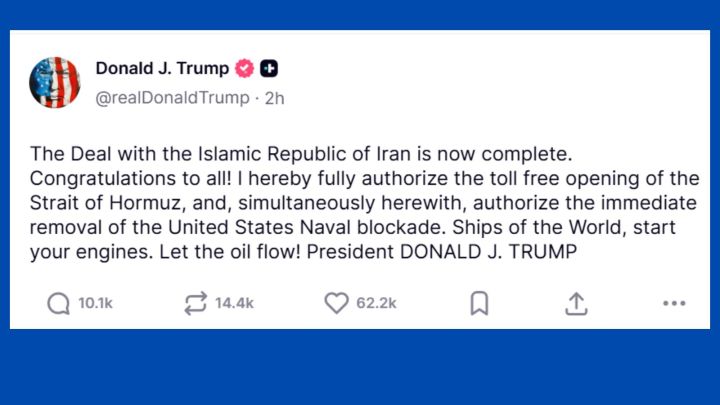
“The deal with the Islamic Republic of Iran is now complete. Congratulations to all!” Trump said in a post on Truth Social.
Early indicators of how Iran views this tentative deal announced by Pakistan and Trump of a deal between the US and Iran.
“Welcome to the Middle East of a new era,” says Iran’s embassy in Turkiye.
Welcome to the Middle East of a new era. pic.twitter.com/TPsrHs4uib
— Iran Embassy in Türkiye (@Iran_in_Turkiye) June 14, 2026
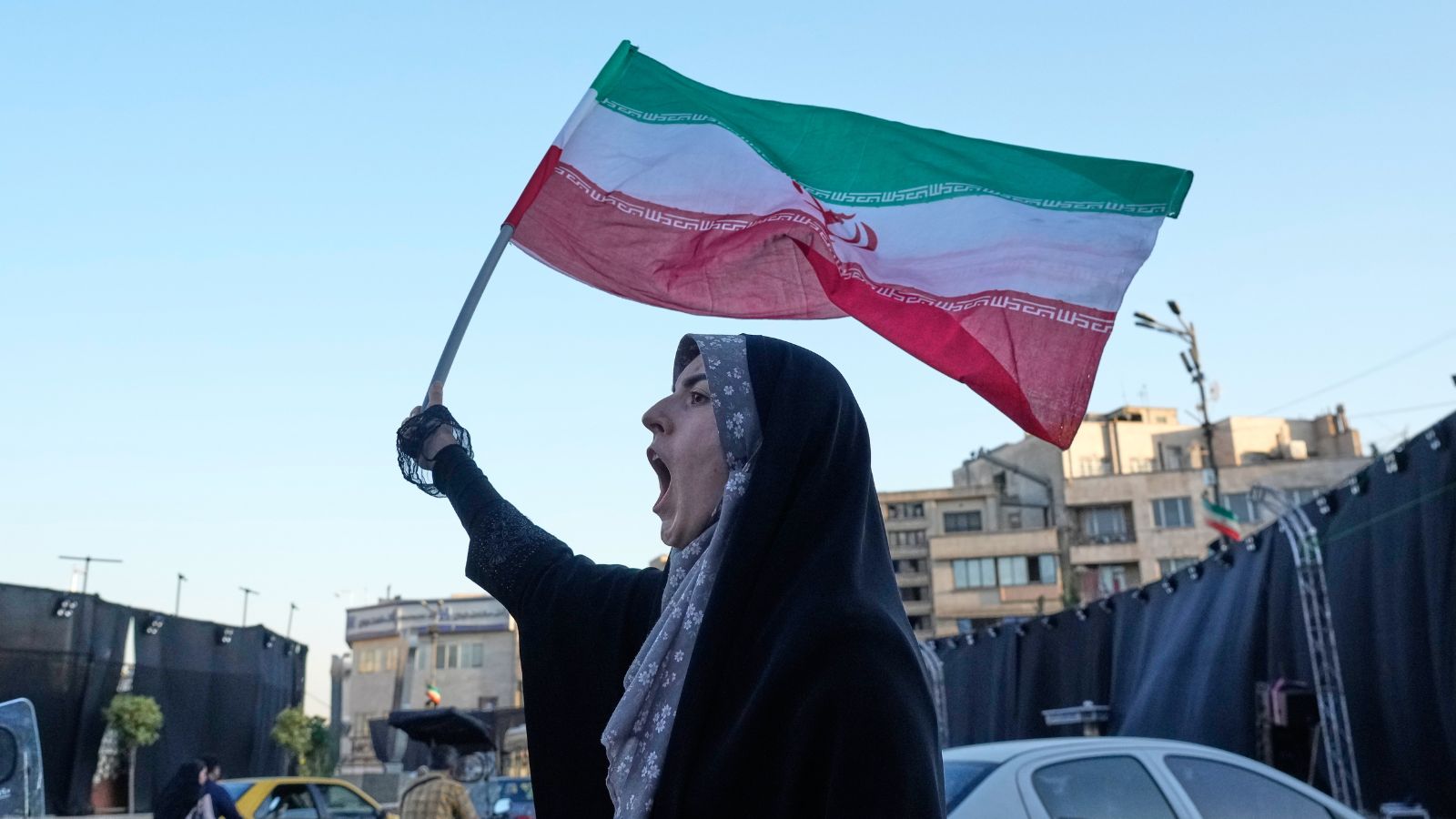
Iran’s flag appears planted across from the Strait of Hormuz.
Strait of Hormuz and the naval blockade
In a post on Truth Social, US President Donald Trump confirmed the broad outlines of the deal, announcing that the Strait of Hormuz a chokepoint that handled roughly a fifth of global oil and gas shipments before the war would reopen, alongside an end to the US naval blockade of Iran. “Ships of the World, start your engines. Let the oil flow!” he wrote.
Story continues below this ad
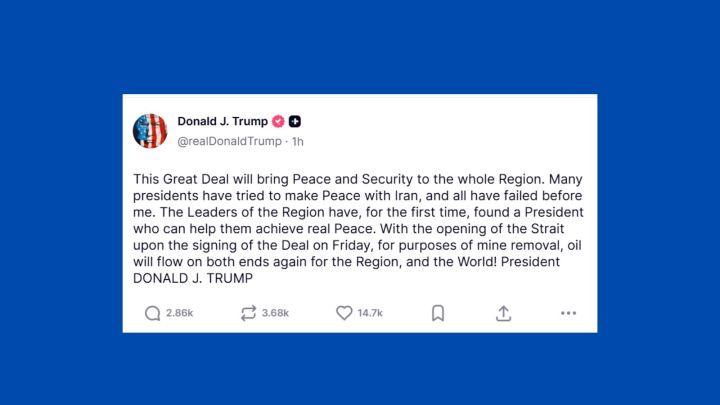
Trump later said the reopening would depend on the deal being formally signed on Friday, linking it to mine-clearance work in the waterway. Iranian state media, however, reported that the memorandum allows the strait to reopen for an initial 30-day period under Iranian arrangements, while Washington lifts restrictions on Iranian oil sales a potential lifeline for Iran’s strained economy.
The agreement does not appear to address Iran’s nuclear programme, which negotiators say will be taken up in the 60-day follow-on talks. Analysts have questioned whether that timeline is realistic, noting that the 2015 nuclear deal took years of negotiation by large teams of technical experts to conclude.
Lebanon front and the Beirut strike
The announcement came despite an Israeli airstrike on Beirut’s southern Dahiyeh district on Sunday that killed three people and injured six, targeting what Israel described as senior Hezbollah commanders after the group fired projectiles into northern Israel.
The strike drew sharp criticism from both Tehran and Trump, who said it had delayed the signing process and was reportedly blunt with Israeli Prime Minister Benjamin Netanyahu about it in comments to Axios.
Story continues below this ad
Iranian officials reacted angrily in the hours before the deal was confirmed. A senior Iranian parliamentary figure said on social media that the strike raised doubts about Washington’s ability to enforce its commitments, while Iran’s military leadership warned of a forceful response. Iran’s foreign ministry said it held the US responsible for the Israeli attack.
Tehran had insisted throughout the talks that any agreement must cover “all fronts,” including Lebanon, where Israeli forces have carried out an extensive offensive and occupy parts of the south part of a broader escalation that began in early March, when Hezbollah struck Israel two days after a US-Israeli operation killed Iran’s supreme leader.
Reaction: Israel uneasy, Iranian hardliners cautious
The emerging deal has drawn criticism in Israel, where commentators and former officials have voiced concern that it does not restrict Iran’s ballistic missile programme or its support for regional militant groups.
A columnist in the Israeli daily Maariv described the outcome as a major setback for Israel, while a former national security adviser to Netanyahu called it a serious misstep. Members of Trump’s own party have also criticised the deal amid high fuel prices ahead of the midterm elections.
What’s next
Story continues below this ad
US Vice President JD Vance is expected to attend the signing ceremony in Switzerland on Friday, with Trump’s own participation also possible.
Even once the strait reopens, shipping disruptions are expected to ease only gradually, given the time needed to clear mines and repair infrastructure damaged during the conflict an issue Trump is expected to raise at the G7 summit beginning Monday.
Meanwhile, In a joint statement about the deal, the leaders of the UK, France, Germany and Italy say they will work closely with the US, Iran and regional partners to “seize this moment”.
“We congratulate the United States, the Iranian government and all those involved, including Pakistan, Qatar and all other mediators, on this diplomatic breakthrough,” the group, known as the E4, says.
“This is a moment of opportunity to restore regional stability and stabilise the global economy.”
The leaders called for the agreement to be “implemented rapidly and comprehensively” and that the “urgent reopening of the Strait of Hormuz with unconditional and unrestricted freedom of navigation is essential”.