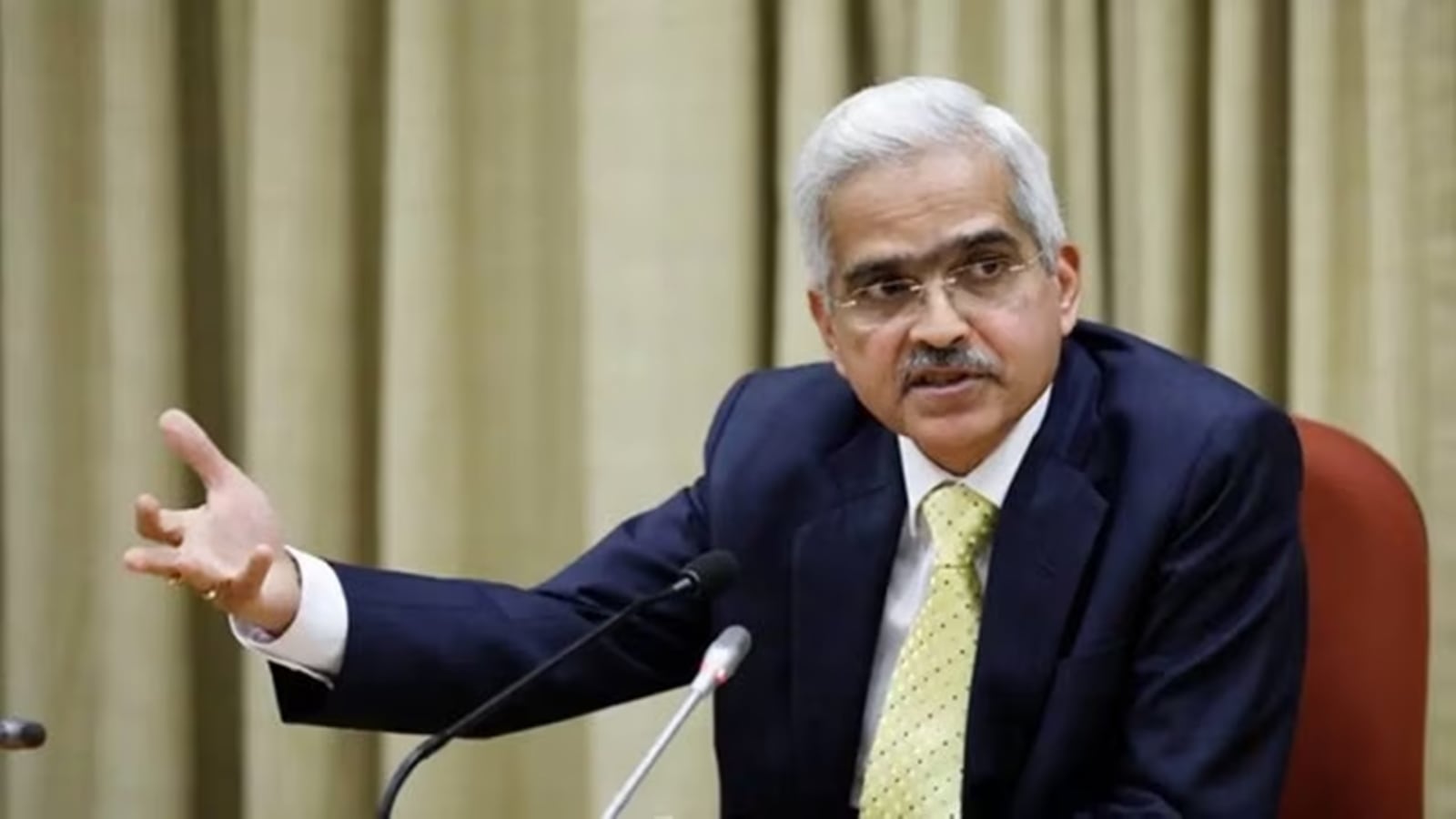
Reserve Bank of India Governor Shaktikanta Das on Friday spoke on host of issues related to relationship between central bank and the government, giving banking license to business houses, interest rates, action on regulated entities due to non compliance of norms and rise in rural consumption.
In an interaction with Shyamal Majumdar, Editor, Financial Express, the Governor said the RBI is currently not contemplating giving banking license to corporate houses.
“ Experience world over has shown that when real sector companies enter into the banking space, there are potential conflicts of interest. The problem around related-party transactions is also a major issue,” Das said when asked if the RBI will shed its hesitations over allowing business houses, private equity and venture capital funds to have larger stakes in banking entities.
It will be very difficult to monitor or to regulate or prevent the related-party transactions and so, the risks involved are very high, he added.
Related-party transaction refers to any transaction, or relationship, in which the company or any of its subsidiaries is or will be a participant, and any related party has or will have a direct or indirect interest.
When asked if RBI, at present, was ruling out entry of corporate houses into the banking sector, Das said, “at this point, there is no thinking in that direction.”
He said the banking penetration in India has been quite wide. Today, the number of bank branches have become less relevant because the reach is being achieved through technology.
Story continues below this ad
“Therefore, what India needs is not proliferation in the number of banks. What India needs is sound, healthy and well governed banks, which, we feel, will be able to mobilise savings and meet credit requirements throughout the country through technology,” Das said.
The Governor, however, said that the RBI was open to receiving new applications for setting up universal banks. As and when an appropriate fit and proper application comes, the RBI will not hesitate in examining it, he said.
When asked to respond to former RBI Governor D Subbarao’ statement, in his recent book, that there was a demand that RBI should be a cheerleader for the government, Das said, “At least I am saying from my experience that nobody expects the RBI to be a cheerleader.”
He said he has never experienced any such demand in his tenure as the RBI Governor.
Story continues below this ad
Das said the coordination between the RBI and the government during the crisis like the COVID was very smooth, which ensured that the country’s economy revived very fast and stronger from the pandemic.
He said differences in opinion between the RBI and the government are bound to happen but those are resolved amicably.
When asked about the view that higher interest rates can affect growth, the Governor said the RBI’s mandate is to maintain price stability, keeping in mind the objective of growth.
“Even with the current interest rates, the growth in India has been very robust. In the last three years, the average growth rate has been 8.3 per cent. This year (FY2025), our projection is 7.2 per cent, and we are very optimistic that it will be achieved,” he said.
Story continues below this ad
Das said the recent actions taken on some of the banks, NBFCs or other financial institutions for non-compliance of regulatory norms were in the interest of customers.
“Whenever we see such problems, our first effort is to engage with them (non-compliant entities) bilaterally. We engaged for months and sometimes more than a year also, but when we see that the compliance is not happening or is inadequate, we have to impose business restrictions. The idea is not to penalize them but business restrictions are imposed in the interest of the customers,” Das said.
On rural demand, the Governor said he was very optimistic about rural consumption picking up because the monsoon is expected to do well.