

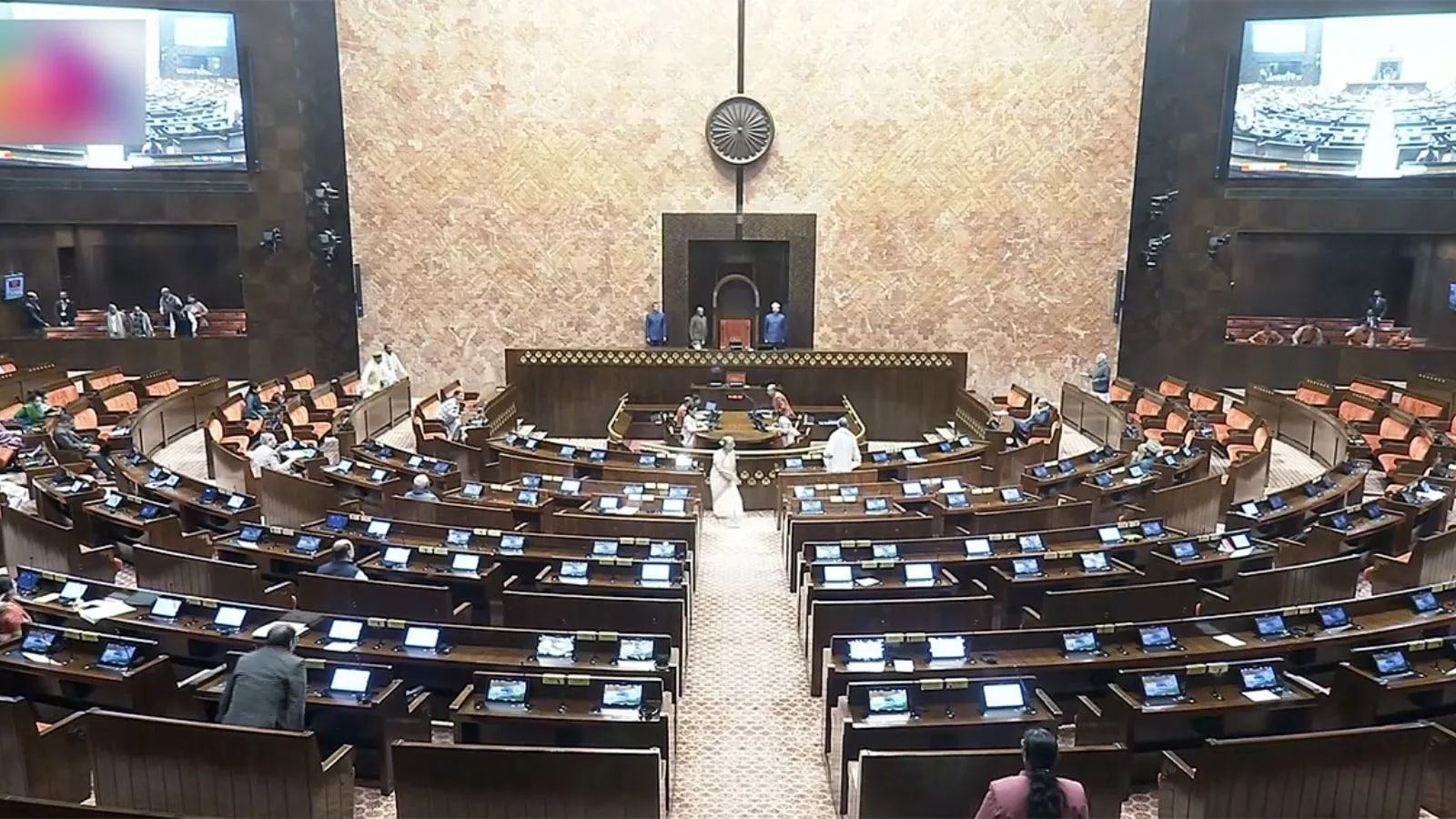
With the Election Commission (EC) on Wednesday announcing elections for 37 Rajya Sabha seats across 10 states, which will fall vacant in early April, the ruling BJP-led NDA is looking to secure a likely boost in its numbers in the Upper House.
The Opposition INDIA bloc, which is likely to see a decline in its Rajya Sabha tally, will be keenly focusing on the March 16 polls as it may have implications that could test the cohesion of its grouping.
Maharashtra, with seven retiring MPs – including NCP(SP) chief Sharad Pawar, RPI (Athawale) president Ramdas Athawale and Shiv Sena (UBT)’s Priyanka Chaturvedi – accounts for the highest number of vacancies. Following closely is Tamil Nadu with six vacancies, including retiring MPs like AIADMK’s M Thambidurai and DMK’s Tiruchi Siva.
Other prominent members who are set to retire from the Upper House in April include Congress leader Abhishek Manu Singhvi (Telangana), RLM chief Upendra Kushwaha (Bihar), and Trinamool Congress’s Saket Gokhale (West Bengal).
Sources in the BJP said while the party is expecting an increase in its tally, the polls could also see its newly appointed national president Nitin Nabin enter the Upper House for the first time.
“The NDA’s overall strength will certainly increase but precise projections are difficult as several Rajya Sabha MPs of alliance partners, including 10 from the party, will retire in phases this year. But we are confident of moving closer to the majority mark on our own in the Upper House,” a senior BJP leader said.
Currently, the BJP has 103 MPs in the 245-member Rajya Sabha and insiders say its improved Assembly numbers, especially in Maharashtra (131 of 288 MLAs) and Bihar (89 of 243 MLAs), will help it gain seats. The NDA’s collective strength is 133 now.
Story continues below this ad
However, some BJP leaders also noted that the party’s improved tally in Assemblies also trigger competing aspirations with its NDA alliance partners. “Balancing equations with Mahayuti allies like Shiv Sena led by Eknath Shinde and the Sunetra Pawar-led NCP is politically significant. In Bihar, Lok Janshakti Party (Ram Vilas) chief Chirag Paswan’s growing presence is also expected to factor into negotiations,” BJP sources said, adding the “two-term per MP rule” would also be taken into account while zeroing in on candidates. This, sources said, is likely to pave the way for “proven organisational hands” to enter the Rajya Sabha, allowing “fresh blood” to be infused into Nabin’s new team.
In the Upper House elections, the BJP has the edge in Assam, which will see three seats fall vacant. The BJP has 67 MLAs in the 126-member Assam Assembly and 19 legislators from alliance partners.
In Odisha, where four seats would fall vacant, the BJP holds an advantage with 79 MLAs in the 147-member House, ahead of the BJD’s 50 and the Congress’s 14.
The BJP also holds an advantage in Chhattisgarh and Haryana, which will see polls for two Rajya Sabha seats each.
Opposition play
Story continues below this ad
The leaders of the INDIA alliance concede that the upcoming cycle of polls is likely to weaken their overall strength in the Rajya Sabha. “The biggest concern is Maharashtra, where parties like the Shiv Sena (UBT) and NCP (SP) are likely to see reduced representation,” a Congress MP said.
Currently the Opposition bloc has 79 MPs, including 27 from the Congress, 12 from the TMC, 10 from the DMK and five from the RJD.
The TMC, however, is comfortably placed in Bengal, where it has 225 MLAs in the 294-member Assembly. Similarly, the Congress holds the advantage in Telangana with 64 MLAs in the 119-member House while the DMK-led alliance holds a majority in Tamil Nadu.
A total of 71 Rajya Sabha seats are scheduled to fall vacant this year. Of those MPs retiring, 30 are from the BJP, eight from the Congress, four from the DMK, three from the TMC, and two each from the JD(U) and NCP (SP), among others.


