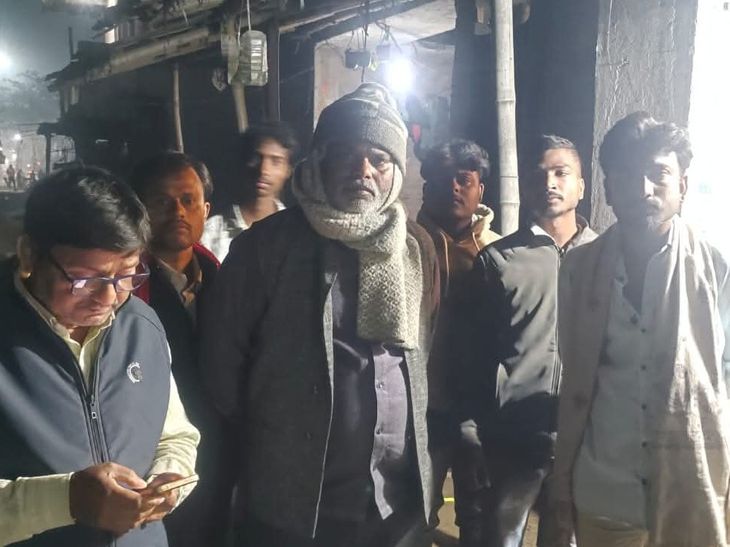

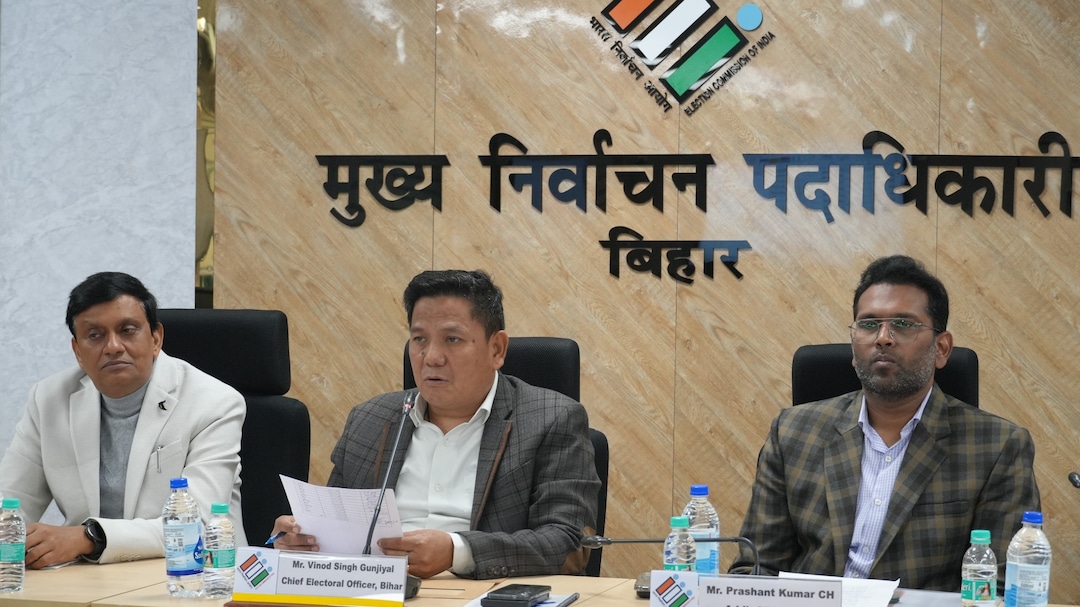
In a significant move towards strengthening digital democracy, the Bihar State Election Commission has successfully deployed an Artificial Intelligence-based e-Voting system during the Urban Local Body polls and is now preparing to scale the model for the next Assembly elections. The initiative was displayed at the India-AI Impact Summit 2026 held at New Delhi. The state in its pavilion showcased several usages of artificial intelligence across governance and public services.
When NDTV visited the Bihar pavilion at the summit, multiple AI initiatives were there, the most notable being the AI-powered remote voting system. The state election commission told NDTV that the technology was developed and introduced with the aim of tackling voter exclusion and increasing participation.
As many among migrant workers, students residing outside their constituencies, senior citizens, pregnant women, persons with disabilities, and patients unable to physically reach polling booths.
How The E-Voting System Work
To implement the system, the Commission launched a dedicated mobile app that enables voters to complete the entire voting process digitally, from registration to vote casting.
According to NDTV, users should download the official app, provide consent, complete mobile verification through OTP, enter their EPIC (Electors Photo Identity Card) details, and undergo identity authentication through live facial recognition.
This is different from Aadhaar-linked systems, as this model relies solely on the voter’s photograph stored in the EPIC database. The platform combines facial recognition, liveness detection, device-level verification, and blockchain-backed encryption to ensure the authenticity and secrecy of each vote.
The layered security framework confirms that the voter was real and genuine, preventing impersonation, protects vote confidentiality, and ensures that ballots cannot be altered. In the system every vote is encrypted and recorded using blockchain technology, making the data immutable and fully auditable. A smart contract mechanism functioned as a digital equivalent of an electronic voting machine, enabling secure counting.
Decryption of votes is permitted only after Returning Officers authenticate the process through Digital Signature Certificates, two-factor authentication, and hash verification, ensuring security from voting to final counting.
ALSO READ: Google CEO Sundar Pichai Warns Against ‘AI Divide’ At India Summit
Why did Bihar Introduce This System?
Many voters specially from the urban regions don’t turnout during the elections owing to migration to other states, or countries for work or studies. The commission, identifying this as a structural barrier to participation, designed the e-Voting model to eliminate such limitations.
State Election Commissioner Deepak Kumar speaking to NDTV stated that the initiative originated entirely within the Commission, despite initial doubts about whether such technology could be successfully implemented in Bihar. He noted that extensive mock voting demonstrations and transparent testing were conducted to build public confidence, emphasising that the core objective was to ensure no voter was excluded due to distance, age, or health constraints.
Challenges During The Implementation
Despite its success, the rollout faced several operational and technical challenges.
The commission said that digital literacy varied widely, especially among elderly voters and first-time users who required help understanding the elements of the application. Facial recognition also encountered practical issues such as outdated EPIC photographs, poor lighting conditions, low-resolution cameras, and unstable internet connectivity, leading to occasional authentication failures.
Political stakeholders initially expressed concerns about secrecy and fairness, prompting the Commission to conduct demonstrations, mock drills, and detailed briefings to enhance transparency and trust.
Returning Officers also need to be getting specialised training to operate DSC tokens for digitally signing and unlocking ballots, highlighting the need for institutional capacity-building.
Not Limited To Elections
Bihar’s push for Artificial Intelligence goes beyond elections, the state also exhibited several other platforms like the Legal-tech platform Dastavez AI, founded by Anmol Bharti and Amrit Bharti, which is leveraging AI to simplify legal drafting by enabling lawyers, startups, and citizens to generate contracts, notices, and agreements efficiently and in accessible language, reducing errors and improving access to legal services.
At the policy level, Tiger Analytics has signed a memorandum of understanding with the Government of Bihar during the summit to establish a large AI Centre of Excellence in collaboration with IIT Patna. The initiative is focused on AI skill development, applied research, and governance solutions, aiming to build a sustainable and long-term AI ecosystem within the state.
ALSO READ: PM Modi Outlines ‘MANAV’ Framework, Calls For Stronger AI Safeguards For Children
Essential Business Intelligence,
Continuous LIVE TV,
Sharp Market Insights,
Practical Personal Finance Advice and
Latest Stories — On NDTV Profit.