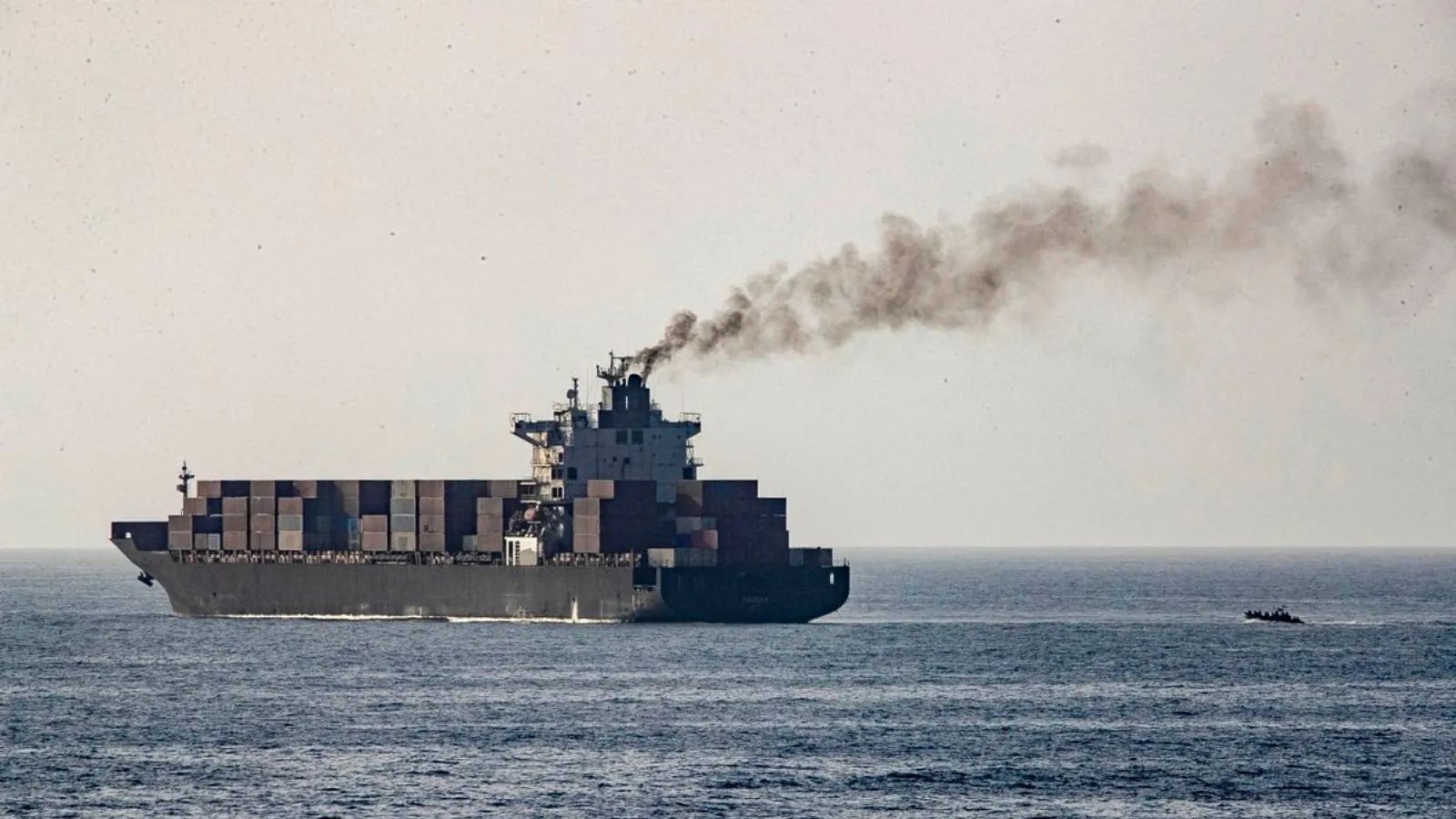
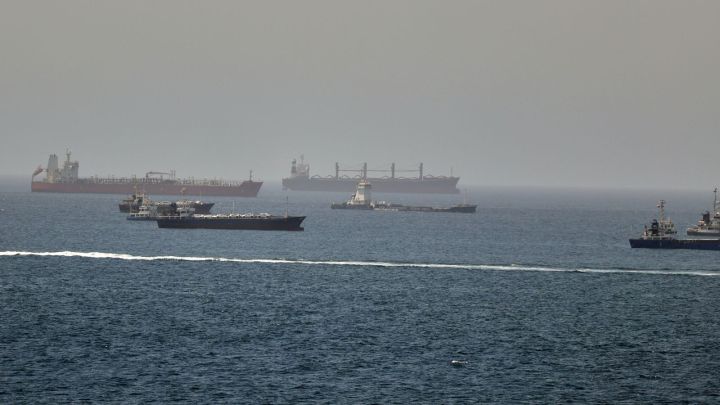
 Cargo ships near the Strait of Hormuz. (File Photo)
 The United States military struck Iranian targets on Friday after Iran fired drones at commercial ships passing through the Strait of Hormuz the day before, in what President Donald Trump called a direct breach of their ceasefire agreement.
US Central Command said American aircraft hit Iranian missile and drone storage sites and coastal radar positions. Officials told CNN and the New York Times the operation lasted roughly 90 minutes and covered four sites three along the coast and one on Qeshm island in the Persian Gulf, carried out by F-35s and F-16s.

What triggered the strikes
Trump said on Truth Social that Iran fired at least four one-way attack drones at ships in the strait. One hit the upper deck of a large cargo ship, while the US knocked down the other three.
The ship that was struck was the M/V Ever Lovely, a Singapore-flagged vessel exiting the strait along the Omani coast. Its owner, Evergreen Marine, said the attack damaged the bridge windows but no one was hurt and the cargo was safe. The main engine and all navigation equipment kept working, and the ship’s ability to sail was not affected.
Trump’s words before the strikes
When reporters asked Trump at the White House whether Iran would face any consequences, he gave a short answer: “You’ll find out.”
Story continues below this ad
“I don’t like the fact that they took a shot yesterday,” he said. “They shouldn’t be doing that.”
Earlier that morning on Truth Social, Trump had been sharper: “Obviously, this is a foolish violation of our Ceasefire Agreement,” he wrote.
What the ceasefire said
The US and Iran agreed on June 17 to stop hostilities under a 14-point memorandum of understanding, which also called on Iran to use its best efforts to allow commercial vessels to pass through the strait without charge for 60 days.
US Central Command said Friday the drone attack on the Ever Lovely “clearly violated the ceasefire” and that Iran’s actions “undermined freedom of navigation” in a waterway that carries a large share of the world’s oil and gas.
(With inputs from agencies)