
The Madras High Court has expressed serious concern over the prolonged delay in concluding disciplinary proceedings against government officials facing corruption charges, saying such inaction weakens the state’s fight against corruption. Calling for structural reforms, the court urged the Tamil Nadu government to appoint an independent, full-time vigilance commissioner and directed disciplinary tribunals to complete long-pending inquiries within fixed timelines.
Justice B Pugalendhi was hearing a batch of writ petitions involving disciplinary proceedings pending before various tribunals for disciplinary proceedings, along with applications filed by the state seeking additional time to conclude those inquiries.
“Every government has been declaring that they are against corruption, however, the reality has been otherwise. Corruption is deep-rooted everywhere, which can be eradicated by dedicated and consistent action. That can be achieved only by strengthening the Vigilance Commission and the Vigilance and Anti Corruption Department,” the court said on June 29.
The common order arose from petitions filed by several government employees, including an assistant engineer C Akila, who complained that disciplinary proceedings had remained pending for years despite government-prescribed timelines, adversely affecting promotions, seniority and other service benefits.
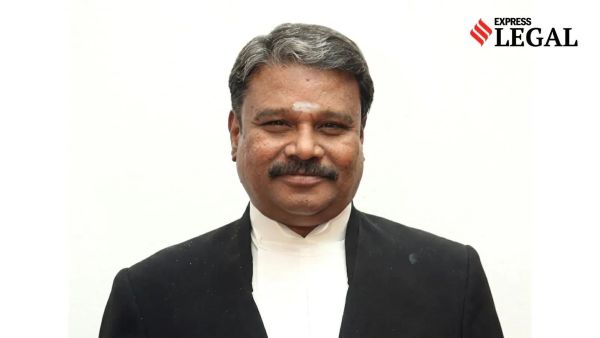 Every government has been declaring that they are against corruption, however, the reality has been otherwise, the Madras High Court said. (File image)
Delays defeat purpose of anti-corruption mechanism
The court noted that the tribunals for disciplinary proceedings were constituted under the Tamil Nadu Civil Services (Disciplinary Proceedings Tribunal) Rules, 1955 to inquire into corruption-related allegations against government servants after investigations by the Directorate of Vigilance and Anti-Corruption (DVAC).
Justice Pugalendhi observed that despite repeated government instructions prescribing strict timelines for completing disciplinary proceedings, inquiries were routinely stretching for years. Under a government order dated August 4, 2022, vigilance investigations are to be completed within one year, tribunals are expected to finish inquiries within another year and the government must pass final orders within four months. However, the cases before the court showed these timelines were rarely adhered to.
170 cases pending before disciplinary tribunals
During the hearing, the state informed the court that as many as 170 disciplinary cases were pending before various tribunals for disciplinary proceedings across Tamil Nadu. The data revealed that 52 cases had remained pending for over one year, 49 for more than two years, 34 for over three years, eight for more than four years and 27 for more than five years. The court said such figures demonstrated the urgent need to prioritise older cases.
Story continues below this ad
Inquiry pending for over a decade
One of the principal petitions before the court was filed by assistant engineer C Akila, against whom disciplinary proceedings were initiated in 2015 following allegations that government funds amounting to Rs 6.75 lakh under the Indira Awaas Yojana had been misappropriated during 2008-09 and 2010-11 by allegedly creating forged records showing construction of houses that were never built.
Akila had earlier secured a high court direction in July 2025 requiring the tribunal to complete the inquiry within four months. Since the proceedings remained unfinished, the state sought more time while Akila filed fresh petitions seeking reservation of a promotional post, quashing of the charge memo and compensation for the prolonged delay, contending that the pending inquiry had stalled her career progression.
The court, however, refused to quash the disciplinary proceedings merely because of the delay, observing that corruption allegations required adjudication on merits. It instead directed the tribunal to conclude the inquiry within three months without seeking any further extension.
Promotions, service benefits affected
The high court observed that prolonged disciplinary proceedings have a direct impact on government employees by delaying promotions, affecting seniority and depriving them of other service benefits. It also noted that officials kept under suspension during prolonged proceedings continue to receive subsistence allowance, making early completion of inquiries essential both from the standpoint of administrative efficiency and public interest.
Story continues below this ad
The court added that even cases involving relatively straightforward allegations, such as recovery of unexplained cash from officials during vigilance inspections, should ordinarily be completed within the time prescribed under the government’s own guidelines.
Court seeks stronger vigilance framework
- Justice Pugalendhi said the vigilance commissioner, who supervises the functioning of the disciplinary tribunals, must actively monitor the progress of inquiries, ensure witnesses are produced on time and see that prosecutors appear regularly before the tribunals.
- The court also observed that while the state vigilance commission was established in 1965 following the recommendations of the Santhanam Committee on prevention of corruption, Tamil Nadu presently does not have a regular or permanent vigilance commissioner exclusively dedicated to vigilance administration.
- Instead, the responsibility is being handled as an additional charge by a senior officer heading another department.
- According to the court, an independent vigilance commissioner devoted solely to overseeing vigilance matters is necessary if the state genuinely intends to achieve corruption-free governance.
- It further observed that disciplinary tribunals should be headed by judicial officers of the rank of district judge, as envisaged under the rules, or by senior IAS officers.
Supreme Court observations recalled
The high court also referred to the Supreme Court‘s decision in Ram Singh vs CBI (2000), which described corruption as a disease that, if left unchecked, could destroy democratic institutions and the rule of law. Stressing that corruption-related cases must receive priority, the court said prolonged pendency only weakens public confidence in the justice delivery system.
Directions issued
Allowing the state’s applications only to a limited extent, the high court granted three months to complete the disciplinary proceedings against Akila and another officer, M Rathinam, making it clear that no further extension should be sought.
The court also directed the concerned disciplinary tribunals to conclude proceedings in the remaining connected matters within four months from the date of receipt of the order.
Story continues below this ad
Significance
The ruling underscores that delays in corruption-related disciplinary proceedings not only undermine accountability but also prejudice both public administration and the rights of government employees. By seeking a dedicated vigilance commissioner and insisting on strict adherence to statutory timelines, the Madras High Court has called for systemic reforms to ensure that corruption cases are investigated and decided without years of avoidable delay.