5 min readJul 10, 2026 08:00 PM IST
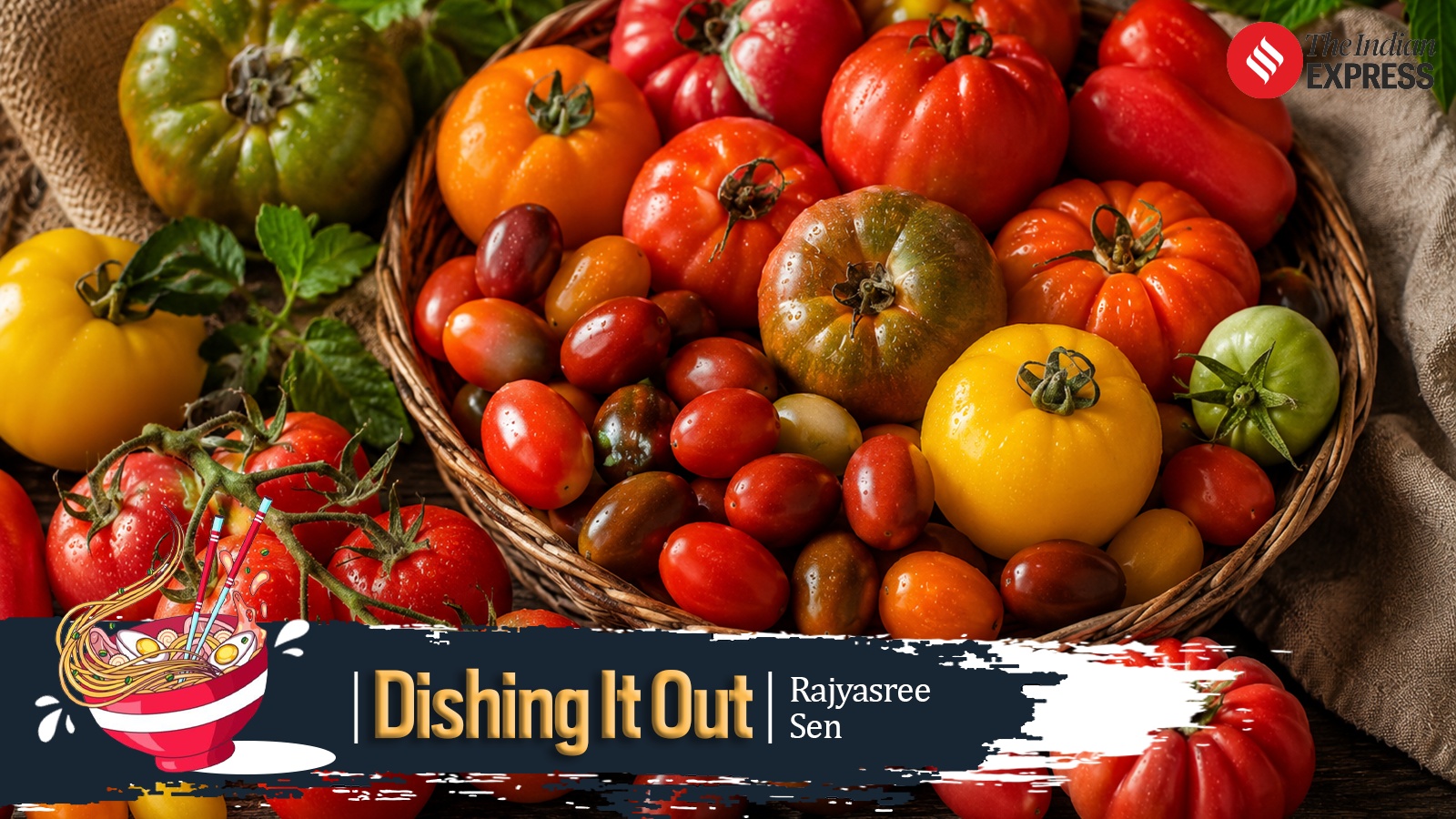
I’m not someone who has ever been interested in living outside India – but many pangs of envy strike me every time I walk through a Waitrose, an M&S Foods, a Tesco, or even a normal grocery store in Europe and America. As someone who likes cooking, the thought that I can choose from a bonanza of tomatoes -– heirloom tomatoes, beefsteak tomatoes, plum tomatoes, cherry tomatoes, tomatoes on the vine, Roma tomatoes, grape tomatoes – boggles the mind and my culinary imagination. I once enjoyed a memorable salad made with Azoychka tomatoes.
The mind—and my culinary imagination—boggles. I did, however, once enjoy a memorable salad made with Azoychka tomatoes. Curious about their origins, I learned these tomatoes originated in Russia and are a Russian heirloom variety whose name translates to “little doll.” The tomatoes are yellow in colour and are medium to large-sized and have a delicate sweetness that made the salad truly stand out.

Spanish Alicante closest to Indian variant
In India, most cuisines use tomatoes. I’ve been going through each region’s cuisine, and the only region I can think of that uses fewer tomatoes is the Northeast. But even the Northeastern cuisine uses tomatoes sporadically. I would say that the Spanish Alicante tomatoes and Adoration Tomatoes are the closest to the tomatoes we get in India. But where did this vegetable (or is it a fruit?) come to India from? It’s not indigenous to the country after all. Which is why it is also referred to as “vilayati baningan” – or foreign brinjal!
Like many other vegetables which have become commonplace in our pantries, on our plates and in our markets – like chilis, potatoes and many other ingredients – tomatoes are indeed “vilayati”. They are native to South America, and were brought to India in the 1600s by Portuguese explorers. But it is only when the British entered India that tomatoes started becoming commonplace in our cooking.
Not that the British took to tomatoes without reservation. For many decades, the British were averse to eating tomatoes given that they were classified under nightshades, many of which were considered poisonous – but we now know they aren’t poisonous, but should be avoided if you have a weak autoimmune system. By the 1700s, even in England, the wonder of the tomato had ensured that soups, salads, and stews tasted better than before. And in India, the British introduced these recipes to their Indian cooks.
 Many gravies use tomatoes (Photo: Freepik)
Tomato, an English vegetable grown in India
The first commercial cultivation of tomatoes in India was first reported in 1832 by Scottish botanist William Roxburgh. He recorded that tomatoes were being widely cultivated across India. If you look at Anglo-Indian cookbooks from the 19th century, including Wyvern’s Indian Cookery Book (1840), tomatoes are categorised under ‘English vegetables grown in India’. Multiple recipes use them in “bakes” or gratins and gravies and of course, tomato sauce. Most recipes, though, were of British or European food. It is the Nuskha-i Ni’mat Khān, which is a Persian translation of an English cookbook in 1801 which had been written to introduce British cooking to Indian kitchens. It is also one of the first cookbooks to explain how tomatoes can be used in shorba and curries. This book, of course, was meant for the kitchens of the Mughals.
It was only in the 20th century, though, that tomatoes became accepted as an Indian vegetable. J F Duthie and J B Fuller’s agricultural manual – Field and Garden Crops of the North-Western Provinces and Oudh (1889-1893) notes that the tomato is “coming more into favour with natives as an article of food on account of its acid taste”.
Story continues below this ad
Tomato ‘well suited to Bengali style’
According to Lizzie Collingham’s Curry, the tomato was “particularly well suited to the Bengali style of sweet-and-sour cookery”. In 1914, a diasporic cookbook by Savitri Chowdhuri uses tomatoes in many gravy-based dishes. In 1926, the Hindi cookbook Pak Chandrika published a recipe for tomato chutney.
Today, tomatoes are so commonplace that there are approximately 1,000 varieties of tomato in India. Of course, China can never be left behind, and leads tomato production in the world, but is followed closely by India and Turkey. I do suggest that if you are ever on foreign shores, do order a tomato salad or go visit a market to see the sheer range of available tomatoes. It is a treat for the eyes and the palate.
Next week, I’ll be writing on the wonder of gunpowder or podi – that spicy powder which is sprinkled on dosas, idlis, and drizzled with ghee.