

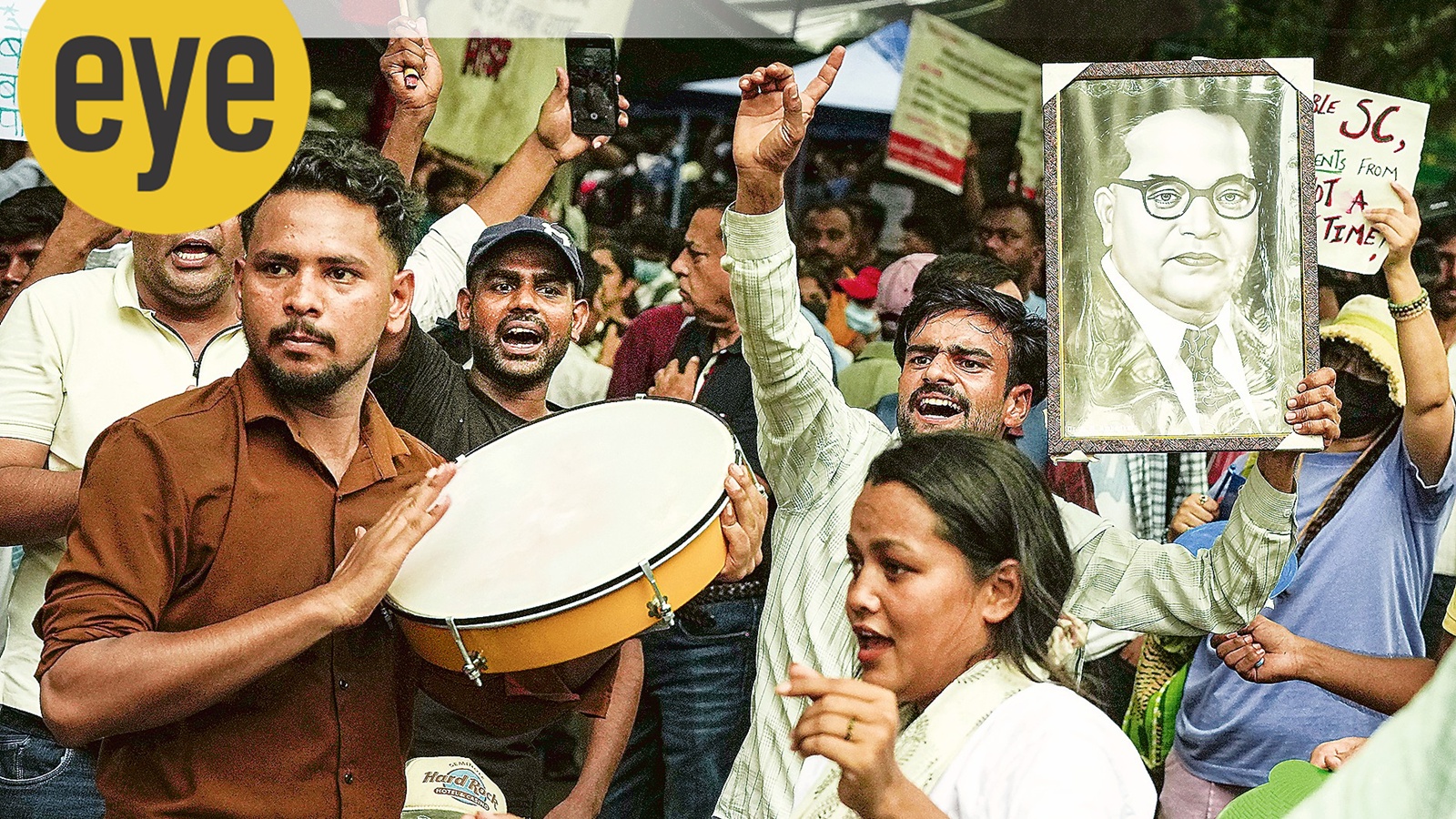
Chhatro mein bhara tha junoon dekha, Dilli police pe sawar maine khoon dekha
Civil dress mein gundo ki dhun dekha, Aur vardi walo ki nameplate gum dekha…
Democracy ki huyi vahan aisi taisi par, sarkaar ko maine phir bhi chup dekha
(I saw passion-filled students, I saw blood riding on Delhi police/ I saw the tune of goons in civil dress and the lost name plate of uniform/ Democracy was in tatters but I still saw a silent government)

Over a 1,000 kilometres from Delhi where scores of students demanding accountability from the Centre over exam leaks were met with tear gas and police batons, Nagpur-based musician Vinod Balakrishna Waghade, who goes by the pulpy moniker Garam Kalakar, sat down to write. The rap bars were a response to what he saw of the Jantar Mantar protests on his social media feed. He got his friend to compose it and recorded it in a studio, uploading it as Jantar Mantar Par Kya Dekha?. Within minutes, the track began to race across social media and by day’s end, had amassed nearly four million views.
“Reading about kids ending their lives and then the ones protesting for systemic change being subjected to such brutal behaviour, it just really shook me,” said Wagahde, 40, who once aspired to crack NEET. A school topper, he recalls a period when the pressure of chasing a medical seat left him struggling with suicidal thoughts. “I even attempted once,” he says. His father wasn’t willing to get him coaching as he believed sending his son to school was enough. Waghade, who couldn’t make it, still cannot shake off the feeling of helplessness. “I had to write,” he says, in a conversation with The Indian Express. He believes music communicates what is often difficult to state outright, sometimes giving strangers a collective purpose.
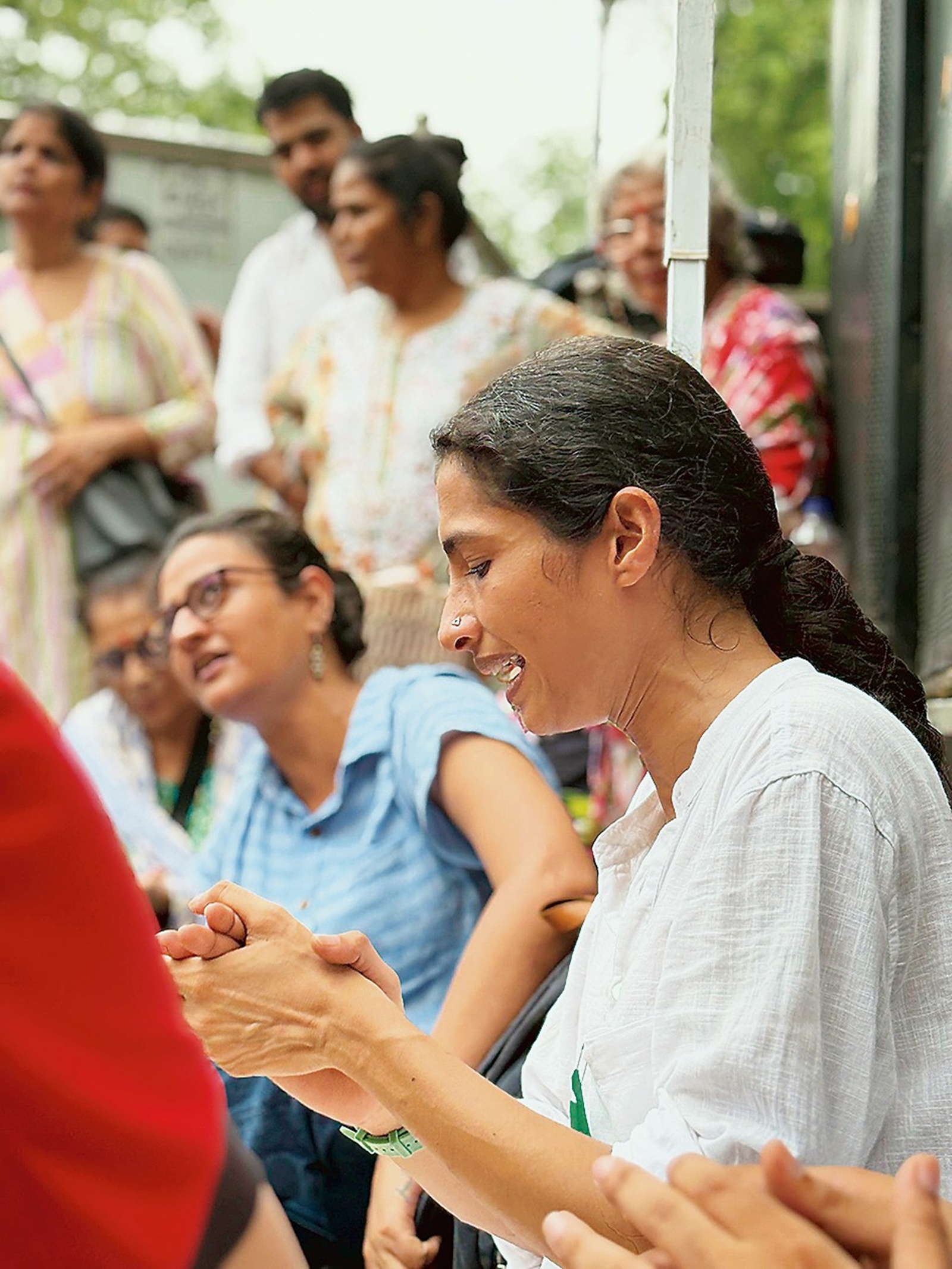 Delhi-based musician Vedi Hashiya
At the protest site in Delhi, a cluster of students who have been regulars from the outset pick up Kashif Malik’s call-and-response pattern. Yuva ghoome khaali khaali, thap karobar hai/ Netao ke naam pe gadho ki bharmaar hai, kaisi sarkaar hai ye kaisi sarkaar hai. The new ones join in. Malik is a part of Collective Delhi, a student youth activist organisation and wrote these lines for the ongoing protest. “Cultural movements have always been at the heart of any revolution for decades. We may not be able to reach people with books the way we can reach them with songs or plays, especially in a country like India, where democratisation of knowledge still isn’t there,” says 24-year-old Gowri Kolal, who has been singing alongside Malik.
lll
Rhymes of Resistance
“In the dark times, will there also be singing? Yes, there will also be singing. About the dark times,” German poet and playwright Bertold Brecht wrote once. Few lines have captured the purpose of protest music more precisely. From the blues that once documented the exploitation of African slaves in encrypted songs that criticised Jim Crow Laws and civil rights anthems such as We shall overcome or musicians like Bob Dylan and Joan Baez who used music as resistance, to the Italian anti-fascist song Bella Ciao and the anti-colonial Progressive Writers’ Movement in the subcontinent with writers such as Faiz Ahmed Faiz, Kaifi Azmi, Krishan Chander, Ali Sardar Jafri, Sahir Ludhianvi and Rajinder Singh Bedi, among others, creating a cultural vocabulary of resistance, here were musicians directly engaging with the social and political crisis of the time.
In fact, protest has always been shaped by songs and poetry. From folk to punk, hip-hop to rap and even film songs, music and poetry have almost always stood in solidarity with ordinary citizens. “Songs get memorised easily. They stay with you for a very long time,” says 23-year-old music producer and hip hop artiste Chaar Diwaari, also known as Garv Taneja, who marched with the students on July 20. “Be it personal or political, art is deeply relevant to what goes on in an artiste’s life. If something moved you, you can’t help but write about it,” says Taneja, who found himself revisiting an old half-written song after being compelled by the protests.
At Jantar Mantar, while students, parents and civil rights groups have been finding inspiration in the newly written rap verses from many artistes and viral film protest songs such as Rang de basanti, Sadda haq (Rockstar), Give me some sunshine (3 Idiots), Yeh jo des hai tera (Swades), Michael Jackson’s They don’t care about us, Bob Dylan’s Blowin’ in the wind and Dub Sharma and DIVINE’s Azadi (Gully Boy) continue to be sung and played. Encore ABJ aka Abhijay Negi, one half of the Delhi hip-hop duo Seedhe Maut, was also spotted at the protest, where fans quickly recognised him. At one point, he was heard rapping verses from his popular track from a few years ago. The song Red includes the lines: Bhoori hai khaal, bhoore kandhe pe haath… APJ, Bose, Bhagat Singh, Chandra Shekhar Azad… Main anti-government, ye bole anti-national.
“Hip hop was born to talk of social subjects,” says Waghade of the origins of hip hop that emerged in the Black and Latino neighbourhoods of the Bronx in New York, synonymous with poverty, discrimination, police violence and marginalisation once.
But some of the most popular ones are also some of the oldest. Faiz’s Hum dekhenge, written in 1979 against General Zia-ul-Haq’s military dictatorship, has become an almost indispensable fixture. His Bol ke lab azaad hain tere remains a rallying cry. Equally enduring is Shailendra’s Tu zinda hai, which he wrote for the Indian People’s Theatre Association (IPTA), an organisation with artists such as Salil Chowdhury and Kaifi Azmi, among others that turned art into a means of political mobilisation.
What has been most unexpected, however, in the current wave of protests is the resurgence of famed poet and lyricist Ali Sardar Jafri’s Fareb (Deceit). Delhi-based musician Vedi Hashiya, 33, who performs nirgun folk as part of Capital-based outfit Aahvaan Project, is seen singing Fareb along a ukulele. Fareb does not have the uplifted optimism of Hum dekhenge. It questions the illusions of liberty and questions whether the promise of freedom means anything without any tangible change. She sings, Saans leti hui lashon ka hujoom, Beech mein unke phira karti hai bekaari bhi… (A crowd of breathing corpses, And wandering aimlessly among them is unemployment too). Vedi found this poem during the CAA protests and it has stayed with her since. “What is interesting is that after what we saw on June 20, some of the lyrics just came alive. What some of these people were saying still holds. Understanding a truth is one thing, letting it take root in your heart is another,” says Vedi, who studied sociology at JNU. She feels art can be heavily political. “Language also cuts us after a while. But we all have songs in us. We all have a form of music that we find enjoyable. Even if we disagree with each other, a musical piece may help us understand each other’s pain better,” says Vedi.
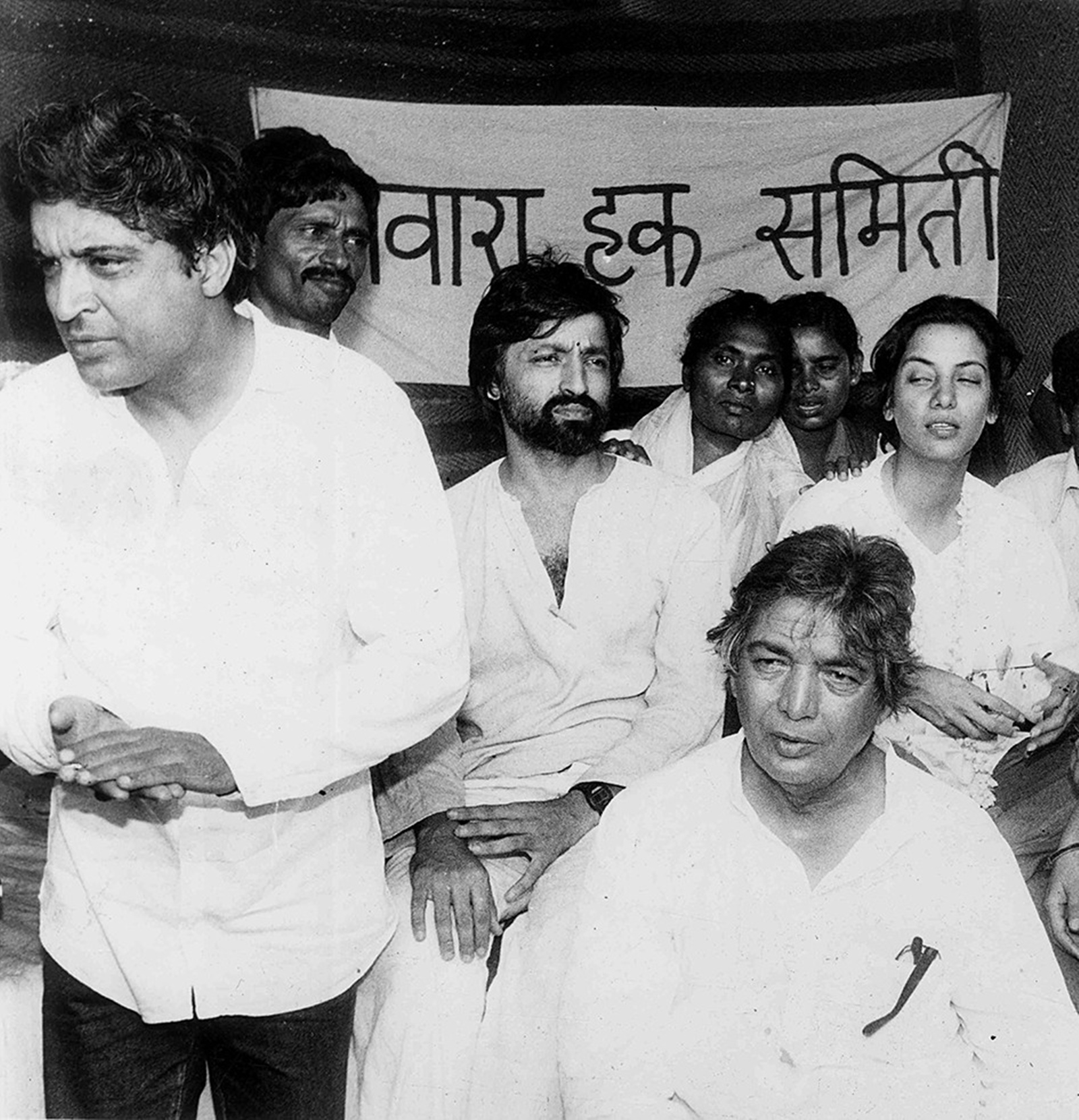 Javed Akhtar (Express Archives)
Outside the Indian Embassy in Berlin, actor and singer Ajitesh Gupta was heard singing Bob Marley’s acoustic ballad, Redemption Song, with the lines Emancipate yourself from mental slavery, while Delhi was singing Rozgaar ab na milega, shiksha mein hai ghotala. The language, melodies and histories may be different, but the role of music in any protest remains remarkably constant: giving a shared vocabulary of resistance that helps people sustain their morale, survive long hours of uncertainty, even fear. “It helps you endure,” says Waghade.


