

4 min readFeb 23, 2026 10:29 AM IST
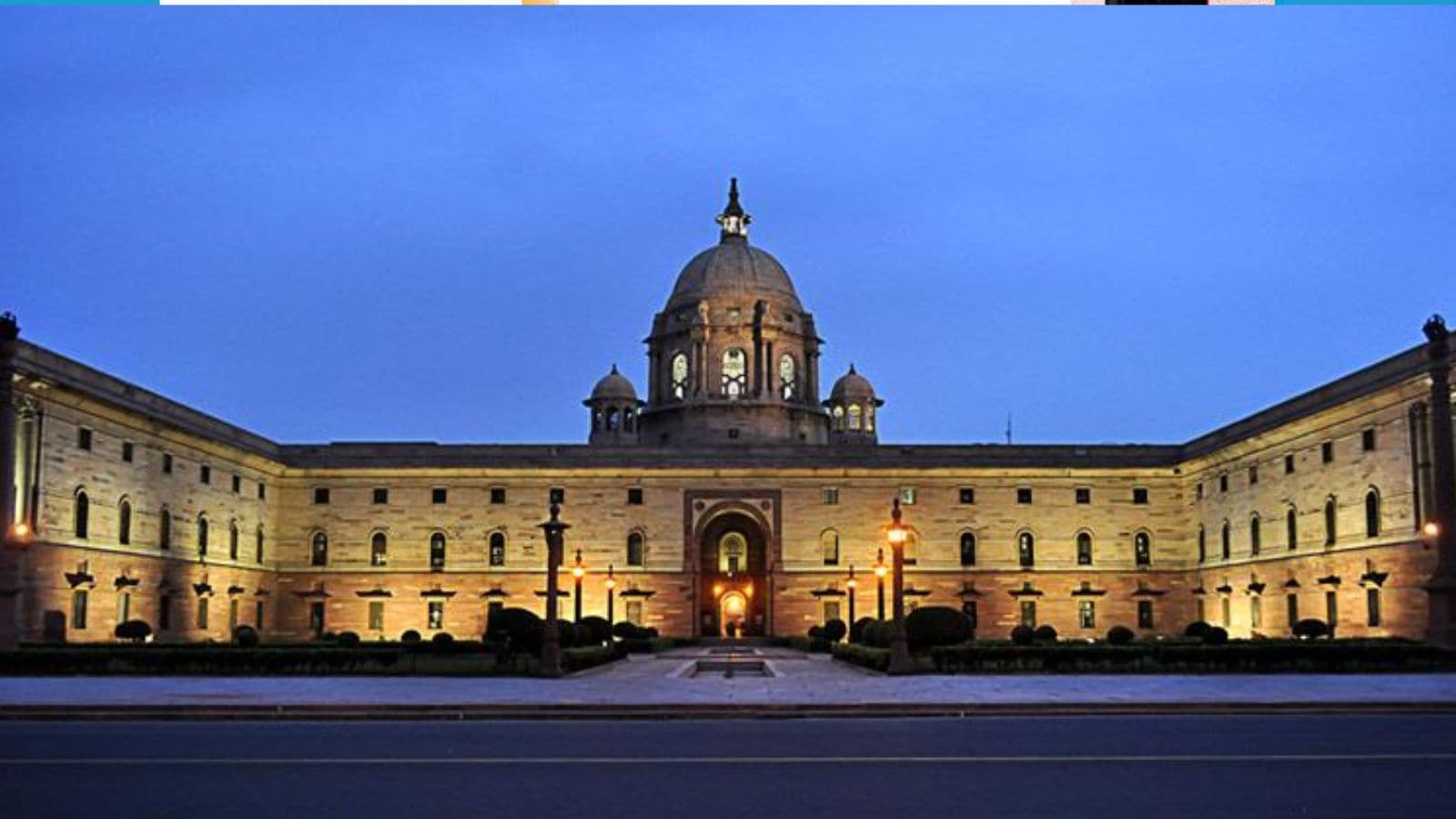
In the central courtyard of Rashtrapati Bhavan is a statue of British architect Edward Lutyens, who, along with Herbert Baker, designed the estate in the 1920s. On Monday, this would be replaced by a statue of C Rajagopalachari, the only Indian-born governor-general of the country, who also held the post between 1948 and 1950, when India became a Republic.
During his Mann ki Baat radio address Sunday, Prime Minister Narendra Modi described the move as freedom from the mentality of slavery.

In fact, a series of changes has swept the hallowed corridors of Rashtrapati Bhavan over the last couple of years, in line with shedding the colonial era and the remnants of the Mughal rulers.
Granth Kutir
Exactly a month ago, on January 23, the speeches of Lord Curzon and the original works of William Hogarth at the Rashtrapati Bhavan library were replaced by Puranas, Vedas, Upanishads, and several other ancient manuscripts and books on Indian epics and philosophy.
These were among 2,300 books and manuscripts — in 11 classical languages — that now form part of Granth Kutir, the library at the Rashtrapati Bhavan.
A statement from the President’s Office said Granth Kutir, or the library of scriptures, is part of Rashtrapati Bhavan’s efforts to shed its colonial legacy and create a dedicated space for about 2,300 books and manuscripts in 11 classical languages of India.
In January, the portraits of British aides-de-camp were removed from Rashtrapati Bhavan and replaced by 21 portraits of Param Vir Chakra awardees, as part of a gallery called Param Vir Dirgha, dedicated to recipients of the country’s highest military honour.
Story continues below this ad
Ganatantra Mandap and Ashok Mandap
In July last year, President Droupadi Murmu announced the renaming of two of the most important halls of Rashtrapati Bhavan – Durbar Hall and Ashok Hall – as Ganatantra Mandap and Ashok Mandap, respectively. While Durbar Hall is the venue of important ceremonies and celebrations such as the presentation of National Awards, Ashok Hall was originally a ballroom and is now used for special events.
As per a statement by Rashtrapati Bhavan in this regard, “There has been a consistent endeavour to make the ambience of the Rashtrapati Bhavan reflective of the Indian cultural values and ethos.”
The term “durbar” refers to courts and assemblies of Indian rulers and the British. It lost relevance after India became a Republic, that is, ‘Ganatantra’, the statement said, adding that the concept is deeply rooted in Indian society since ancient times, making Ganatantra Mandap an apt name for the venue.
“Renaming ‘Ashoka Hall’ as ‘Ashok Mandap’ brings uniformity in language and removes the traces of anglicisation while upholding the key values associated with the word ‘Ashok’,” it said.
Story continues below this ad
Amrit Udyan and Kartavya Path
In January 2024, a day before the historic Mughal Gardens were to open to the public for the season, Rashtrapati Bhavan announced that it would give them a common name, ‘Amrit Udyan’.
Spread over 15 acres, the grounds were named for their layout, inspired by Mughal gardens in Jammu and Kashmir and around the Taj Mahal. As per the Rashtrapati Bhavan website, which describes the gardens as “the soul of the Presidential Palace”, miniature paintings of India and Persia were also an inspiration for them.
In 2022, the pathway from Rashtrapati Bhavan to India Gate, previously known as Rajpath, was renamed Kartavya Path.
On the occasion, the Prime Minister’s Office had said: “It symbolises a shift from erstwhile Rajpath being an icon of power to Kartavya Path being an example of public ownership and empowerment.” These are “steps… in line with the Prime Minister’s second ‘Panch Pran’ for New India in Amrit Kaal: ‘remove any trace of colonial mindset’,” the statement said.


