Five days after an angry deluge tore through the mountain passes of Nepal, family members arriving after long journeys looked for something — anything — that could identify their loved ones amid the hundreds of mangled bodies.
In one hall in the downstream city of Bharatpur, men and women stared at a small television screen, watching a slide show of recovered remains in complete silence.
Next door, another government hall turned makeshift morgue housed the 270 sets of remains whose photos had been flashing on that screen. Nearly all remained unidentified.
Bharatpur, over 100 miles from where the floods first hit, had no capacity to preserve the corpses that washed up to its riverbanks, and could not keep them any longer. They were being transported to a forest for a mass burial before darkness took over the city.
At the burial spot, security forces in protective gear offloaded the bodies one by one onto stretchers, as cameras documented each step. Nearby, rows of metal numbered signs stuck into concrete-filled pots — the markers for each grave — awaited.
Only a fraction of the missing are turning up among the dead, underscoring a bleak reality: The death toll is likely to keep rising.
As of Sunday night local time, nearly 800 bodies had been found. More than 2,500 people were still missing, when the initial 72 hours after a disaster are usually seen as critical to a rescue operation.
The devastating flood swept through northern Nepal and Tibet on Wednesday after part of a glacier sheared off a mountain face, and its fall created such seismic force that officials initially believed it was an earthquake. The massive wall of water and mud it created swept up villagers, hydropower workers and hundreds of tourists and travelers from nearly three dozen countries on religious pilgrimages. Tens of thousands of people remain in need of relief, with entire towns wiped out, and roads, bridges and communication lines destroyed.
The bulk of the ongoing rescue effort has focused on the tunnels of several major hydropower projects in Rasuwa, which saw some of the earliest and fiercest damage in Nepal, and in Nuwakot, just downstream.
Through a night of rain, the army had tried to drill its way to tunnels buried under debris and mud. By Sunday afternoon, with support from Indian rescue teams, they had managed to find an opening to one tunnel, which they found brimming with water, according to Brig. Gen. Raja Ram Basnet, the army spokesman. A second tunnel has proved more difficult to locate an opening to, he said.
“The Nepali Army has been using thermal drones to search for signs of life,” he said. “But there have been no indications of survivors so far.”
The force of the deluge was such that nearly a dozen bodies were swept hundreds of miles away and found in India.
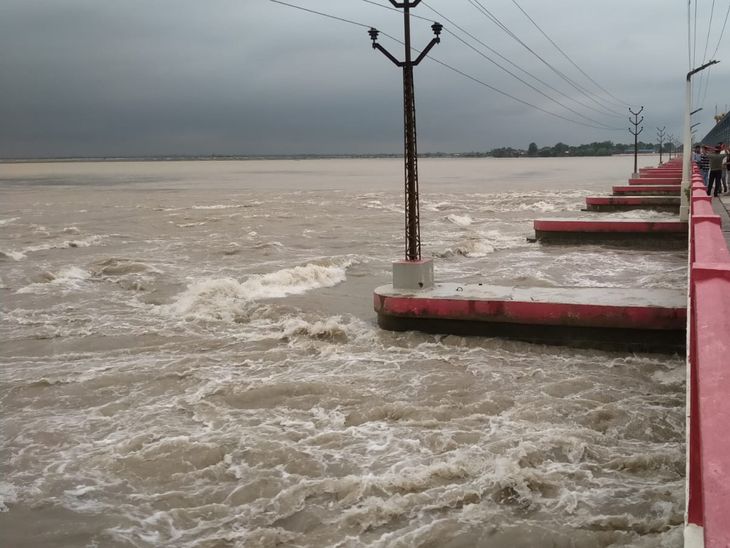
When the remains started washing up on the riverbanks of the Chitwan district, dozens of miles downstream from where the floods first hit, the officials were immediately overwhelmed.
Nepal is a deeply poor country, with limited infrastructure. The morgues in Chitwan have the capacity for storing just over three dozen bodies, Police Chief Rameshwor Poudel said.
With no good alternatives, district officials turned to the government hall in Bharatpur. Since it only had one air-conditioner, they tried to procure dry ice. They set up a help desk and a visitor hall. And they photographed the remains, so the loved ones who were beginning to trickle in could identify their missing.
But the bodies had been in water for so long. The monsoon heat did not help. And the freezers the foreign minister had appealed for from his international counterparts were not materializing immediately.
Only about a dozen bodies were identified and handed over to their families for burial. More remains kept coming.
“We’re still finding 15 to 20 new bodies every day,” said Anil Thapa, a senior traffic cop helping at the makeshift morgue. “This will keep going on for months.”
On Saturday, the district authorities announced that they would begin burying the remains after a thorough process of documentation that includes taking photographs, recording distinguishing marks or clothing articles found on the corpses, and collecting DNA samples.
In a lush forest glade, a 10-minute drive away, they buried 93 bodies late Saturday, and another 100 the next day.
During the closing hours of the mass burial on Sunday evening, Biresh Kumar Sah, 17, reached the town’s makeshift morgue after an eight-hour bus ride.
He was studying in the Nepali capital when he first heard that the flood had hit his hometown, Siraha. His father, a math teacher, and his younger brother, who studied at the same school, were missing.
“The first day I tried to ignore it. I hid the information from everyone,” he said. “I wanted to still have hope.”
On the second day, he posted online that his father was missing.
“His colleague reached out and let me know he had seen my father and my brother being swept by the flood,” he said.
“I know they’re gone,” he added. “But I still have hope.”
His aunt, standing behind him, said the family would have to accept the emerging facts and prepare to hold final rites.
Biresh interjected, rolling his eyes.
“I don’t know these rites,” he said. “I feel wretched.”
Ramesh Dahal, 31, who had also looked at the photos on the screen, said he had reached Bharatpur after first checking all the hospitals in Kathmandu where the wounded had been taken.
He was looking for his 21-year-old nephew, Suman Dahal, a guide who had been leading a group of trekkers in Rasuwa.
Mr. Dahal said he had initially remained hopeful, after hearing reports that some people had fled to higher ground in the jungles as the floods descended.
Maybe they had felt the earthquake-like force of the falling glacier that had created the flood, and gone somewhere safe, he speculated. “Maybe they heard a siren from China,” he said.
But with each passing day, he said, he was coming to accept the reality.
“Now I feel there’s perhaps 0.1 percent chance to even to find his body,” he said.
Binod Ghimire contributed reporting from Kathmandu.