UPSC Essentials brings to you its initiative for the practice of Mains answer writing. It covers essential topics of static and dynamic parts of the UPSC Civil Services syllabus covered under various GS papers. This answer-writing practice is designed to help you as a value addition to your UPSC CSE Mains. Attempt today’s answer writing on questions related to topics of GS-2 to check your progress.
🚨 Click Here to read the UPSC Essentials magazine for February 2026. Share your views and suggestions in the comment box or at manas.srivastava@indianexpress.com🚨
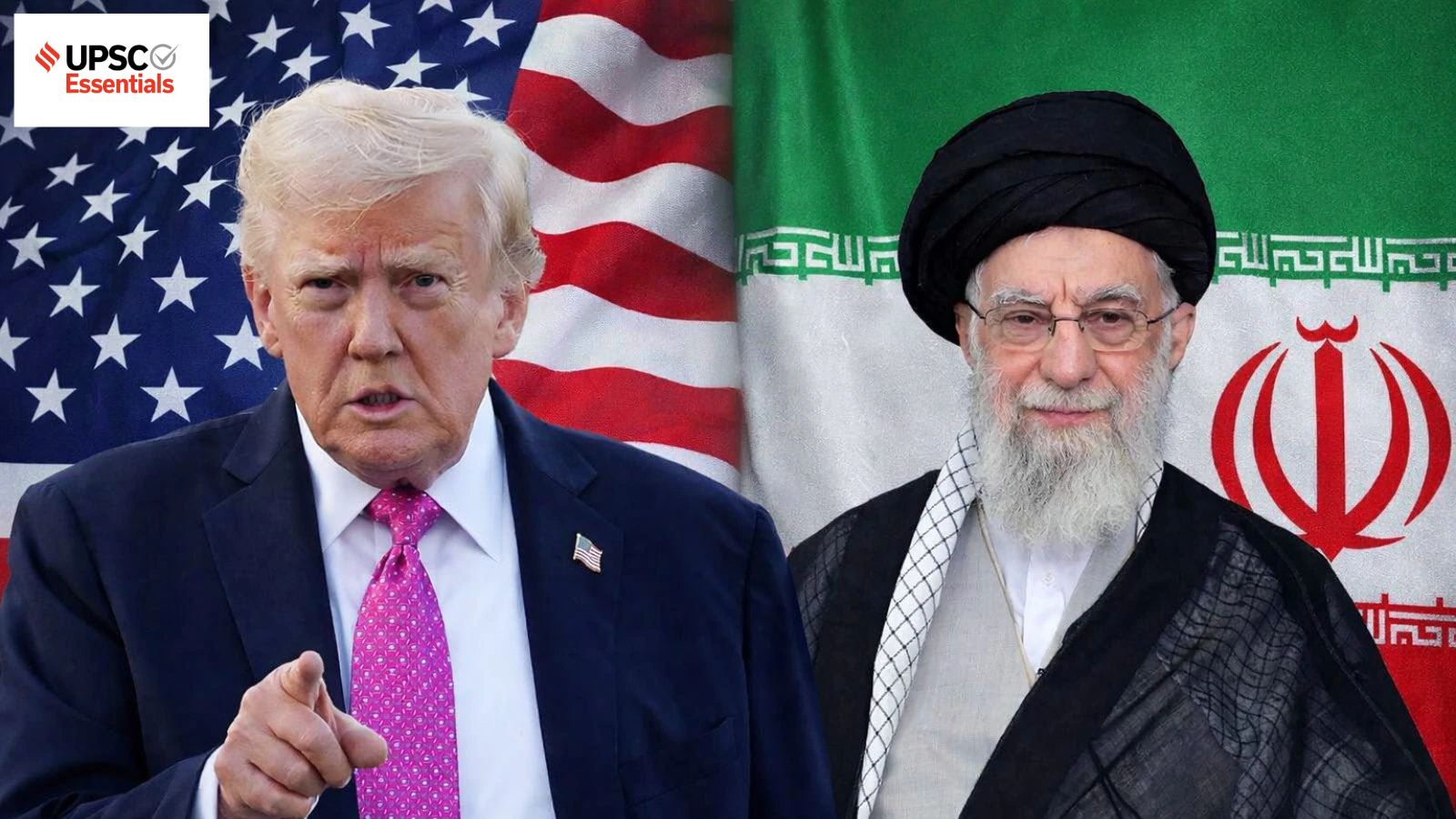
Discuss how escalating tensions between the United States and Iran can affect global oil markets. What are the strategic implications of such tensions for India’s foreign policy and energy security?
QUESTION 2
Discuss the significance of the International Energy Agency (IEA) in global energy governance. What is the strategic importance of India obtaining full membership of the IEA?
QUESTION 1: Discuss how escalating tensions between the United States and Iran can affect global oil markets. What are the strategic implications of such tensions for India’s foreign policy and energy security?
Relevance: The question is relevant under GS-II: International Relations, particularly India’s relations with West Asian countries and the United States and Iran. It links geopolitical conflicts to global oil market volatility and chokepoints like the Strait of Hormuz. It tests understanding of balancing diplomacy amid competing power blocs while safeguarding national interests.
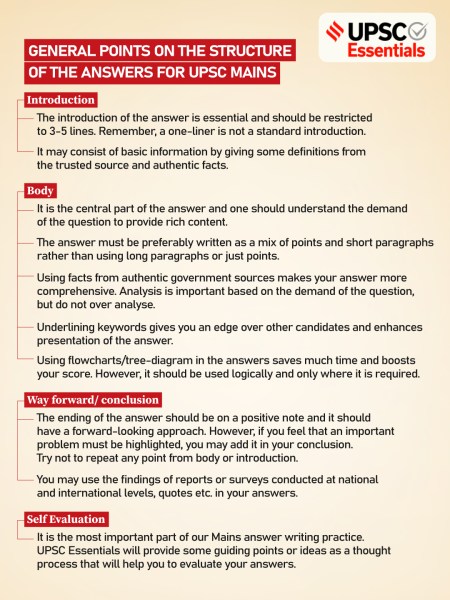
Note: This is not a model UPSC answer. It only provides you with a thought process which you may incorporate into the answers.
Introduction:
Story continues below this ad
— International oil prices have hit a six-month high due to escalating tensions between the US and Iran.
— The second round of talks between US and Iranian envoys in Geneva over Tehran’s nuclear programme concluded with some progress, although still far from any concrete signs of an understanding that could allay fears of military action. The US has significantly built up its military presence in the region in recent weeks.
Body:
You may incorporate some of the following points in your answer:
— Oil markets are anxious due to fears that military action against Iran may cut off oil supplies from the wider Gulf region, which accounts for the majority of global oil exports.
Story continues below this ad
— At the heart of the concerns is the possibility that the Iranian regime, if cornered and faced with an existential threat, may block energy flows through the Strait of Hormuz, a narrow but essential waterway that serves as a critical chokepoint for global oil and gas flows.
— The global oil market is currently oversupplied, which may empower the US administration with the belief that strikes against Iran will have little impact on oil prices. However, if the strait is blocked for an extended period of time and the violence spreads to the rest of the region, the scenario could change dramatically.
— Other major Gulf oil producers, like Saudi Arabia, Iraq, the UAE, and Kuwait, rely largely on the strait to supply the worldwide market. As a result, despite their often tense relations with Tehran, certain Gulf countries have actively engaged with the US administration to avoid military participation.
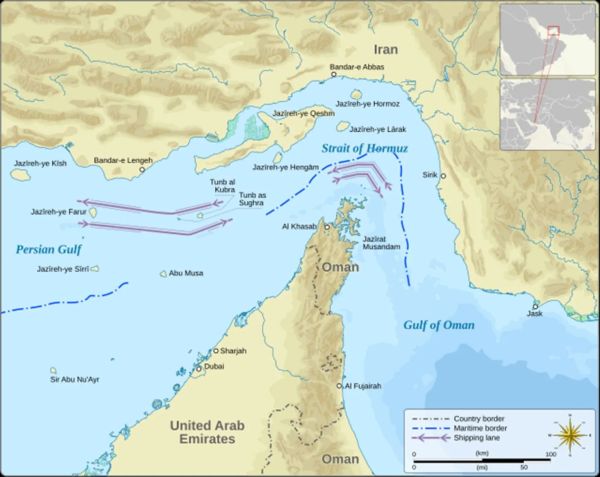 The Strait of Hormuz connects the Persian Gulf and the Gulf of Oman. (Photo: Wikimedia Commons)
Implications of such tensions for India’s foreign policy and energy security
Story continues below this ad
— For India, one of the top oil importers globally, higher oil prices are never good news. Given India imports around 2 billion barrels of oil annually, every $1 increase in oil prices could increase the country’s already hefty oil import bill by around $2 billion on an annualised basis.
— According to tanker data, over 40% of crude oil imported by India transits the Strait of Hormuz. Its importance for India’s energy supply and security cannot be understated, as the country is the world’s third-largest consumer of crude oil and depends on imports to meet over 88% of its requirement.
Conclusion:
— The Strait of Hormuz handles approximately one-fifth of global liquid petroleum consumption and global liquefied natural gas (LNG) trade. The narrow waterway between Iran and Oman, connecting the Persian Gulf with the Gulf of Oman and the Arabian Sea, sees roughly 15 million barrels of crude and 20% of global LNG volumes pass through every day.
Points to Ponder
Story continues below this ad
Why is the Strait of Hormuz strategically significant for global energy supplies?
How should India balance its diplomatic relations between the US and Iran while protecting its strategic interests?
Related Previous Year Questions
What is the significance of Indo-US defence deals over Indo-Russian defence deals? Discuss with reference to stability in the Indo-Pacific region. (2020)
In what ways would the ongoing U.S-Iran Nuclear Pact Controversy affect the national interest of India? How should India respond to this situation? (2018)
Story continues below this ad
QUESTION 2: Discuss the significance of the International Energy Agency (IEA) in global energy governance. What is the strategic importance of India obtaining full membership of the IEA?
Relevance: This question fits under GS-II: Important International Institutions, Agencies and Fora. India’s bid for full membership reflects its rising global stature and growing energy demand. It examines institutional reform, Global South representation, and India’s role in shaping energy transition and climate policy.
Note: This is not a model UPSC answer. It only provides you with a thought process which you may incorporate into the answers.
Introduction:
— At its recent annual ministerial meeting in Paris, the International Energy Agency (IEA) welcomed the progress being made on India’s request for full membership of the organisation.
Story continues below this ad
— As of now, India is an associate member of the Paris-based agency, which is a leading intergovernmental body that works on energy security, global energy policy, and, now increasingly, on climate change and energy transitions.
Body:
You may incorporate some of the following points in your answer:
Significance of the IEA
— IEA’s original mandate was to ensure that oil supplies were kept stable, and potential disruptions in future were anticipated and prevented through timely action.
— Over the years, IEA’s role has changed significantly because of diversification of energy sources, newer technologies, expansion of energy production, and the crisis caused by climate change. The IEA now concerns itself not just with oil, but a variety of energy sources, including renewables. Climate change, decarbonisation and energy transition now form important areas of its work. Recently, it also launched a critical minerals programme.
Importance of India obtaining full membership of the IEA
Story continues below this ad
— India has been seeking full membership for the last few years. In October 2023, it submitted its formal request to IEA. The issue of India’s full membership has come up in India’s bilateral discussions with the US as well.
— IEA has been playing an increasingly influential role in guiding global energy policies. While it remains the most important agency to deal with energy -related emergencies, it has also been evolving into a very useful knowledge platform for energy transitions, climate change, and clean energy technologies. It hosts one of the most reliable and comprehensive energy databases.
— As the world’s most populous country, India is set to play an increasingly central role in efforts to safeguard energy security, drive inclusive energy transitions, and combat climate change… In the next three decades, India is poised to see the largest energy demand growth of any country in the world as industrialisation and urbanisation surge and per capita income rises sharply.
Conclusion:
— IEA was created in 1974 as one of the responses to the global oil crisis, triggered by the decision of the major Arab oil producing countries to impose an embargo on oil supplies to countries that were seen to be supporting Israel during the Yom Kippur War the previous year.
— Many more countries became members of IEA at a later stage, but the membership was kept open only for OECD countries. There are now 32 full members. At last week’s ministerial meeting, Colombia was inducted as the 33rd full member. Colombia had become a member of OECD in 2020, thus clearing the way for its induction into IEA.
— In 2015, IEA opened the doors for non-OECD countries to become associate members. The associate members participate in the policy discussions and activities, but do not have decision-making rights. India became an associate member in 2017. There are 13 associate members right now.
(Source: India seeks to join IEA: Why its request for membership is not a straightforward process)
Points to Ponder
Read about IEA
How can IEA membership align with India’s climate commitments and energy transition goals?
Related Previous Year Questions
“Energy security constitutes the dominant kingpin of India’s foreign policy, and is linked with India’s overarching influence in Middle Eastern countries.” How would you integrate energy security with India’s foreign policy trajectories in the coming years? (2025)
Critically analyse India’s evolving diplomatic, economic, and strategic relations with the Central Asian Republics (CARs), highlighting their increasing significance in regional and global geopolitics. (2024)
Previous Mains Answer Practice
UPSC Essentials: Mains answer practice — GS 3 (Week 142)
UPSC Essentials: Mains answer practice — GS 3 (Week 143)
UPSC Essentials: Mains answer practice — GS 2 (Week 142)
UPSC Essentials: Mains answer practice — GS 2 (Week 141)
UPSC Essentials: Mains answer practice — GS 1 (Week 142)
UPSC Essentials: Mains answer practice — GS 1 (Week 141)
Subscribe to our UPSC newsletter and stay updated with the news cues from the past week.
Stay updated with the latest UPSC articles by joining our Telegram channel – IndianExpress UPSC Hub, and follow us on Instagram and X.