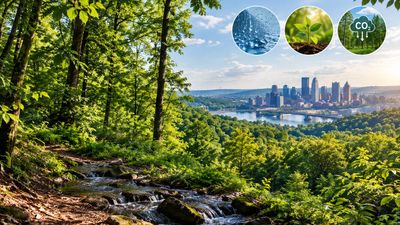
A 27-acre stretch of woodland near Pittsburgh is set to receive permanent protection with the help of $277,200 in state funding. The funding was announced by Pennsylvania State Rep. Emily Kinkead on October 7 and will support the Lowries Run Expansion Project in Ross Township. According to the Pennsylvania House of Representatives, the grant was awarded to the Allegheny Land Trust for the acquisition and permanent preservation of the woodland. Officials estimate the protected area can absorb 22.5 million gallons of rainwater and sequester more than 100,000 pounds of carbon each year, while also creating additional green space and opportunities for outdoor recreation.
27 acres of woodland to be protected
The newly announced funding is aimed at keeping approximately 27 acres of woodland from being lost to other forms of development. The money will go to the Allegheny Land Trust, which will use it to support the acquisition and permanent preservation of the property as part of the Lowries Run Expansion Project. According to Ross Township documents, the project intends to add more protected green space while giving local residents additional opportunities to experience and enjoy nature.For communities around Pittsburgh, protecting woodland can have benefits that go beyond simply keeping an undeveloped patch of land intact. Forested areas can help manage rainfall, store carbon and provide habitat for wildlife, while also offering residents places to spend time outdoors. State Rep. Emily Kinkead, who announced the funding, described investment in green space as an investment in community health and well-being. She also credited her work with state Sen. Lindsey Williams in securing the funding.
Woodland could absorb millions of gallons of rainwater
One of the most notable figures attached to the project is the estimated amount of rainfall the 27 acres can absorb. According to the Pennsylvania House release, the woodland is expected to absorb 22.5 million gallons of rainwater annually. Ross Township documents also estimate that the property can sequester about 109,125 pounds of carbon annually. That capacity matters in areas where heavy rainfall can place pressure on stormwater systems and contribute to flooding. Forests and other natural landscapes can slow down rainfall as it reaches the ground, allowing water to infiltrate the soil rather than immediately running across paved or developed surfaces.Protecting woodland therefore becomes part of a broader approach to stormwater management. Instead of relying entirely on engineered infrastructure to deal with rainfall, communities can also preserve natural areas that already provide some of these functions. Kinkead specifically pointed to stormwater mitigation and air quality as two of the reasons the investment is important. The Lowries Run project is therefore not only about preserving scenery. The land is expected to provide a practical environmental benefit every year simply by remaining wooded.
More than 100,000 pounds of carbon each year
The woodland is also expected to contribute to carbon storage. Officials estimate that the 27 acres will sequester more than 100,000 pounds of carbon annually. Trees take in carbon dioxide as they grow and store carbon in their trunks, branches, roots and surrounding soil. Keeping an established wooded area intact allows that natural process to continue rather than replacing the trees with development.The estimated annual carbon figure gives another indication of why permanently protecting relatively small areas can still matter. While 27 acres may seem modest compared with large conservation projects, the land can continue providing environmental benefits year after year.
Funding comes through Pennsylvania conservation programme
The $277,200 award comes through Pennsylvania’s Department of Conservation and Natural Resources Community Conservation Partnership Program, or CCP. The programme supports projects focused on recreation, natural-resource conservation and community revitalisation. Its broader aim is to connect people across Pennsylvania with the outdoors while helping communities protect and improve natural resources.In the case of Lowries Run, the state funding combines those goals. The project will preserve woodland, strengthen local green space and support opportunities for outdoor recreation. The Allegheny Land Trust has previously worked on conservation projects in the Pittsburgh region. Its conservation work has included protecting forest and farmland and highlighting the role that natural areas can play in managing stormwater, supporting wildlife and improving community resilience.
Why permanent protection matters
The key part of the latest project is not simply acquiring the 27 acres but permanently preserving them. Once land is protected for conservation, its future use is no longer determined solely by short-term development pressures. The woodland can continue functioning as green infrastructure, storing carbon, absorbing rainfall and providing habitat. It can also remain part of the natural landscape surrounding local communities, giving residents access to green space close to where they live.For Pennsylvania, the project reflects a wider effort to treat conservation as an investment in both the environment and communities. The Lowries Run Expansion Project may involve only 27 acres, but officials expect those acres to keep delivering measurable benefits every year. With $277,200 in state funding, the woodland is now moving toward permanent protection, preserving a natural resource that can absorb millions of gallons of rainwater, store more than 100,000 pounds of carbon annually and provide additional green space near Pittsburgh.