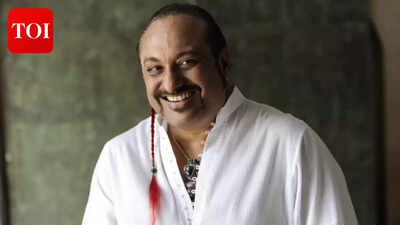
As one half of Colonial Cousins alongside Hariharan, Leslee Lewis helped redefine the Indian pop soundscape of the 90s. From genre-bending fusion to timeless indie-pop anthems, he carved a space that was uniquely his own — melodic, emotional and unmistakably original.Now, 26 years after his last Bollywood outing, Leslee is back as a singer with Zorr Ka Dhakka, marking a full-circle moment in his musical journey. In an exclusive interview with ETimes, the composer-singer opens up about why he never chased trends, how passion keeps him “26 at heart,” the evolving sound of the industry, and why melody will always outlive marketing.
You’re returning to Bollywood as a singer with Zorr Ka Dhakka after 26 years. That’s a long gap. How does it feel?
It is a long time. The last Bollywood song I sang and composed was Dekho 2000 for the film Mela. That was for Aamir Khan. After that, I got very busy with Coke Studio, live shows and my independent music. You can’t stop making music just because you’re not singing in Bollywood. In the 90s, I was already creating so much music, so that journey never stopped.
Is it nostalgic? Emotional? Does it feel like unfinished business?
If I’m not excited, I don’t do it. That’s just who I am.Whether it was Coke Studio, my 90s music, or my new albums like The White Album and Phir Se Rock and Roll, I’ve always been excited like I was at 17. I’ve never changed. For me, music comes before everything. If I don’t enjoy it, I can’t do a good job.Songs like Pari Hoon Main, Yaaron Dosti, Pal — I created those melodies because I loved doing them. And people loved them too. I’ve always worked out of passion.When Raju Singh called me to sing Zorr Ka Dhakka, I was excited immediately. Rajiv and I go back a long way. He’s a wonderful composer and producer. I knew if he was calling me, it was for a reason. When I heard Anusha Srinivasan Iyer’s lyrics, they instantly fit the energy of a title track. I had so much fun recording it. And here I am again, after 26 years, singing another Bollywood title track.
How does it feel singing for someone else’s composition instead of your own?
I love it.When a composer knows what they want, they can guide you properly. It’s like a film director — if the director knows the emotion he wants from an actor, he brings out the best in them. That’s what Raju did. He knew exactly how he wanted me to sing it.When I’m composing and producing my independent music, I decide everything. But in Bollywood, the film director is the captain of the ship. The music director is the captain of his department. I come in as the singer. So I sing it the way they want it. It’s not my film or my song — I’m the singer.And I enjoy that process just as much.
Will we hear more Bollywood songs from you now?
Of course. I’m very open to collaborating — whether as a singer or even as a music director. I’d love to work with young artists and directors.People sometimes think I’m unapproachable because they grew up listening to my music in the 90s. There’s a respect factor. They feel slightly awkward approaching me. But there’s no misconception. I’m very open.If I’m singing for your film, you are the captain. I follow your vision. When I’m doing my independent music, then I decide. That’s the only difference.I’m not unbreakable. I’m very open to creating new music with new people.
Looking at your journey from the 90s to now, what has changed more — the industry or your relationship with music?
Technology has changed everything. And that has changed the industry.Today, anyone with a computer can be a composer. Technology can correct pitch. Big corporate houses now make many decisions. The artistry has shifted. And now AI will change even more.What I feel is missing is melody. In the 90s, melodies were strong. Then technology took over. We have incredible sound quality today — but songs are missing. That’s why Bollywood keeps remixing old songs. The melody is still there in those songs.I think melody is coming back. If you listen to the opening of Zorr Ka Dhakka, it’s melodious. It’s not just noise. There’s a story in the song, and it’s presented musically.Only a good melody lasts a lifetime.In 2026, people are still singing Pari Hoon Main and Yaaron. During Navratri, all over the world, for nine days every year, Pari Hoon Main is played. That’s because it connected with people’s hearts.That’s my speciality — melody. And I believe people are ready for it again.
Recently, there’s been discussion about repetitive romantic songs after Arijit Singh’s retirement from playback singing. How can that pattern break?
A lot of it has to do with algorithms. If one romantic song works, streaming platforms push 50 similar songs. So you end up hearing 50 songs that sound the same.That’s not always the artist’s fault. The algorithm promotes what has worked before.If you hear my White Album, it has six romantic songs — and all of them sound completely different from each other. But it takes time. My 1991 music became popular in 1993. Colonial Cousins took time. Pari Hoon Main took time.Some music is ahead of its time. You lay it out there, and slowly people begin to appreciate it.
What keeps you relevant even today?
Passion.If someone gives me Rs 100, I will give them Rs 120 worth of content. I cannot work without passion. That’s why I’m still here in 2026. I was doing music in the 80s. I was relevant then. And I’m still relevant now.I’m not trying to be different. I’m just being myself. This is my voice. You like it? Fantastic. If you don’t like it, that’s fine. I’ve never changed my music to please everyone. My music has always remained the way I believe it should be.Today, people tell me, “There’s something in your songs.” That’s a beautiful thing to hear. I’ve always worked from the heart, and passion is everything. Without passion, you cannot last.You can have all the marketing money in the world. You can promote yourself heavily. You might shine for two days and disappear. But if you want longevity, it has to come from within.If you see my concerts — just go to my Instagram and check my latest live show post — you won’t feel like you’re watching someone who is 65. Age doesn’t matter to me. I feel 26.When I started working on my White Album in 2020, I re-aged myself to 20. So today, when I speak to you, I’m 26. That energy shows in my performances. My music is still rocking.
Many young composers struggle with finding their identity. What’s your take on that?
Today, a lot of artists struggle with identity. People want to box you into one thing. If you’re a banker, they say you can’t be a cricketer. Why not? If you have both talents, you can do both.But people don’t like to see multi-talented individuals. They want to define you.I can’t help that. From the early days — whether it was A Band of Boys or my independent work — I’ve explored different sounds.If you listen to White Album, it’s romantic and melodic. If you listen to my rock projects, they’re pure rock and roll — in your face. My next album might have a 90s Bollywood or indie-pop flavour. You’ll wonder how the same person is doing romantic songs, rock songs, and retro-inspired tracks.That’s my talent. Unless I keep doing it, how will people know what I’m capable of?
Is that why returning to Bollywood excites you?
Absolutely. It’s not like I gave up on Bollywood. I’ve just been very busy.After 2000, I was performing all over the world — London, Istanbul, Munich, Beijing. I travel constantly. I don’t stay in Mumbai much. So if someone wants me to sing, I might not even be in the country.But I love going to the studio. I love standing in front of the composer and creating something together. That’s the real fun.That’s why I was excited to record again with Raju Singh and Anusha. To stand there and build the song together — that’s magic.
You’ve seen multiple eras in the industry. What do you make of conversations about bias, like the recent comments by AR Rahman ?
I honestly don’t know what he said or in what context he said it. I don’t follow these political discussions.Rahman is Rahman. He has achieved everything. He’s given us some of the biggest songs ever. If he said something, I’m sure there’s a context. But I’m not the right person to comment on it.I am my own industry. I don’t hang around discussing what someone said about someone else. I don’t even have that many friends in the industry.My friends are my computer, my music, and my next song.Which artist is putting out an album every year? Or releasing a new song every two or three months consistently?For the last two years, I’ve been doing exactly that. Now I have eight to ten songs ready.I want to introduce this generation to ideas from 30–40 years ago — not by copying old songs, but by bringing back the concept. Why did our grandparents love Noorjahan? Why did those melodies connect so deeply?Our DNA is the same. If something was beautiful then, it can still touch people today. But you must present it in a new way — new production, new masala, new packaging.You don’t reuse the old song. You recreate the emotion in a modern soundscape. Like Dhurandhar.
If you were starting out today, would you choose the film route first or build your career independently?
I don’t think artists always have a clear choice. The opportunities come in front of you, and you decide whether to take them.For me, 2026 feels like something new. Singing in Bollywood again after 26 years is exciting. At the same time, I’ve been releasing independent music for the last two to three years consistently. When I heard the lyrics recently, I liked how they were written in context and how my voice was used — almost like presenting me as a new singer again in Bollywood.That excites me.I just want to go to more places, reach more people, and keep creating. I’m excited about what’s next.