
“When we look at West Indies, we spoke about them little bit lacking in the bowling department,” Du Plessis said on ESPNcricinfo’s TimeOut show. “So if you, as a team, know that’s where you are slightly off, and then we’re talking now at the highest level – they don’t have a bad bowling attack, it’s just you comparing the attack to India.
“When your strength lies in your batting, you know that you’re going to have to out-bat the opposition. Therefore, when you’re in a position where you can pull the trigger on making sure you push that score a little bit more, you have to. It’s just almost like a non-negotiable in order to be a team that wins the World Cup for them. They have to score 220-230, so that the bowling adds more pressure.
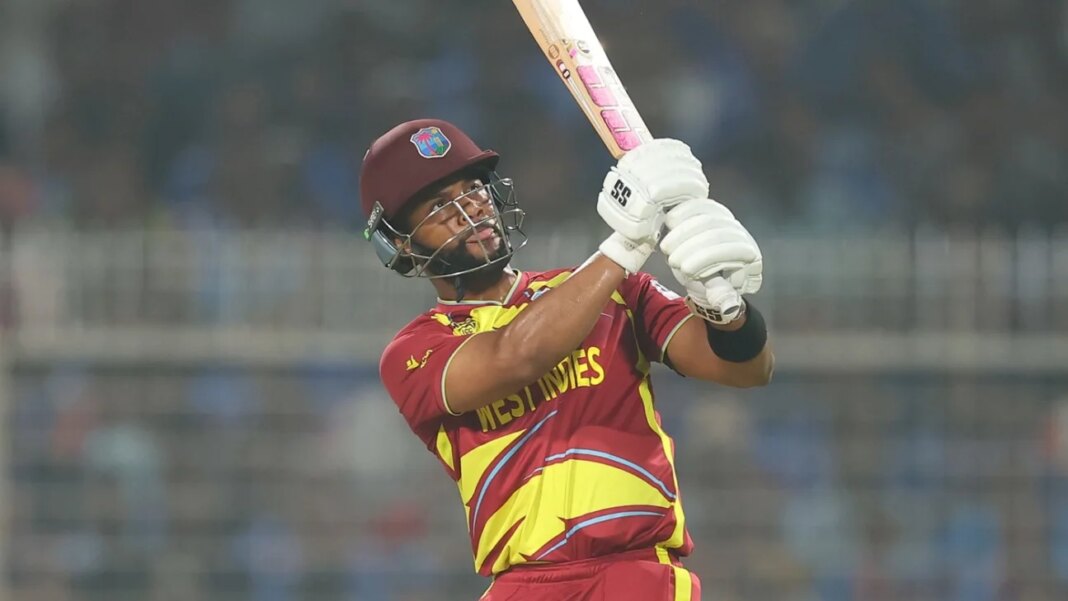
“If they just get a score that’s a good score, it’s always going be tight. Their thing with their batting is, ‘yes, we batted well today, but in order for us to win the World Cup or beat India, we have to win those small moments a little bit better’. In that, that 35 off 35 innings [of Shai Hope], the way that they batted from sixth to the ninth over when there was a little bit of strike rotation, because there, the foundation was done.
“Once again, they batted well, but in order to beat India, you have to do a little bit more.”
Kumble also echoed that thought, saying that holding wickets back rarely pays off when teams bat first in the format, especially given West Indies’ firepower.
“I’ve always believed that in a T20 format, you need to use your resources if you’re batting first, irrespective of who’s in your batting lineup. You’re better off scoring 196 for 9 than being 195 for 4. I understand that the powerplay didn’t go the skipper’s [Shai Hope] way; he was struggling a bit, but the team score was going at a fast pace.
“Beyond that, once you know that you have ten wickets in hand after the powerplay, only 14 overs, and some serious hitting power still in your dugout, you need to go harder, even if you lose a couple of wickets.”
Du Plessis and Kumble added that West Indies should have capitalised, especially on a day when two of India’s “best bowlers” – Varun Chakravarthy and Jasprit Bumrah – went for runs, also keeping in mind the conditions at the Eden Gardens as a reason to push beyond par.
“If you look at the bowling scorecard, Bumrah went for almost 40 runs. Then, Varun went for 40 runs, so you’ve got 80 runs from the two best bowlers that you probably would be thinking before the match – they didn’t get too many wickets. Varun got one [wicket] and Bumrah got two, so you’ve lost three wickets for 80 runs, so that’s really good,” Kumble said.
“Especially because you know the stats are also saying to you… chasing ground, possible dew, so all the factors are against you, so you can’t just try to get a par score,” Du Plessis added. “You have to aim for the stars. We have to push here more, even at the risk of losing wickets.”
For Kumble, the decisive moment for India came just after the drinks break, when Hardik Pandya returned to remove Sherfane Rutherford, who he says could have gone all out with the bat from there.
“I think he came back after that drinks break and got Rutherford straight up in the first over. That was a big wicket. Probably, if he had stayed then, [he could have thought] now let’s pull the trigger and then just go hell for leather.”
“We know what Hetmyer does to left-arm spin, so Axar would have been the happiest man on the planet to know that I can just bowl at two right-handers here,” Du Plessis said. “Yes, they can still hit me. But the match-up in terms of the lefty is a far worse one, so it allowed Axar to just be in the game all the time, versus if Hetmeyer is in and he took him down. If you put pressure on the five bowlers, they have to possibly look at the sixth bowling option, and therefore they didn’t have to go there tonight.”