Leaders in Israel and the United States have indicated that the conflict against Iran could continue for weeks.
The US, led by President Donald Trump, has emphasised that this will not be a problem, and that its military has the capacity to conduct an extended fight. But for Israel, already fatigued by the cost of having inflicted a genocide on Gaza, as well as wars or attacks in Lebanon, Syria, and a previous round with Iran, a lengthy conflict could be more costly.
Recommended Stories
list of 3 itemsend of list
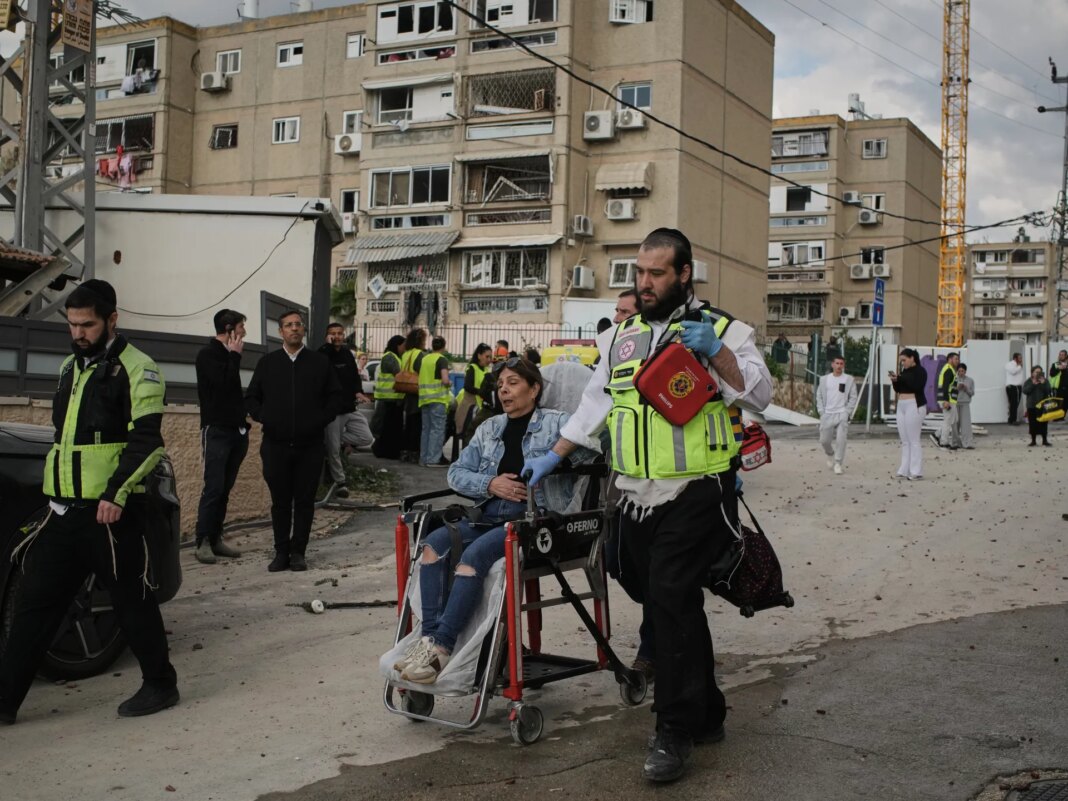
Since it attacked Iran on Saturday, Israel has endured repeated missile and drone strikes, forcing widespread air raid alerts, school closures, and the mobilisation of tens of thousands of reservists.
Cities like Haifa and Tel Aviv have faced sustained attacks, emergency services are stretched, and a public, unused to war on the scale their government has inflicted upon others, has spent the past few days in and out of bomb shelters.
For now, enthusiasm for the war is high. Interviews with Israelis in most major cities show a hunger to confront an enemy that the public was told for decades was determined to exterminate them. With the exception of the far-left, politicians have rallied to the government banner.
“As soon as the war started, Israel was swept in a wave of militarism,” Israeli political economist Shir Hever said.
“It was not the same as [the June 2025 12-day war]. Then, it was mostly panic, an existential fear that Iran could destroy Israel. Now, it is gung-ho militarism and overconfidence. Even the war critics – who are few and far between – recommend that [Israeli Prime Minister] Netanyahu keep the war ‘short’, as if Israel can decide when it ends.”
Support for the war is part of what many see as a radicalisation of Israeli society. Previously peripheral far-right politicians have made their way into the centre of government, with political polarisation and economic strain accelerating the flow of the young and talented out of the country.
Those who remain are already conditioned to think of Iran as the fundamental enemy of their country, and weeks of war may militarise the society even further.
“It’s like the UK blitz in World War II,” Daniel Bar-Tal, an academic at Tel Aviv University, said.
“Then, the British accepted this bombardment because they saw themselves as fighting this ultimate evil. Israelis have the same feeling. We are indoctrinated into believing, almost from birth, that Iran is evil, which is reinforced through kindergarten, high school, and the army.”
For Bar-Tal, it is impossible to guess what kind of Israeli society might emerge from weeks of renewed war, only that the country’s past moral certitude in the righteousness of its establishment had not been dented by the massacres committed during the 1948 Nakba, nor the recent Gaza genocide.
“Now, we have a generation who are still more militaristic and more rightist, with Netanyahu telling us we now need to live by the sword. It’s just more evidence that Israel needs enemies to survive.”
Bombs and guns
Beyond the social impacts, Israel has military calculations to take into account if the war does drag on.
Most pressing is determining how long Israel can sustain the current levels of warfare against an opponent of Iran’s scale and military heft. This will be affected by both the support it receives from its allies, such as those in the US and Europe, and whether its defences become exhausted before those of Iran, defence analyst Hamze Attar said.
“In the first three days of the war, Iran launched more than 200 ballistic missiles at Israel,” he told Al Jazeera. “To put that into context, during the 12-day war, they launched around 500, each requiring that Israel counter by launching an interceptor rocket. That’s probably more than Israel has the capacity to counter, so, without US help, it would probably have lost control of its airspace by now.”
Israel has three different air defence systems: the Iron Dome, for short-range rockets and artillery; David’s Sling, to counter medium-range rockets and cruise missiles; and Arrow 2 and Arrow 3, designed to intercept ballistic missiles
The Israelis do not disclose the number of interceptors they have in stock, but Israel began to run low on interceptor stocks during the 12-day war, indicating that it will become more difficult to maintain a high level of interceptions if the war continues for a lengthy period. This would lead to a rationing of interceptors and a focus on defending military and political targets, potentially leading to more civilian casualties.
According to Israeli and US sources, Iran has been producing ballistic missiles at a rate of 100 per month in the aftermath of June’s conflict, Attar said, which would suggest that Tehran had already amassed a significant stockpile.
However, Attar was quick to point out that the Iranian threat is also based on the types of ballistic missiles they have.
“We don’t know what type of ballistic missiles,” Attar said, outlining the different types of missiles: long-range, reaching as far as Greece and the Mediterranean; medium-range, reaching Israel; and short-range, which can target the Gulf states.
“Likewise, we don’t know how many [missiles] they [Iran] had before the 12-day war, how many were destroyed during that war, or how many launchers they have,” Attar added. “If you don’t have the launchers, which the US and Israel are targeting, it doesn’t matter how many missiles you have. It’s like having bullets without a rifle.”
Economic considerations
More than two years of almost constant war have taken their toll on Israel’s economy, analysts warned, with the cost of munitions weighing on the Israeli purse, and the deployment of a reservist force numbered in their hundreds of thousands for periods far longer than any planners had originally conceived of.
Israel’s spending in 2024 on the wars in Lebanon and Gaza was reported to have reached $31bn, contributing to the country’s highest budget deficit in years. Preliminary figures from 2025 show spending on war reaching $55bn.
The pressure on the economy led to the downgrading of Israel’s sovereign credit rating in 2024 by all three major credit rating agencies.
“Israel is experiencing a debt crisis, an energy crisis, a transportation crisis, [and] a health service crisis,” Hever said.
But none of these would be enough to halt Israel’s military campaigns on their own, the political economist cautioned. “This is not a question of economy, but a question of technology.”
“If the US can keep supplying Israel with weapons that are so advanced that they can load themselves, aim themselves, and kill from such a distance that the soldiers don’t need to risk their own lives, I don’t see how the economic crisis inside Israel would be enough to stop Israel’s aggression,” he said.