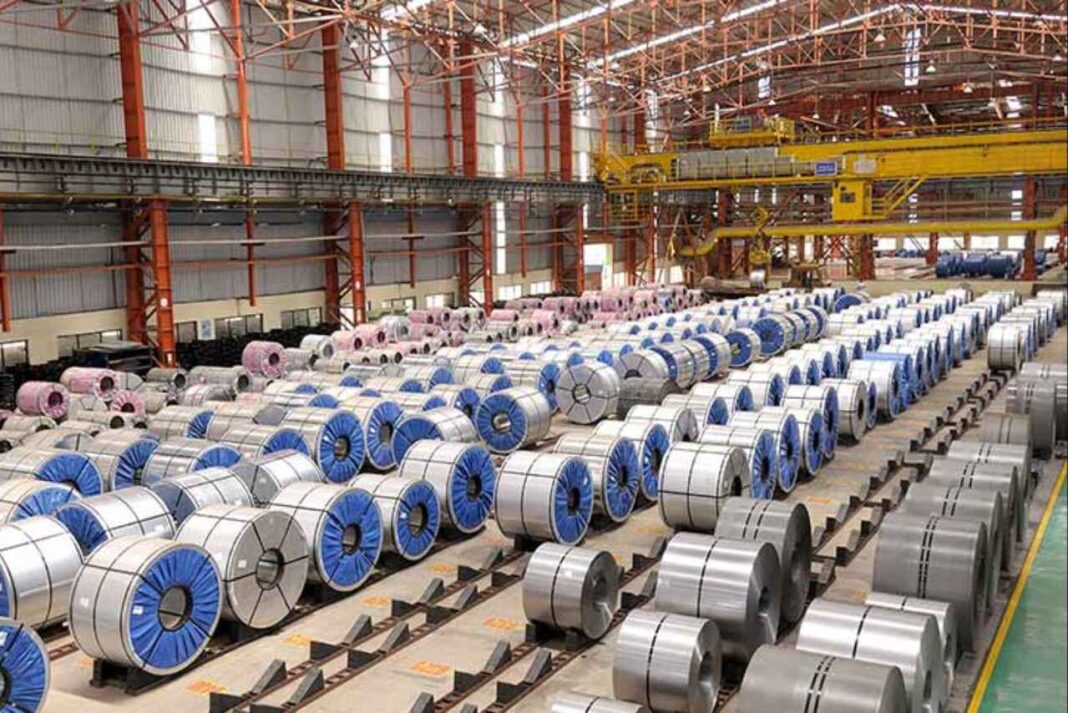
Synopsis: APL Apollo Tubes didn’t just grow with India’s construction boom but rather reshaped it. With innovation, scale, and distribution strength, it built market leadership. But can it sustain margins in a volatile steel cycle?
India’s construction landscape is quietly changing. What was once a market dominated by basic round pipes and price wars has evolved into a structured, branded, and technology-driven segment, and at the centre of that shift stands APL Apollo Tubes. From a small ERW unit in the 1980s to commanding more than half of India’s structural steel tube market today, the company has not merely grown with the industry, it has helped shape it.
But this is not just a scale story. It is a story about product architecture, manufacturing innovation, distribution power, and capital discipline in a deeply cyclical raw material business. The real question is not how APL Apollo became the leader, that much is visible. The real question is whether its advantages are durable enough to withstand steel price volatility, rising competition, and aggressive capacity expansion. And that answer lies not in the narrative, but in the numbers.
The Starting Point: A Category That Didn’t Exist
APL Apollo Tubes began in 1986 as Bihar Tubes Pvt. Ltd., operating a single electric resistance welding (ERW) plant in Sikandrabad. At the time, their annual production capacity was around 6,000 metric tonnes of steel pipes. Their offerings were fairly basic, mainly round MS pipes for agricultural irrigation, sold in a market where no one really had control over pricing.

Back in the late ’80s and ’90s, India’s ERW steel pipes and tubes industry was pretty scattered. Small, local manufacturers dominated, mostly competing on price. There wasn’t much to distinguish one company from another, branding was almost an afterthought, and everyone made the same basic round mild steel pipes for plumbing and irrigation. If you were looking for square or rectangular tubes, the structural hollow sections you’d see all over developed countries, you’d barely find them in India. Steel-intensive construction hadn’t really taken off yet.
Things began to change when APL Apollo Tubes recognised where the market was going. They noticed that India’s construction sector was shifting toward steel, think major infrastructure, warehouses, and industrial facilities. Rather than staying stuck fighting over the round pipes business, APL Apollo changed course. They invested heavily in structural hollow sections, expanded their product range, and built a stronger distribution system.
As construction accelerated and the industry became more organised, structural tubes started gaining popularity as a faster, more efficient alternative to traditional building materials. By moving early and scaling up, APL Apollo grew alongside the rising demand. Now, their dominance in structural steel tubes is less about competing on price and more about understanding the market, adapting their product mix and staying ahead of the curve.
What are Structural Steel Tubes?
Let’s clarify what APL Apollo’s 55 percent market share really means, because anyone paying attention will want specifics before forming an opinion. The Indian steel tube market isn’t a single, uniform space. It’s made up of different layers. First, there’s the commodity segment: plain round black MS pipes which go into plumbing, irrigation, and scaffolding areas where volumes are high, margins are thin, and competition is fierce. Next up are galvanised and pre-galvanised pipes, which are a bit more specialised and used for things like fencing, agriculture, and lighter construction. But the main event is structural hollow sections (SHS). These are the square, rectangular, or circular hollow tubes that form the backbone of buildings, airports, solar plants, bridges, and industrial sheds.
A structural steel tube is essentially a hollow steel section, whether square, rectangular, or round- that builders use to support loads in all sorts of structures. It’s different from regular water pipes. These tubes are designed for strength, not for carrying water. You’ll find them everywhere: residential homes, office towers, bridges, warehouses, airports, and huge industrial buildings. People prefer them because they’re strong yet lightweight, easy to assemble, and they make construction go much faster than traditional concrete columns ever did.

India’s organised structural steel tube market is around 9 million tonnes per year and APL Apollo has a capacity of about 5 million tonnes, giving them a share of 55 percent to of this organised segment. This market is projected to expand to 17.3 million tonnes by FY30, and the share of the structural steel market share will also expand from current 6.5 percent to 8.3 percent.
The company’s capacity is currently 89 percent utilized which the company aims to double its capacity to 10 million tonnes and capture a market share of nearly 58 percent by FY30.
The Product Architecture
APL Apollo offers more than 2,000 products, grouped into four main categories: Apollo Structural (black hollow sections), Apollo Z (galvanised and coated products), Apollo Tricoat (three-layer polymer-coated tubes mainly for residential use), and Apollo Building Products (including door frames, ceiling sections, and decorative tubes). Margins vary between segments, so understanding what drives the company’s earnings means looking at each group individually.
Looking at recent figures, the EBITDA per tonne for each category paints a clear picture. The heavy-duty Apollo Structural sections, the large hollow beams used in multi-storey construction, generated about Rs 8,631 per tonne over the first nine months of FY26.
Apollo Z’s rust-resistant galvanised tubes earned around Rs 6,005 per tonne. Standard Apollo Structural products, which sell in the largest volumes, brought in around Rs 3,130 per tonne. Combining these results, APL Apollo’s average EBITDA per tonne stood at about Rs 5,030 in 9M FY26, a 32 percent jump from Rs 3,797 per tonne in FY25.
The Manufacturing Moat
APL Apollo’s main advantage comes from its Direct Forming Technology, or DFT. They introduced it back in FY17, which was the first in India, and it is pretty impressive. To understand why DFT really matters, you need a quick look at how ERW tubes are usually made.
Making ERW tubes the traditional way is a hassle. Every time you need a new size, you have to shut down the entire mill, swap out the forming rolls, realign everything, and only then get production going again. All that stopping and starting slows down your output and reduces productivity, especially if you’re changing sizes frequently.
APL Apollo Tubes changed the game with Direct Forming Technology (DFT) in FY17. With DFT, they can produce different hollow section sizes without halting to switch rolls. That leads to faster changeovers, much greater flexibility, and better machine utilisation. They’ve also secured some of their designs with intellectual property rights.
These structural hollow sections are used in all kinds of projects, like greenhouses, solar panel mounts, and large pre-engineered buildings. Each project demands its own size and thickness, so being able to manufacture a wide variety of SKUs without major production delays is a big plus for APL Apollo. Still, there are challenges ahead. If larger steel companies aggressively target these value-added areas, competition could intensify quickly.
Distribution as a Moat
APL Apollo’s real advantage lies in its distribution network, and it’s not something competitors can replicate overnight. They’ve established a network with over 800 direct distributors, supported by more than 2.5 lakh retailers and fabricators across 300 cities and towns. With warehouses and branch offices in over 20 countries, they’re able to deliver products almost anywhere, and fast, often the next day in major and mid-sized markets.
This system is mutually reinforcing: contractors specifically request APL Apollo products, leading dealers to keep them stocked, which makes the brand even more accessible and top-of-mind.
APL Apollo knows how to make an impression. They’ve launched major campaigns with Amitabh Bachchan and Akshay Kumar and jumped into sports sponsorships, all to ensure contractors and site supervisors remember their name. In India’s crowded construction market, these people really influence what gets purchased, so building that recognition is important. Rather than relying on distributors to push their products, APL Apollo’s strong brand creates direct demand, giving them greater control over the supply chain.
But they haven’t stopped there. With Apollo Tricoat and “Aalishaan by APL Apollo,” they’re moving beyond just the B2B segment and reaching everyday shoppers in retail. In this space, pricing isn’t only about commodity rates, but also allows them to earn better margins. It’s a smart strategy, now they’re not just a name in construction, but a brand that appears in people’s homes as well.
Additionally, APL Apollo reduced its average collection period from 23 days in FY20 to just 5 days by FY25 and working capital days are zero in FY25. This highlights the strength of their channel financing and underscores the leverage they have as the preferred supplier in the market.
Financial Highlights
The financial story of APL Apollo is more nuanced than headline revenue growth suggests, and that nuance matters for understanding whether the equity is a structural compounder or a cyclical re-rating story.
The revenue from operations for APL Apollo Tubes stands at Rs 5,815 crores in Q3 FY26 compared to Q3 FY25 revenue of Rs 5,433 crores, up by 7 per cent YoY. Additionally, on a QoQ basis, it reported a growth of 12 percent from Rs 5,206 crore. Over the past five years, the sales have grown at an astonishing CAGR of 22 percent.
Also, EBITDA stood at Rs 472 crore in Q3 FY26, a growth of 36 percent as compared to Rs 346 crore in Q3 FY25. Additionally, on a QoQ basis, it reported a slight growth of 6 percent from Rs 447 crore. Also, coming to the margins front, EBITDA margins increased by 200 bps YoY, reaching 8 percent in Q3 FY26.
Coming down to its profitability, the company’s net profit stood at Rs 310 crore in Q3 FY26, a growth of 43 percent as compared to Rs 217 crore in Q3 FY25. Additionally, on a QoQ basis, it reported a slight growth of 3 percent from Rs 302 crore. Over the past five years, the net profit has grown at an astonishing CAGR of 26 percent which is slightly higher than its sales growth as operating leverage kicked in.
Sales volumes stand at 917 thousand tons in Q3 FY26 compared to Q3 FY25 volumes of 828 thousand tons, up by 11 per cent YoY. Additionally, on a QoQ basis, it reported a growth of 7 percent from 855 thousand tons.
EBITDA per ton also grew during the period. It reported an EBITDA per ton of Rs 5,146 in Q3 FY26, which grew by 23 percent from Rs 4,173. However, on a sequential basis (QoQ), it declined slightly by 1.7 percent from Rs 5,228.
Future Outlook
APL Apollo is preparing for a significant increase in capacity over the next few years. Currently, they’re at around 5 million tonnes, but their goal is to reach 8 million tonnes within two years. By 2030, they’re targeting 10 million tonnes. They’re funding this expansion internally, setting up new plants in East, South, and West India. Management remains optimistic about demand, noting it’s robust and shows no signs of slowing. They expect to exceed 4.2 million tonnes in FY27, with annual volume growth of about 20 percent.
Margins are also on track to improve. The company has raised its EBITDA per tonne target to approximately Rs 5,500. This is being driven by premium pricing under the APL Apollo brand, more efficient plant operations, reduced freight costs, and higher capacity utilisation. They’ve also introduced a new SG brand to attract price-sensitive customers, while still protecting profitability. As monthly volumes increase, management anticipates even greater operating leverage.
Looking forward, APL Apollo plans to enter high-margin “super speciality” sectors, like EVs, aerospace, and oil & gas, by collaborating with global partners. These new offerings could deliver EBITDA per tonne of over Rs 10,000, far surpassing current levels. With rising cash flows, reduced working capital needs, and a target ROCE of around 40 per cent by FY27, APL Apollo is positioning itself to become larger and more profitable in the coming years.
Key risks and challenges
To really gauge how strong APL Apollo Tubes’s leadership is, you need to take a clear look at the competition. Big players like Tata Steel (with Tata Structura), JSW Steel, Surya Roshni, and Goodluck India are all active in this space. APL Apollo claims to hold about 55 percent of the market for structural hollow sections, while the rest of the organised market is split among these rivals.
Having this kind of scale and handling multi-million-tonne volumes definitely gives APL Apollo an advantage. They can negotiate better procurement deals and spread out their fixed costs. But at the end of the day, steel prices still depend on the broader market, so they aren’t completely shielded.
There’s also the unorganised segment, particularly in rural and semi-urban areas, where customers are highly price-sensitive. Smaller local mills can compete aggressively on basic products since they have fewer compliance burdens. And don’t overlook the big integrated steel producers, since they already have access to raw materials; they could ramp up their focus on value-added hollow sections at any time.
Additionally, Steel prices fluctuate significantly, and this poses the biggest risk to profit margins. HR coils, which are the primary raw material, have prices determined by the global market. This market shifts depending on developments in China, iron ore costs, and energy prices. APL Apollo does not typically hedge against these changes in raw material prices. Instead, they depend on how quickly they can pass these price changes on to their customers.
In summary, APL Apollo Tubes hasn’t just set up factories; it’s created an entire ecosystem. They took an ordinary steel pipe business and, through new ideas, strong branding, broad distribution, and adaptable manufacturing, turned it into something far greater. That transformation didn’t happen instantly. It took years of consistent effort to rise to the top.
Yet, at its heart, this remains a steel business. Raw material costs fluctuate, margins can be unpredictable, and when they ramp up capacity, it needs to be managed wisely. Growth is important, but what truly matters is how efficiently they use their capital and maintain stable returns.
What really sets APL Apollo apart is its extensive distribution and broad product range. That dealer network took years to build and isn’t something newcomers can replicate quickly. As construction activity picks up and the market becomes more organised, this network only becomes more valuable. Still, the reality is that competition is here to stay. The leadership race will keep shifting.
In short, the story is impressive, the company knows its position, and the potential is genuine. But from this point, it’s not just about an appealing story; it’s more about delivering results. Over the next few years, figures like profits, returns, and steady margins will reveal whether APL Apollo simply leads the industry or truly creates long-term value.
Disclaimer: The views and investment tips expressed by investment experts/broking houses/rating agencies on tradebrains.in are their own, and not that of the website or its management. Investing in equities poses a risk of financial losses. Investors must therefore exercise due caution while investing or trading in stocks. Trade Brains Technologies Private Limited or the author are not liable for any losses caused as a result of the decision based on this article. Please consult your investment advisor before investing.