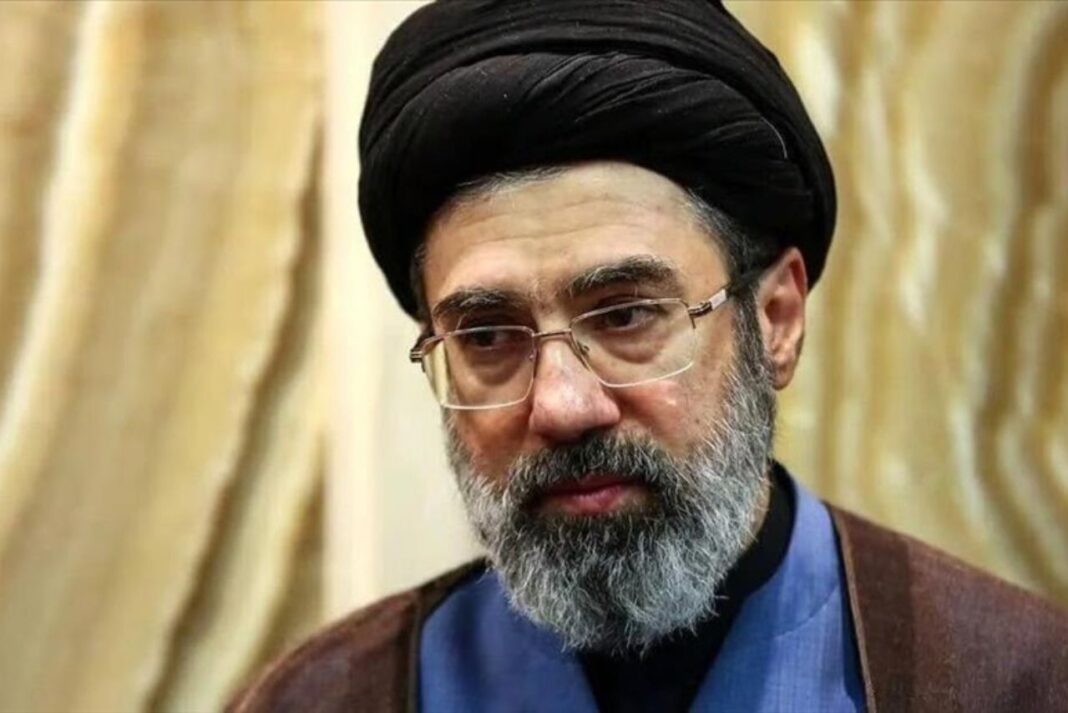
Synopsis: Mojtaba Khamenei was named Iran’s supreme leader on March 8, 2026, succeeding slain father; hardliner IRGC ties raise escalation fears. Oil surges: Brent $108+/bbl on Hormuz threats, hitting India and China’s imports hard.
A new supreme leader now rules Iran, and the world is already paying the price at the pump. On March 8, 2026, Iran’s Assembly of Experts chose Mojtaba Khamenei to lead the country. He succeeds his father, Ayatollah Ali Khamenei, who died in a joint US-Israeli airstrike on February 28. The vote came just nine days into one of the most explosive conflicts in the Middle East in decades.

The moment the announcement broke, global oil markets jolted. U.S. crude futures surged more than 20% in early Monday trading. Brent crude jumped 18.85% to $110.17 a barrel its highest level since July 2022.
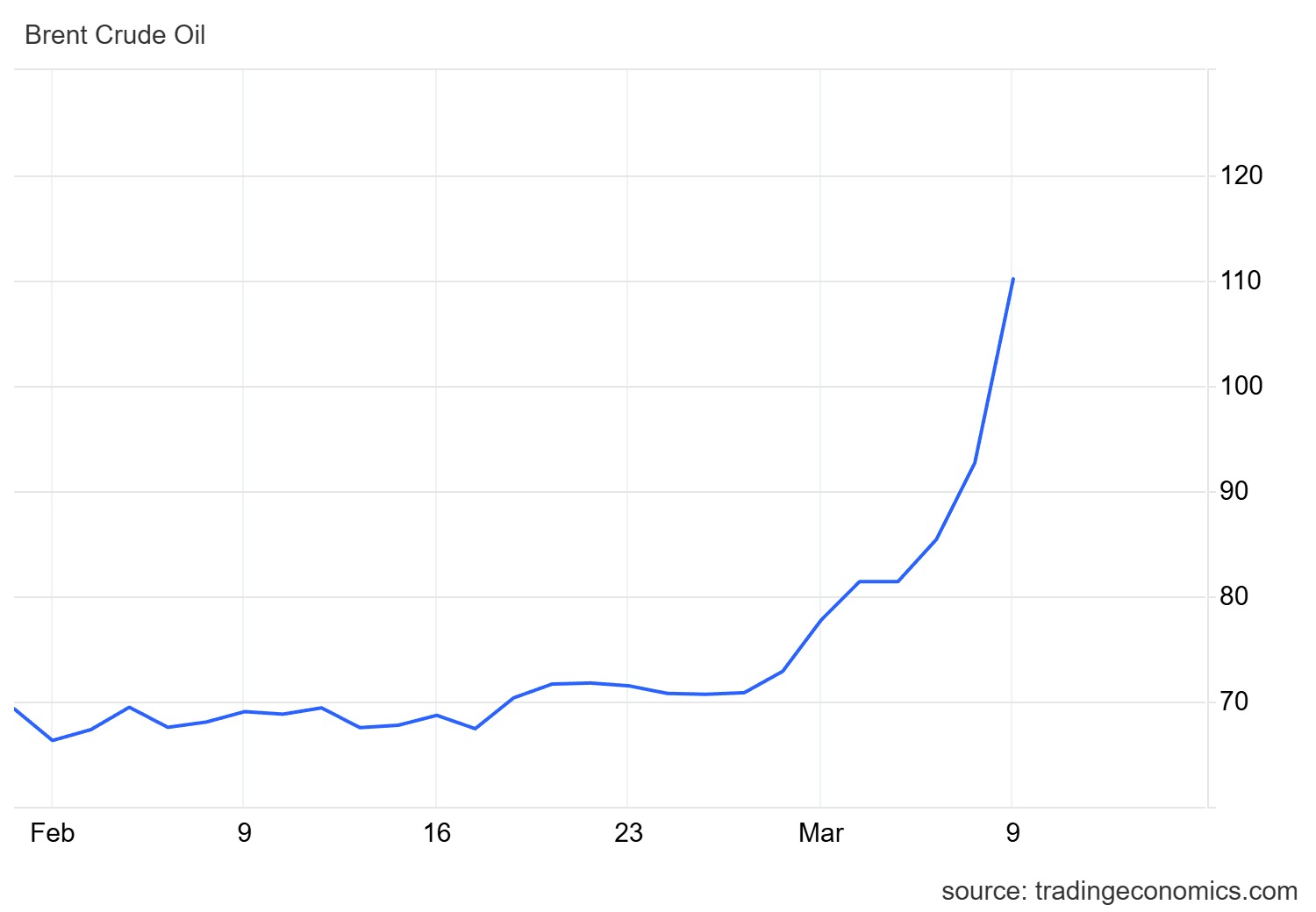
Source: tradingeconomics
For ordinary people around the world, this means higher fuel bills, pricier groceries, and fresh uncertainty ahead. And with a hardline leader now in charge in Tehran, experts warn there is no easy off-ramp in sight.

Who Is Mojtaba Khamenei And Why Does His Rise Matter?
Mojtaba Khamenei, 56, is the second son of the late supreme leader. He was born in 1969 in Mashhad and trained as a cleric at Qom’s seminaries. He fought in the Iran-Iraq War in the 1980s. However, he never held formal public office. Instead, he spent years working behind the scenes influencing security appointments and business networks quietly.
His appointment marks the first hereditary succession in the Islamic Republic since the 1979 revolution. That shift alone sends a strong message. It shows that hardliners inside Iran still hold the reins of power, even as bombs fall on the country.
Critics describe Mojtaba as more extreme than his father. He has deep ties to the Islamic Revolutionary Guard Corps, known as the IRGC. He supported the brutal crackdown on protesters during the 2009 unrest. He consistently opposes any engagement with Western nations.
Furthermore, his appointment carried an enormous personal weight. His wife and, reportedly, his child were killed in the same strike that killed his father. That loss may push him toward a harder, more vengeful stance in the months ahead.
Iran’s armed forces immediately pledged allegiance to the new leader. The IRGC issued a statement saying it stands ready to follow Mojtaba’s orders. Security chief Ali Larijani called for national unity around the new supreme leader.

U.S. President Donald Trump responded sharply. He told ABC News that Washington should have a say in who leads Iran. “If he doesn’t get approval from us, he’s not going to last long,” Trump said. Israel, on the other hand, had already threatened to target whoever the Assembly chose.
Back in Tehran, not everyone cheered. Reports surfaced of chants of “Death to Mojtaba” in some parts of the city. Domestically, his legitimacy rests far more on regime insiders than on public support.
A War That Is Reshaping the Middle East and Global Energy
The conflict did not begin quietly. US-Israeli strikes launched more than a week ago targeted senior Iranian figures, nuclear sites, and military infrastructure. At least 1,332 Iranian civilians have been killed, according to Iran’s U.N. ambassador. Thousands more suffered injuries.
Seven American service members have now died from wounds sustained during Iran’s counter-attacks. Trump presided over the return of the remains of 7 others killed earlier in the week.
Israel continued its campaign on the ground. On Sunday, Israeli forces struck large fuel storage facilities near Tehran. Thick black smoke hung over the Iranian capital, according to local residents. Flames lit up the night sky. Israel’s military said the depots stored propellant for ballistic missiles and called them legal military targets.
Israeli Prime Minister Benjamin Netanyahu vowed to press on. “We have an organised plan with many surprises to destabilise the regime,” he said in a video statement.
Iran struck back across the region. It targeted U.S. facilities, attacked shipping in the Strait of Hormuz, and launched drone strikes toward Gulf allies. Saudi Arabia shot down a drone that attempted to reach its Diplomatic Quarter, a tree-lined neighbourhood in Riyadh that houses most foreign embassies, including the U.S. mission.
As a result, the U.S. ordered non-emergency embassy staff to leave Saudi Arabia. It also ordered departures from Qatar, Kuwait, Jordan, and Bahrain. The war, in short, has spilled far beyond Iran’s borders.
Iran’s foreign ministry called Sunday’s large-scale assault a “dangerous new phase” of the conflict. Analysts agree. The risk of a broader, longer war has risen sharply and so has its cost for the global economy.
Why Oil Prices Are Surging and Could Go Even Higher
Iran sits at the world’s most critical energy chokepoint. The Strait of Hormuz, a narrow waterway between Iran and Oman, carries roughly 20% of global oil and 20% of the world’s LNG. Nearly 15 to 20 million barrels of oil pass through it every day.
Iran produces about 3.3 million barrels of oil per day, exporting mostly to China. But its real power comes from geography. It can threaten or block the flow of oil from Saudi Arabia, Iraq, and the UAE as well.
In recent days, Iran has done exactly that. It has mined parts of the strait, deployed drones, and blocked tanker traffic. Tanker traffic in the area has dropped sharply. Shipping companies are avoiding the zone following advisories from the International Maritime Organization.
Additionally, attacks on Saudi Aramco’s Ras Tanura refinery have halted production there. That alone removes roughly 25% of seaborne oil trade from the market. For oil-importing nations in Asia which depend heavily on Middle East crude this is a serious blow.
Even without a full closure of the Strait, the damage is real. Insurance costs for tankers have spiked. Ships now reroute around the Cape of Good Hope in Africa, adding 10 to 15 days of travel time and raising freight costs. Those extra costs find their way into fuel prices worldwide.
Trump, posting on social media, argued that prices “will drop rapidly when the destruction of the Iran nuclear threat is over.” He called the price hike “a very small price to pay” for global safety. Markets, however, are not so calm. S&P 500 futures fell 1.4%, while Nasdaq futures dropped 1.5% on Monday. The dollar rose against the euro and the yen.
Analysts have sketched out three scenarios for what comes next. In the worst case a prolonged war with sustained Strait disruptions oil prices could climb to between $108 and $130 per barrel.
Global supply could fall by 15 to 20 million barrels per day. In a best-case scenario, if a ceasefire takes hold quickly, prices could stabilize at $80 to $90 per barrel. The most likely outcome right now is a middle path: oil hovering between $100 and $110 while the standoff continues.
How India, China, and the World Will Feel the Pain
Higher oil prices do not stay inside oil markets. They ripple outward hitting household budgets, fueling inflation, and slowing economic growth. The countries most exposed are those that rely heavily on Middle East oil.
India imports about 80% of its oil. Half of those imports come from the Gulf region, much of it passing through the Strait of Hormuz. For India, a 10% rise in oil prices adds roughly 0.4% to inflation, weakens the rupee, and widens the trade deficit. With Hormuz blocked, up to 2.7 million barrels per day of Indian crude imports are at risk. The government holds about 25 days of strategic reserves, but prolonged disruption would test that buffer hard.
India is now rerouting. Some oil is coming from Russia, which operates under a U.S. 30-day sanctions waiver. Other supplies are arriving from Nigeria and Brazil. However, these alternatives cost more and take longer to arrive.
China faces different but equally serious problems. It is the world’s largest oil importer and receives 90% of Iran’s exports. Higher oil bills slow China’s growth. Beijing now competes with New Delhi and others for limited alternative supplies.
South Korea is also exposed. Its economy depends heavily on energy imports from the Gulf. In severe scenarios, inflation there could rise, and its stock markets could fall more.
Globally, economists warn this conflict could add 0.5% to inflation to asia and europe. That delays interest rate cuts by central banks. It raises the risk of stagflation the painful combination of slow growth and rising prices in energy-vulnerable economies.
The situation extends beyond oil, too. India trades more than $180 billion annually with Gulf countries. Over 10 million Indian workers live in the region. Disruptions to shipping affect medicines, electronics, and food not just fuel.
What Happens Next
With Mojtaba Khamenei now in power, Iran has a leader who sees confrontation, not compromise, as the path forward. His ties to the IRGC run deep. His hardline ideology leaves little room for negotiation with Washington or Jerusalem.
Analysts warn his leadership could accelerate Iran’s nuclear program. It could also deepen support for allied militias Hezbollah, the Houthis, and others across the region. In short, the war may get longer before it gets shorter.
Therefore, oil markets are likely to stay unsettled. The Strait of Hormuz remains contested. Key infrastructure is under attack. And a new, untested leader in Tehran now holds the power to decide how Iran responds.
For drivers in Mumbai, factory owners in Seoul, and households in Beijing, the consequences are already arriving in the price of fuel, the cost of food, and the weight of economic uncertainty. As things stand today, relief at the pump may not come anytime soon.
Disclaimer: The views and investment tips expressed by investment experts/broking houses/rating agencies on tradebrains.in are their own, and not that of the website or its management. Investing in equities poses a risk of financial losses. Investors must therefore exercise due caution while investing or trading in stocks. Trade Brains Technologies Private Limited or the author are not liable for any losses caused as a result of the decision based on this article. Please consult your investment advisor before investing