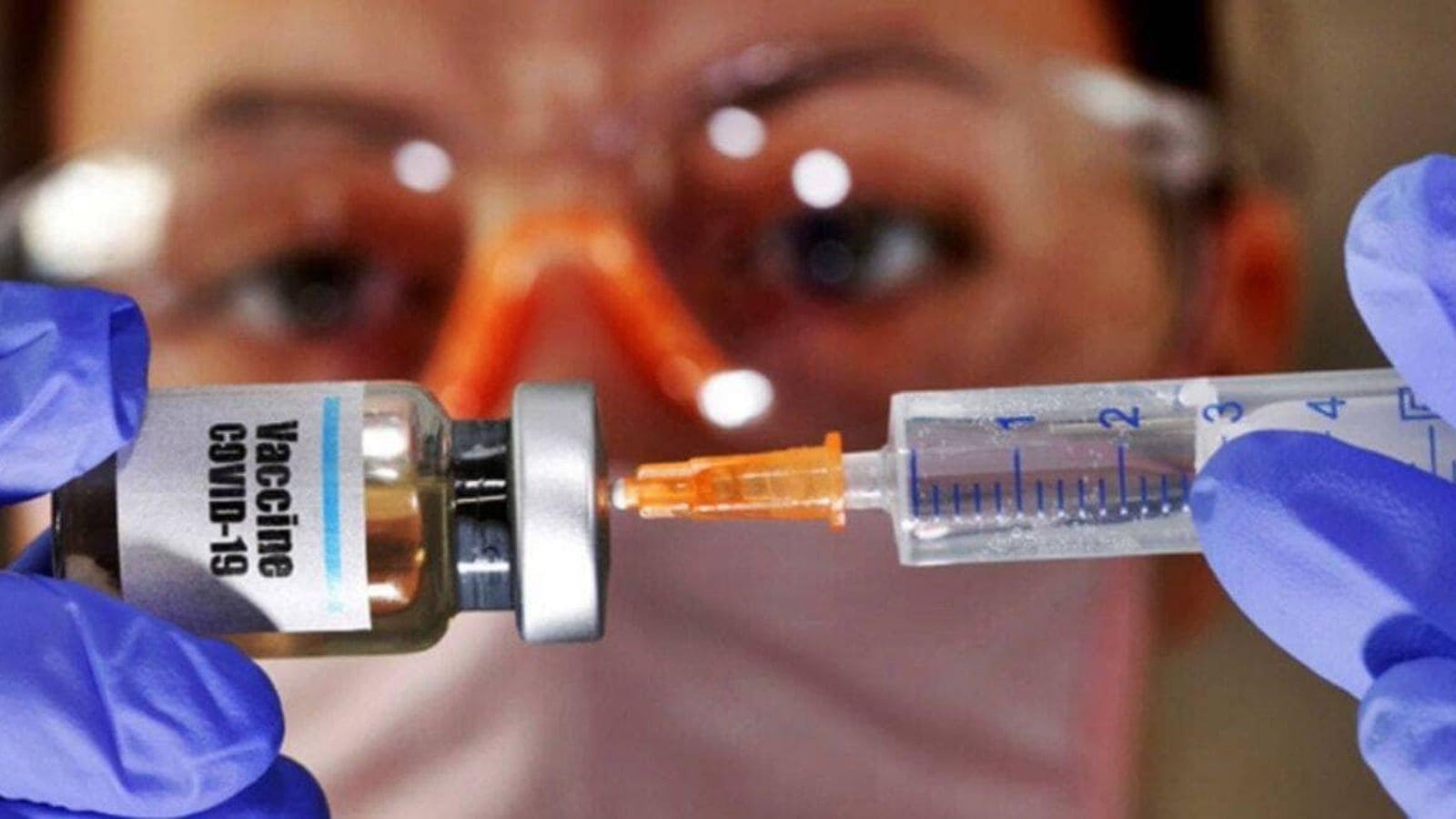
The Supreme Court on Tuesday asked the Centre to come up with a no-fault compensation policy for serious adverse events following Covid-19 vaccination.
Observing that “the Constitution does not conceive of the State as a distant spectator to human suffering, but as an active guardian of welfare and dignity”, a bench of Justices Vikram Nath and Sandeep Mehta also directed that the existing mechanism for monitoring adverse events continue to operate and that the data be regularly placed in the public domain, as previously ordered on May 2, 2022, in Jacob Puliyel vs Union of India.
The bench said in the Jacob Puliyel case, the court “underscored the responsibility of the State in monitoring adverse events following immunisation” and added, “In our considered view, that responsibility cannot end at surveillance alone, but must extend to providing fair compensation to those who suffered vaccine-related injury…”
The court asked the Centre to “continue to ensure that surveillance of adverse events following immunisation (AEFI) is carried out through efficient monitoring mechanisms, and that relevant data is placed in the public domain in a transparent and timely manner”.
The judgment ensures that those who suffered injuries from Covid-19 vaccination can claim compensation without needing to prove negligence or liability.
The SC order came on a plea filed by two parents seeking compensation for the death of their daughters, aged 18 and 20, after they received their first doses of the Covishield vaccine. They contended that their children suffered from severe adverse events following immunisation. Among others, the petitioners sought constitution of an independent expert medical board to inquire into such deaths, formulation of protocols for early detection and treatment of AEFI, and grant of compensation.
The SC was also seized of an appeal by the Centre challenging a September 1, 2022 interim order of the Kerala High Court asking the Ministry of Health and Family Welfare and the National Disaster Management Authority to formulate, within a stipulated period, a policy for identification of AEFI cases and for compensating the families of the deceased.
Story continues below this ad
Overall, nine cases of alleged vaccine-related deaths were raised in the various petitions before the SC.
Writing for the bench, Justice Nath said: “A closer look at the petitions reveals that the question is not just confined to the adjudication of individual cases. The grievance here is much deeper, namely, that families alleging grave harm during the course of State-led vaccination programme are left without any uniform remedy to seek redressal.”
The bench made it clear that it is “neither adjudicating upon the vaccine efficacy nor sitting in scientific review over the regulatory approval process” and “does not proceed on the premise that the regulatory approval process or the vaccination programme was unlawful or deficient”. “The measures were undertaken in extraordinary circumstances with the objective of protecting public health,” the bench said.
The court acknowledged that “from the onset of the pandemic, efforts were undertaken at every level of governance to mitigate its impact”.
Story continues below this ad
The bench rejected the prayer for a separate court-appointed expert body “in view of the existing mechanisms for scientific assessment of AEFI”.
The Centre had taken the stand that the question of causality between vaccination and the resultant deaths involve scientific assessment and that “such an assessment has been conducted by them and no relation has been found between the two”.
The court said that it accords due weightage to “extensive studies” by Indian Council of Medical Research (ICMR) and National Centre for Disease Control (NCDC)” which “affirmed that there is no direct link between the vaccines and sudden deaths caused thereafter”.
The judgment said, “At the same time, AEFI, as recognised by the WHO denotes any untoward medical occurrence after vaccination which does not necessarily have a causal relationship with the vaccine itself.”
Story continues below this ad
“The Constitution does not conceive of the State as a distant spectator to human suffering, but as an active guardian of welfare and dignity. The Directive Principles of State Policy illuminate this vision with clarity. Article 41 speaks of public assistance in cases of sickness and disablement, within the limits of State’s capacity. Article 47 declares the improvement of public health to be among the State’s primary duties.”
The bench said, “The vaccination programme undertaken during the pandemic was itself an expression of these constitutional commitments. The State went above and beyond in order to create a vaccination scheme and the same undoubtedly helped save many lives. But at the same time, as the government data itself suggests, it cannot be brushed aside that the same vaccines also led to loss of life. In such a situation, it is not appropriate that the State shrugs its responsibility in coming to aid those affected families who have lost their near and dear ones.”
The SC said that “vaccine injury claims raise questions where scientific attribution is often complex” and “to insist upon proof of negligence and fault in each case would impose an onerous burden upon affected families and would not be the best solution to those left affected. Further, a multiplicity of individual proceedings risks inconsistent outcomes and unequal access to relief, thereby undermining the guarantee of equality under Article 14.”
The SC said that “in such a setting, the relationship between the individual and the State cannot be viewed through the prism of fault-based liability” and referred to policies adopted by other countries acknowledging the need to address vaccine-related injuries through dedicated compensation mechanisms.
Story continues below this ad
The bench said having a compensation scheme “becomes all the more pressing in the context of the Covid-19 pandemic, where immunisation was carried out on an unprecedented scale as a collective societal necessity. In such a situation, the State cannot be heard to say that those who experience serious adverse consequences must fend for themselves, without any clear or accessible avenue of relief”.