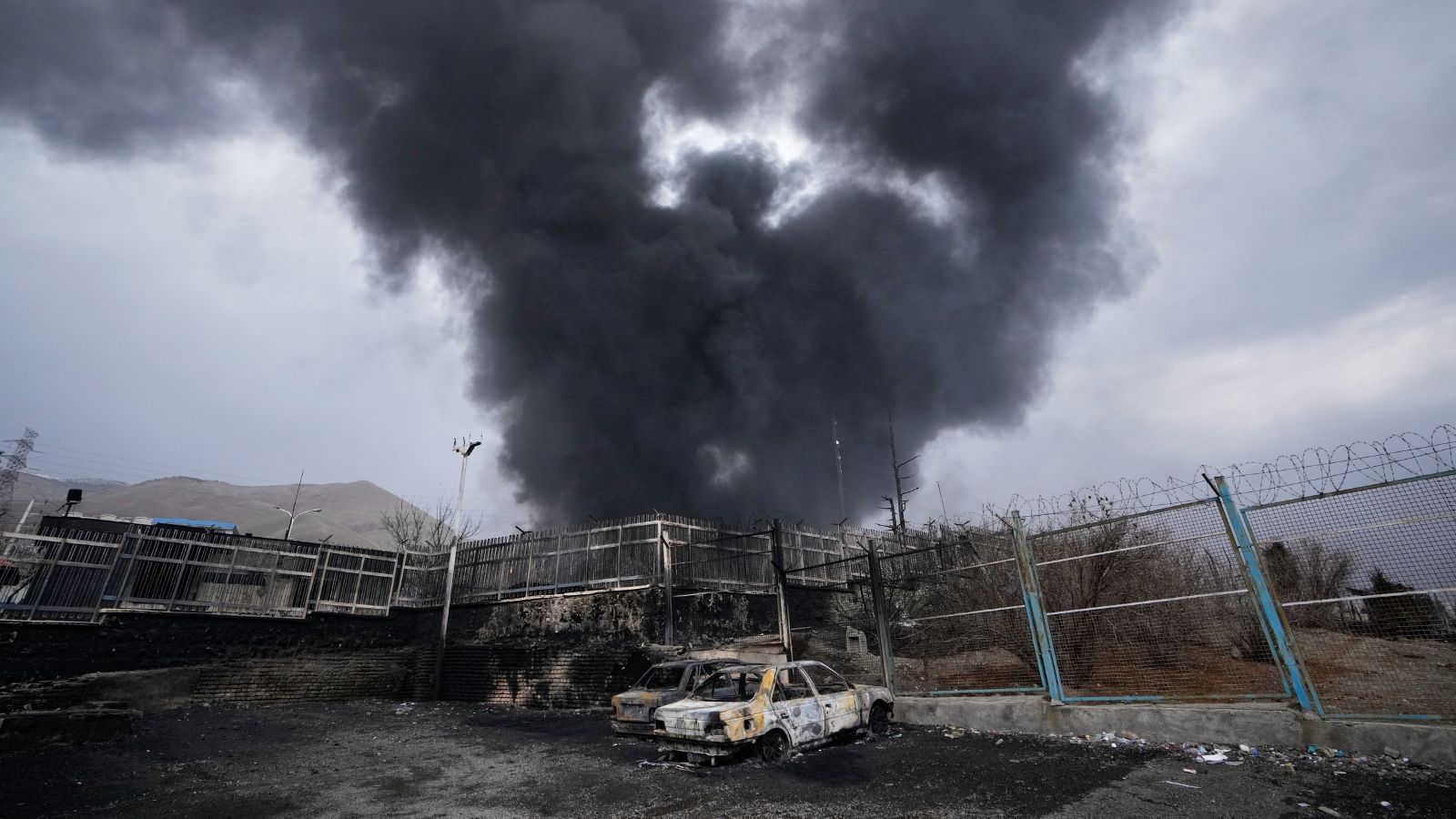
When Tehran residents stepped outside on Sunday morning, something was very wrong with the rain. It wasn’t the usual grey drizzle. It was black — oily, soot-laden droplets coating cars, clothes, and skin, falling dozens of miles from the source of the disaster. This was “black rain” in Iran and it has become one of the war’s most alarming consequences.
On the night of March 7-8, Israeli strikes hit four oil storage facilities and an oil production transfer centre in Tehran and the province of Alborz, igniting large fires that burned for hours.
The targeted sites included the Aghdasieh oil warehouse in northeast Tehran, the Shahran oil depot, and the Tehran refinery in the south.
The Iranian Red Crescent was quoted by The Times of Israel as saying that the explosions released significant quantities of toxic hydrocarbon compounds, sulfur, and nitrogen oxides into the air. As rain moved through the pollutant-saturated skies over the city, it absorbed these chemicals — and fell back down as oily, blackened precipitation.
Scientists explained that the black rain resulted from a weather pattern bringing rain into the area, which combined with particles already suspended in the atmosphere.
What are the health risks from the black rain?
On Tuesday, the World Health Organization (WHO) warned that black rain and acidic rain falling over Tehran pose a real danger to the population, primarily to respiratory health, and backed Iran’s advisory urging people to remain indoors.
The strikes, WHO spokesperson Christian Lindmeier stated, caused a massive release of toxic hydrocarbons, sulfur oxides, and nitrogen compounds into the air. Scientists said inhaling or touching the smoke or particles could cause headaches, skin and eye irritation, and difficulty breathing — and that longer-term exposure to some compounds increases cancer risk.
Story continues below this ad
Lindmeier stated that the “black rain” and “acidic rain” in Tehran “is indeed a danger” for Iranians.
The Iranian Red Crescent warned that the rain could cause serious lung damage and chemical burns to the skin, reported CBC News. The news outlet quoted Peter Ross, a senior scientist at Canada’s Raincoast Conservation Foundation, that petroleum mixtures contain thousands of hydrocarbons, including benzene. These he described as extremely toxic. The potential for severe long-term consequences, he warned, is very real.
Tehran was already vulnerable before the first strike landed. Doug Weir, director of the UK-based Conflict and Environment Observatory, told CBC News that the city is surrounded by mountains, meaning pollutants are pushed downward and inward. Combined with its dense urban layout, air doesn’t circulate as it ideally should.
What are Tehran residents saying?
The human reality behind the data is striking. One resident told NBC News she sat at home with a headache and a bitter taste in her mouth. Another, 70-year-old Mina, said that even after the rain dispersed, she could still smell the smoke everywhere.
Story continues below this ad
Kianoosh, a 44-year-old engineer from Tehran, told Time magazine he couldn’t believe what he was seeing — black rain even in Tajrish, miles away from the burning depots. A university professor in a city about 70 miles north described his white car as being almost completely black by morning.
BBC quoted residents as saying that the resultant smog and pollution “blocked out the sun and left a strong smell of burning in parts of the city”. Experts say the pollution level in the region is “unprecedented”.
Black rain and the curse of ‘forever chemicals’
The ‘black rain’ crisis may outlast the fires. Scientists warned that “forever chemicals” — likely present in flame retardants built into the facilities — could contaminate groundwater and become airborne, ending up back in the rain. Acid rain, depending on concentration, could also accelerate corrosion of buildings already weakened by Tehran’s chronic air quality problems.
The Conflict and Environment Observatory in its latest report has tracked over 232 incidents with environmental risk since the conflict began, and warned of contamination of vegetation that could expose humans and animals to toxic compounds through the food chain.