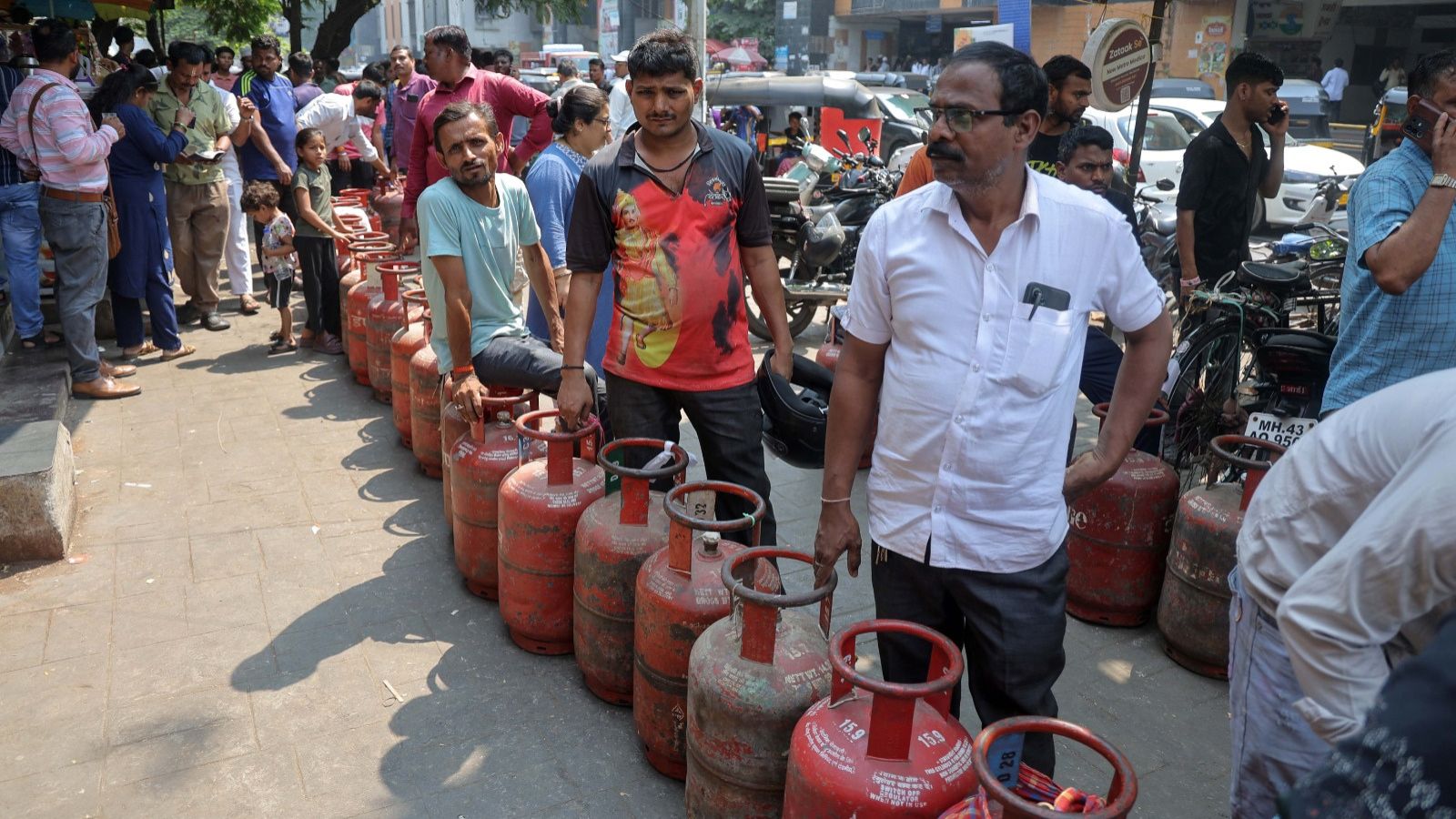
The conflict in West Asia is a reminder that the distance between geopolitics and everyday life can sometimes be measured in a single object: The LPG cylinder sitting quietly in the kitchen.
Petrol prices may influence commuting decisions and electricity tariffs shape industrial costs, but cooking gas determines something far more intimate. Whether a family can prepare its next meal without anxiety. This is why any uncertainty around cooking gas supply or price carries unusual emotional weight in India.

Even before any visible disruption appears, behavioural signals are emerging across the country. Retailers and online platforms are reporting an unusual surge in demand for induction cooktops and electric cooking appliances. Prices of these devices have risen in several markets as inventories thin. Households appear to be preparing quietly for the possibility that cooking gas supplies could become irregular or expensive.
This instinctive response reveals something important about Indian household psychology. Families do not wait for a shortage to materialise before reacting. They respond to uncertainty itself.
Cooking gas also sits at a sensitive intersection of household economics. The LPG refill is a recurring expense that cuts across income groups. For middle-class households, it represents a visible addition to the monthly budget. When the price of a cylinder rises even moderately, small discretionary purchases disappear, and the arithmetic of household budgeting tightens quietly.
For lower-income households, the consequences can be sharper. A higher refill price may force families to stretch the life of a cylinder longer than intended or temporarily return to traditional fuels such as firewood. Such reversals would undermine years of progress in expanding access to cleaner cooking energy and improving public health outcomes.
The ripple effects extend far beyond the home. India’s vast ecosystem of small eateries, street food vendors, caterers and neighbourhood restaurants relies heavily on LPG. When supplies tighten or prices rise, these businesses face immediate cost pressures that soon appear in higher menu prices and everyday food inflation.
LPG is not only a household expense but also a critical input cost in India’s food economy. When cooking gas becomes expensive or scarce, the cost of preparing meals rises across eateries, street food stalls and catering kitchens. Those higher costs inevitably reach consumers, which is how a kitchen fuel shock quietly turns into food inflation across the economy.
This is why cooking gas has always been politically sensitive in India. In such moments, communication from government institutions becomes critically important. The present government understands perhaps better than any before it that household infrastructure shapes political sentiment, having expanded access to toilets, tap water and cooking gas while winning the confidence of women voters across the country.
Crises are managed as much through communication as through supply management. If detailed explanations are not forthcoming in Parliament, governments must at least speak directly to citizens and engage openly with the media so that reassurance travels faster than rumour.
Citizens understand that wars and geopolitical disruptions are beyond domestic control. In a country where cooking gas touches nearly every home, silence can amplify anxiety faster than any actual shortage. Yet in this moment of uncertainty, the absence of clear and proactive communication risks undermining the very household confidence those efforts were meant to build.
The present moment also raises a larger strategic question for India. A country of this scale cannot allow the stability of its kitchens to remain exposed to distant geopolitical shocks. Energy security debates often focus on crude oil and strategic petroleum reserves, yet the daily reality of citizens lies elsewhere.
Over the long term, India will need to reduce this vulnerability through diversification of LPG import sources, stronger storage buffers and expanded domestic refining capacity. Electric cooking technologies and piped gas networks could gradually reduce dependence on imported cylinders if supported by the right infrastructure and policy direction.
The stability of India’s household is closely tied to economic confidence, household welfare and public trust. When the modest blue flame burns steadily beneath a cooking vessel, households feel secure about the continuity of everyday life. When that flame flickers with uncertainty, the unease travels far beyond the kitchen.
The writer is a corporate advisor and author of Family and Dhanda