Without the sneakiness of a kindred friend who lent you comic books in class, without the enthusiasm of a parent who put an abridged biography into your hands, or the passion of a teacher who nudged you towards the school library, how would you have discovered the joy of reading when you were a child and only beginning to find the beauty in words?
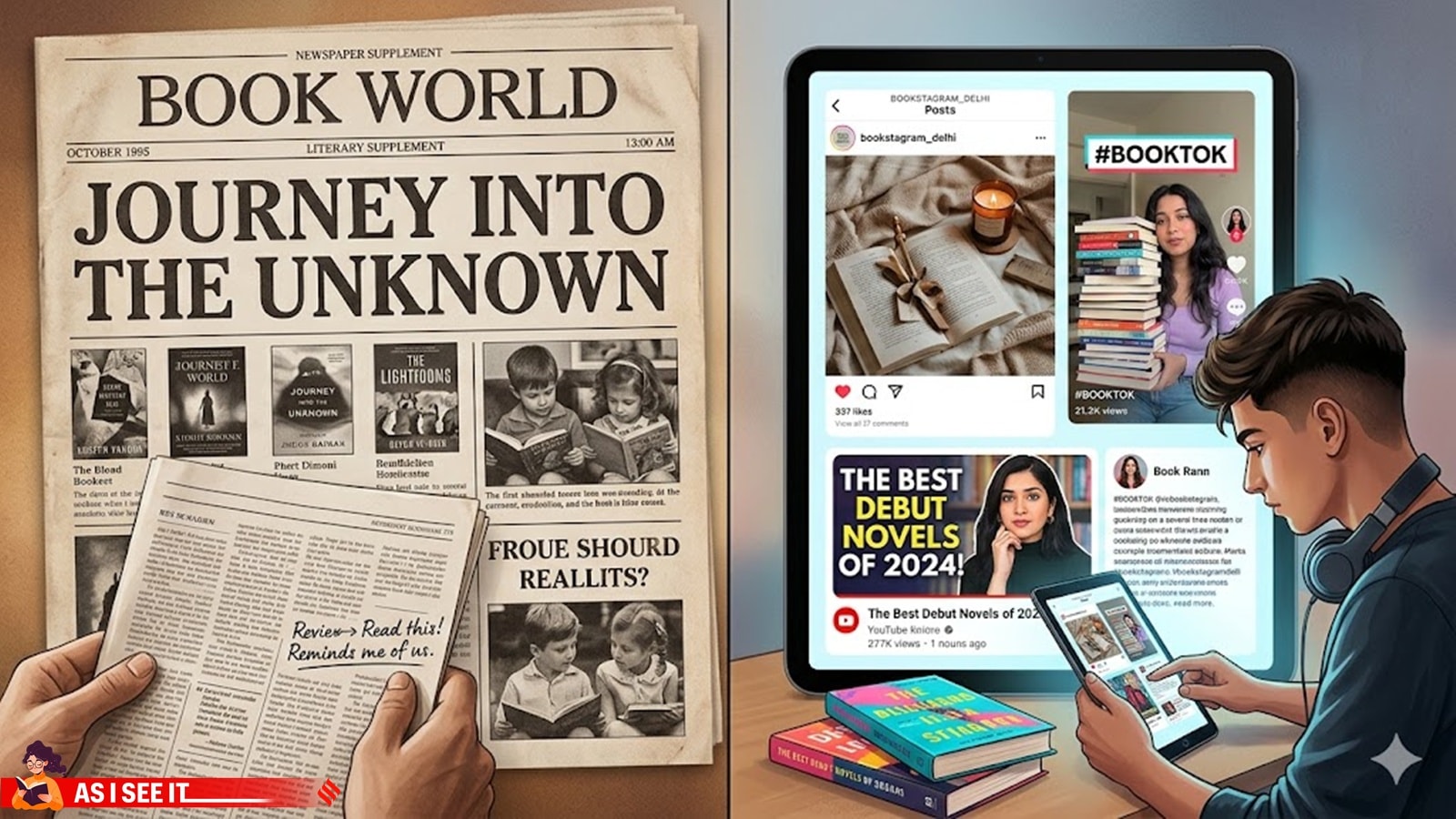
In the absence of all these people, you might have still come across a spread of your newspaper supplement splashing pictures of children’s books and cartoons that made you pick it up and want to read them.

Those newspaper pages about books not only introduced the literary world to children but also gave a chance to grownups, hitherto indifferent to reading, to discover a certain genre or author they never knew they’d like. In other words, books sections in traditional media created a world of readers.
Slowly dying coverage
Their gradual disappearance or fading away into smaller corners of back pages was not exactly unforeseen. When news broke of books pages shutting down in the Washington Post and the weekly reviews in the Associated Press, it seemed like a continuation of the slowly dying coverage of books and authors in the media, unless there was an award or a controversy. Even literature festivals, with its enviable list of writers from all over the world, appeared to draw not a lot of media attention. Three back to back fests in Kerala this year, while rich with authors and cultural figures, were little written about.
“We have wonderful journalists in this country who are knowledgeable and care about books and authors. But the media coverage of litfests often ignores our local writers, especially those writing in Indian languages other than English, unless they have won a major prize. We could use more thoughtful review space, especially of translations; readers would appreciate more guides around lit fests spotlighting debut authors; and both Indian non-fiction and fiction could use better and more sustained coverage,” says writer and literary critic Nilanjana Roy.
Despite the lack of media presence, lit fests tend to be crowded, with overflowing readers for sessions and long queues forming for author signatures. A recent article on The Guardian alleging a lack of readers in India did not go down well among the community of readers and writers and festival organisers. William Dalrymple, renowned historian and co-founder of the Jaipur Literature Festival, was one of the first to ridicule the assumption.
“Irritating & ignorant article: our @JaipurLitFest literary sessions are massively crowded with passionate, nerdy young readers & our authors regular report the longest signing queues of their careers: in 5 days of the last JLF we sold over 44,000 books,” William had tweeted.
Story continues below this ad
Similar scenes unfolded in Kozhikode last month when the Kerala Literature Festival was held on the beach over four days, and along with the guests appeared famed astronaut Sunita Williams. The festival, unlike many others, was free of charge and beach goers of the weekend crawled in to make the whole event a very crowded affair. Even so, there were hardly any reporters vying for the interview of a Booker-winner or fighting for the front seats of poetry sessions.
“English reading and writing is still a privileged affair. There is a real urban-rural divide. I started reading literature when I was in the JNU and reading reviews had helped to learn about new books, especially by Indian authors. You have a lot of places to look for English authors, but I became familiar with Indian authors through book reviews,” says writer Saharu Nusaiba Kannanari.
He also points out that regional newspapers hardly publish book reviews. A bookstore owner in Thiruvananthapuram says that when an English daily stopped putting out lists of new releases, it really affected the sales.
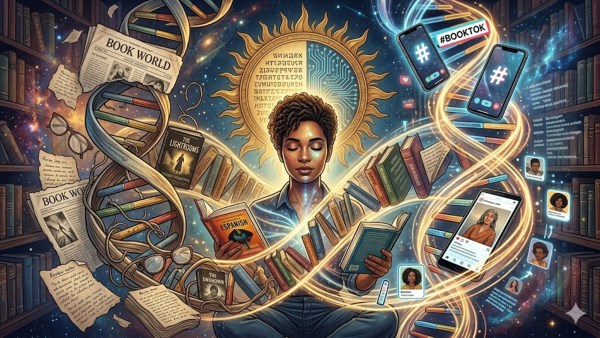 Gen Z readers prefer to rely on BookTok, Bookstagram and BookTube to decide their next read. (Source: Generated with AI)
“As a reader and a writer, the shrinking space for book coverage in publications quite simply lessens my chances of discovering good books. I say good books because books written by celebrities, influencers,and the like, which are usually not very good, take up all the space on the page. They clog our social media algorithms too. This lulls a reader into believing that quality literature isn’t being published in India, which is simply untrue. The disappearance of reviews or interviews of lesser-known authors not just kills the book, but also the interest in reading. Why would anyone go to a bookstore if all they’re seeing is mediocrity?” asks Sayari Debnath, senior journalist and literary translator.
Story continues below this ad
It is not just the reader, writer and publisher but also the journalist that suffers, with the job loss entailed by the closure of books pages.
Online book communities
The Gen Z reader unsurprisingly depends on online communities like BookTok (a sub section of TikTok that focuses on books), Bookstagram (Instagram communities for readers and writers) and BookTubers (Youtubers whose content focus on books). Meenakshi Senan, a comic scriptwriter in her 20s, says that such communities introduce the Gen Z reader to less-popular niche genres or books which are otherwise hard to discover. “I would for instance be interested in a bookstagrammer talking about books on mother daughter relationships. There are also very specific topics covered by these communities, like book recommendations for someone who went through a reading slump, or for someone who had never been a reader but would like to start,” she says.
The only drawback is, these communities don’t just show up on your social media unless you seek them out, or else your algorithm somehow latches onto them. Literary introductions to an entirely new reader do not happen organically.
“I can see that there is a tremendous hunger for books, an appetite for reading — but along with a lack of physical infrastructure (local bookstores, large and well-run public libraries), it’s only a handful of journalists and bookstagrammers who’re helping readers discover what they might love. Over a hundred years ago, The Modern Review carried reviews of books written in English, Hindi, Gujarati, Bengali and other Indian languages confidently in its pages, alongside snapshots of books that were attracting notice in Asia or Europe,” Nilanjana says.
Story continues below this ad
She adds: “We were more curious then, more open to discovery and absolutely sure that readers would read widely, if only they knew what to read; perhaps we need to recover our own rich history of writing about reading.”