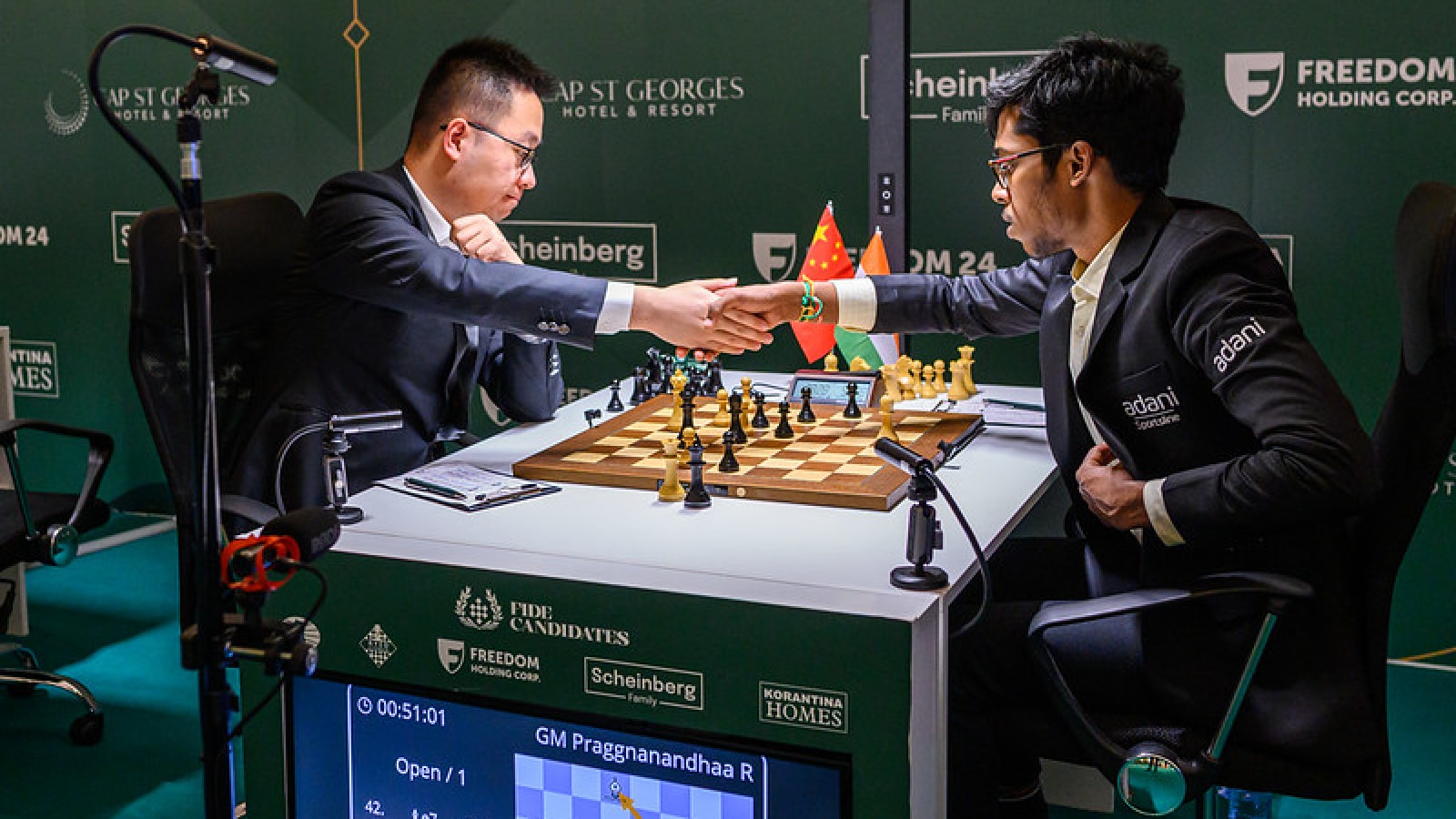
Modern chess is strange, in ways that go beyond the surface. It’s an age when engines are so powerful that every opening has been analysed to death, and top players can rattle off 20 moves of theory without breaking a sweat. The result is a defensive standard that’s never been higher. When both players know what the computer thinks is the best move and mistakes are ruthlessly punished, the draw has become the default outcome at the elite level. So how does one win?
Monday’s game between India’s R Praggnanandhaa and China’s Wei Yi, in the second round of the 2026 Candidates Tournament, offered a hint of an answer.
It was another draw, but in reality, it was more than two grandmasters playing for a truce. Praggnanandhaa had come prepared with something special, and he used it to push Wei Yi, one of the most reliable defenders in the world, to the very edge.
The shared point was almost like an afterthought, and what really mattered was how close the Indian came to breaking through against a player who seldom cracks.
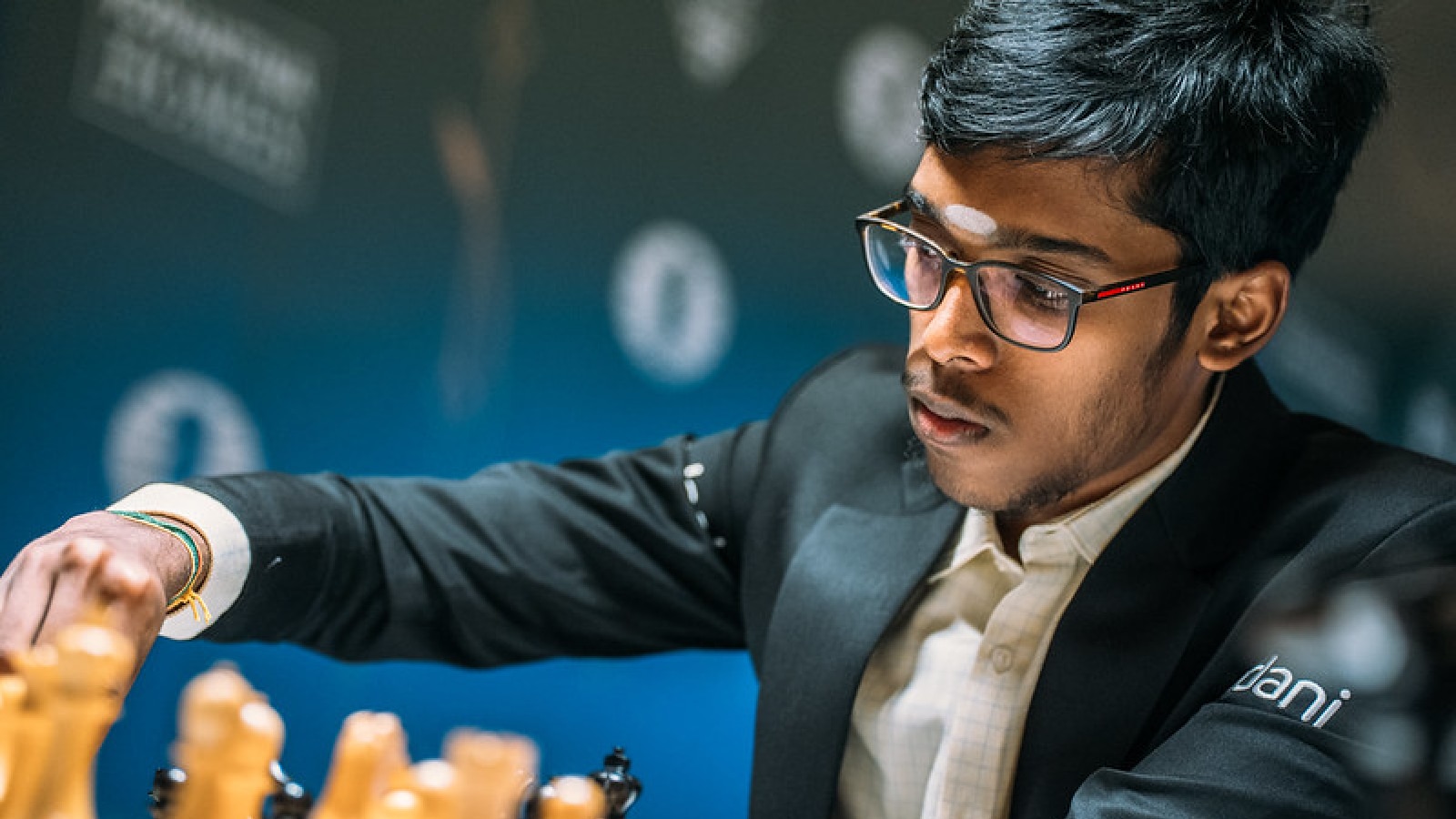 R Praggnanandhaa in action against Wei Yi in the second round of the Candidates. (FIDE/Michal Walusza)
After going with an unusual opening in the first round, the “Grand Prix” – a wild variation of the Sicilian Defense – against Anish Giri with white pieces that helped him breach the Dutchman’s citadel, Pragg had black pieces and needed to be careful against Wei Yi.
After the Chinese grandmaster pushed the e4 pawn to start things off, Pragg opted for the French Defense with e6, and it was now his territory. Following the initial development of the minor pieces, Praggnanandhaa was slowly getting ahead on the clock. It was a copybook approach, similar to the one against Giri, where he forced his opponent to spend considerably more time on the clock right from the start. By the 13th move alone, the Indian had gained nearly a 50-minute edge and was able to keep the position fluid.
Pragg’s long-time coach and Dronacharya awardee RB Ramesh explains the importance of surprising the opponent. He described how the game has evolved and that it is no longer enough to push and play for a win with only the light pieces. Now, to keep up with the demands of the modern game, one needs to play for a win even with black, since the first-mover advantage has blurred with the advent of engines.
Story continues below this ad
“For you to win the title, you need to score more points than everyone else, so essentially you need more wins. Gone are the days when there was an approach where you play for a safe advantage with white, push, and only play for a win when you get an advantage with the light pieces, and just play for a draw with black,” he said on the ChessBase India YouTube stream.
“It’s very difficult to get an advantage with white anymore, so you cannot just be playing for a win with white and say, if you don’t get anything with black, it’s okay. So we are forced to find opportunities to play for a win with black pieces as well, especially in such tournaments.”
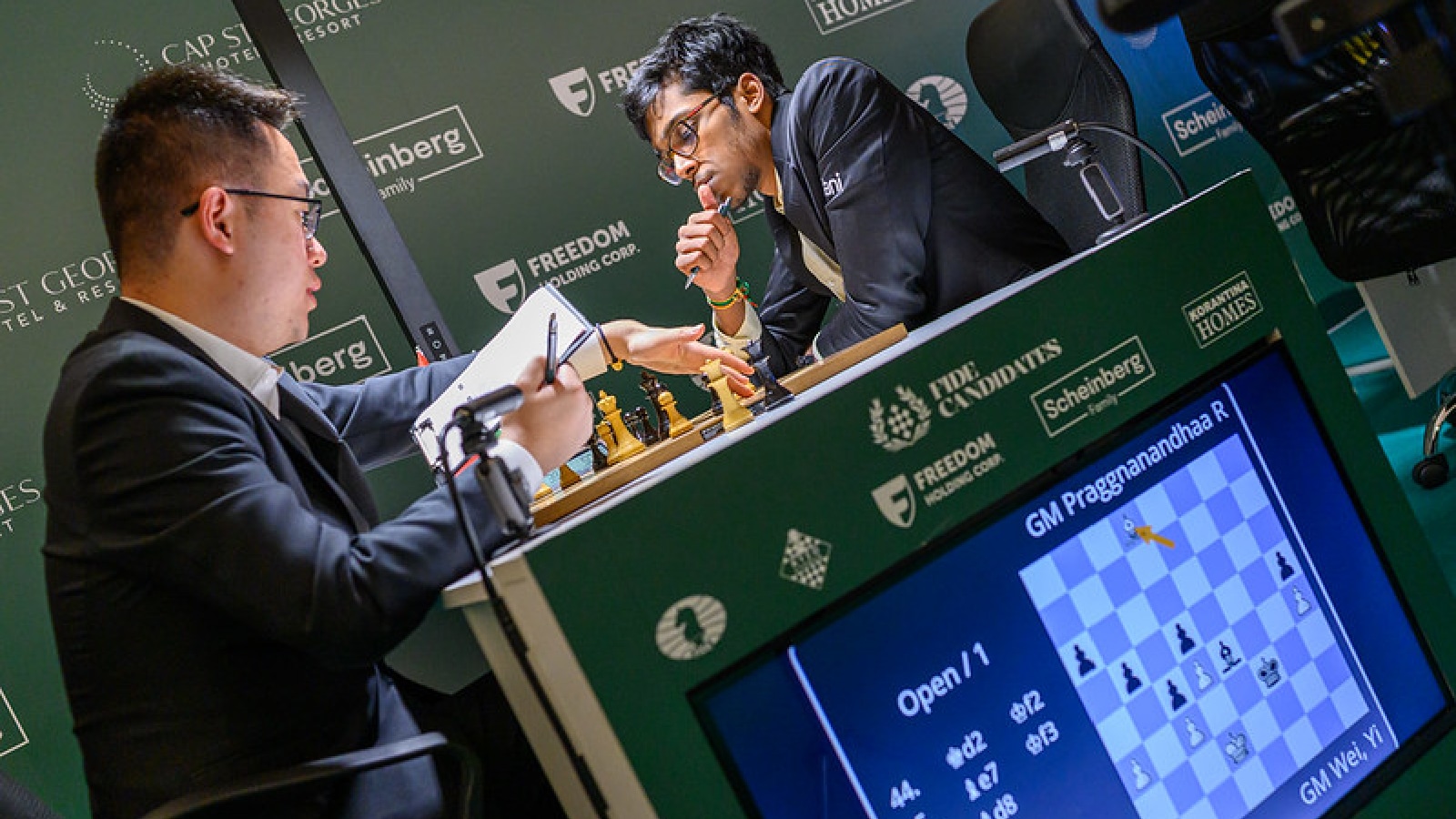 R Praggnanandhaa takes on Wei Yi in the second round of the Candidates. (FIDE/Michal Walusza)
Close but no cigar
However, even after surprising Wei Yi with his preparation and gaining a massive edge on the clock, it took just one move for the Chinese to shut the door on Pragg. That is precisely why Ramesh’s explanation is valid on the need to outsmart the opponent from the preparation itself.
In the women’s section, an all-Indian battle between R Vaishali and Divya Deshmukh was opened by five-time world champion Viswanathan Anand, who made the ceremonial first move.
Story continues below this ad
The game began as an English Opening that later transposed into a Queen’s Gambit Declined, with Divya playing white. Both players went for early exchanges, trading off the dark-squared bishop as early as the sixth move. Vaishali struggled with time management for the second consecutive round, having narrowly survived a time crunch against Kazakh GM Bibisara Assaubayeva on Sunday.
Fortunately for her, Divya was also short on time as both players had only about 15 minutes left with 17 moves still to make before reaching time control. Divya missed the chance to capitalise on a significant blunder from Vaishali under time pressure, instead allowing the game to simplify. The players eventually agreed to a draw.
Every match in both sections on Monday – Open as well as Women’s – ended in a draw. Pragg is leading the standings with 1.5 points after two rounds, along with Fabiano Caruana and Javokhir Sindarov. Everyone in the women’s section has one point.