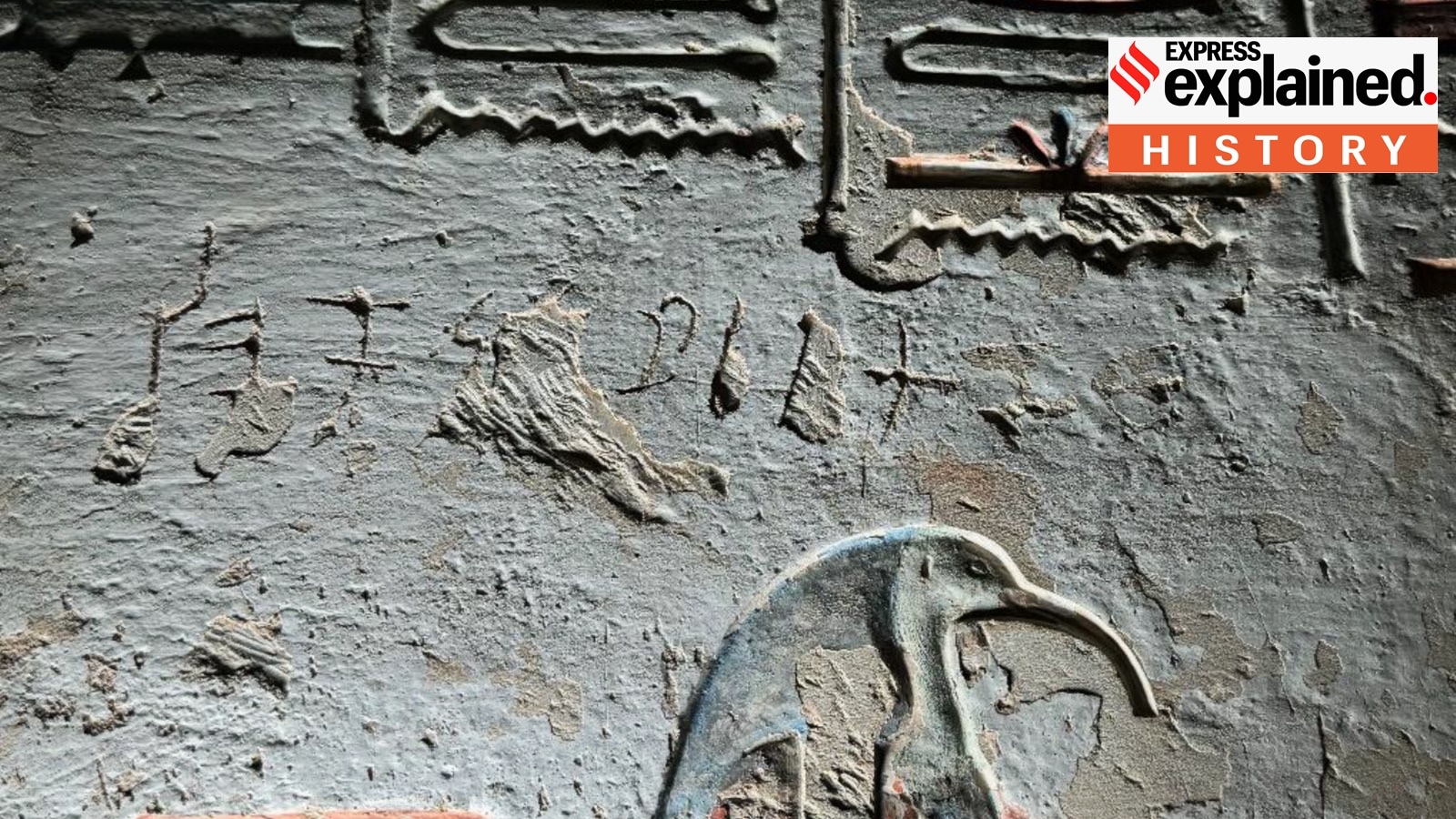
In the dim corridors of Egypt’s Valley of the Kings, where New Kingdom pharaohs were buried more than three millennia ago, visitors have long left their marks. Predominant among the graffiti are Greek names — more than 2,000 of them were catalogued by the French scholar Jules Baillet in 1926. But hidden among those scratches, almost unnoticed for a century, were other voices. They were Indian.
In a study conducted in 2024 and 2025, Charlotte Schmid of the École Française d’Extrême-Orient (EFEO) and Ingo Strauch of the University of Lausanne documented close to 30 inscriptions in Tamil-Brahmi, Sanskrit and Prakrit across six tombs in the Theban Necropolis. As their paper, “From the Valley of the Kings to India: Indian Inscriptions in Egypt,” makes clear, these inscriptions belong to “the period between the 1st and 3rd centuries C.E.”

For historians of South Asia and the Mediterranean, the implications are immediate. These were not merely traders docking at Red Sea ports and sailing home. They were travellers who ventured inland to Thebes, far from the coast, and left their names beside those of Greek and Latin visitors.
A Tamil name, written eight times
The most striking name among the inscriptions is repeated insistently: Cikai Koṟṟaṉ.
“The name Cikai Koṟṟaṉ appears repeatedly. It was inscribed eight times across five tombs,” the researchers note. Some of these are near entrances; one appears “at a height of about four metres at the entrance,” suggesting deliberate placement and perhaps even an attempt to be seen.
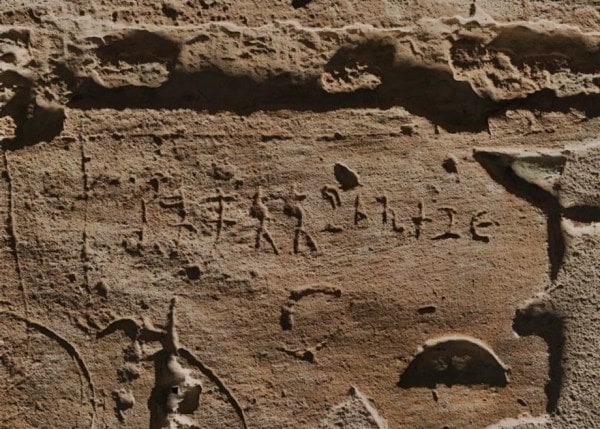 The inscription found in Egypt. (Special arrangement)
The name itself opens a window into linguistic and cultural entanglements. As Schmid explains in the report, “The name Cikai Koṟṟaṉ is revealing, as its first element may be connected to the Sanskrit śikhā, meaning tuft or crown.”
The second element, Koṟṟaṉ, is “more distinctly Tamil,” derived from a root meaning victory and slaying, echoing Koṟṟavai, the Chera warrior goddess, and the term koṟṟavaṉ, meaning king.
Story continues below this ad
In other words, the name straddles linguistic worlds. Its first syllable gestures toward Sanskrit; its core identity is deeply Tamil. This hybridity reflects the cosmopolitanism of early historic India, where multilingualism was not exceptional but common among merchant communities.
The name Koṟṟaṉ has surfaced before. It appears in “Koṟṟapumāṉ”, inscribed on a pottery sherd from Berenike, the Red Sea port that has yielded Indian inscriptions since the 1990s. It is also attested in the Sangam corpus, where the Chera king Piṭṭāṅkoṟṟaṉ is addressed as “Koṟṟaṉ”. Such parallels tie the Egyptian graffiti firmly to the literary and epigraphic record of the ancient Tamil land, or Tamilagam.
“Kopāṉ Came and Saw”
Cikai Koṟṟaṉ was not alone in the Egyptian find. Another inscription reads “Kopāṉ varata kantan” — Kopāṉ came and saw. “The phrasing is strikingly similar to Greek formulae found in the same tombs,” Schmid told The Indian Express on Thursday (February 12), a day after her co-authored paper was presented for the first time in Chennai.
As she suggests, it appears to imitate the standard “came and saw” declaration common in Greek graffiti. The name Kopāṉ itself has parallels in Tamil Nadu, including at Ammankovilpatti. Other Tamil names identified include Cātaṉ and Kiraṉ — both familiar from early Tamil-Brahmi inscriptions in South India.
Story continues below this ad
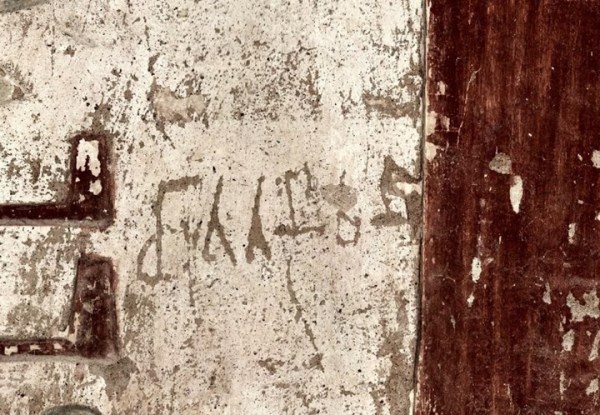 One of the inscriptions cited in the research. (Special arrangement)
Detailing their journey into these findings, Schmid and Strauch said that these Indian inscriptions appear “inside the tombs alongside larger bodies of graffiti in other languages, primarily Greek.” According to them, Indian visitors were probably participating in an existing Mediterranean practice: marking one’s presence in a sacred or monumental site. They were not carving out separate spaces, but were inserting themselves into a cosmopolitan ritual of travel and remembrance.
Strauch first visited the Valley of the Kings in January 2024 as a tourist. While walking through the tombs, he noticed a few unusual inscriptions. He photographed them and shared the images with Schmid. Soon, the two scholars began to suspect that the markings were Indian. Within four months, they were back in the region together, this time on a focused study trip.
It was during this return visit that they identified nearly 30 inscriptions — 20 in Tamil-Brahmi (Tamili) and the remaining in Sanskrit and Prakrit.
Strauch is a professor of Sanskrit and Buddhist Studies at the University of Lausanne. Schmid, based in Paris, is a professor of the history of religion. She learned Tamil 25 years ago from the School French D’extrême-Orient in Puducherry. She is trained in reading epigraphical Tamil, which proved crucial in deciphering the inscriptions.
Beyond Tamil: Sanskrit and Prakrit
Story continues below this ad
Of the roughly 30 inscriptions documented, about 20 are in Tamil-Brahmi. The other 10 are in Sanskrit, Prakrit and Gandhari-Kharosthi, indicating that visitors from northwestern and western India, including regions such as Gujarat and Maharashtra, were also present. One Sanskrit inscription refers to an envoy of a Kshaharata king who “came here” — a significant detail since the Kshaharata dynasty ruled parts of western India in the 1st century C.E.
This suggests that not only merchants, but also individuals connected to ruling lineages were part of these transoceanic networks. The linguistic range matters. It confirms that trade between India and the Roman world was not confined to a single coast or language group. Tamil merchants from the Malabar coast were clearly active, but so were traders from the northwestern subcontinent. The Valley of the Kings graffiti represents a snapshot of the Indian Ocean world in motion.
From Berenike to Thebes
Earlier archaeological attention had focused on Berenike, the port that functioned as a gateway between Roman Egypt and the Indian Ocean. Excavations have produced longer Indian inscriptions and material evidence of trade — pepper, beads, textiles.
But the Valley of the Kings lies far inland, in the Nile River valley. The presence of Tamil-Brahmi, Sanskrit and Prakrit inscriptions there pushes the story further. The inscriptions suggest that Indian traders did not merely dock, exchange goods and depart. They stayed long enough to travel, to sightsee, to participate in local practices of commemoration. They were literate in their own scripts and, as Schmid has argued, likely conversant in Greek as well.
Story continues below this ad
There is a deeper question embedded in the discovery. Tamil-Brahmi inscriptions in India number only around a hundred. The addition of 20 more in Egypt is substantial. Why do so few survive locally? Were writing practices in Tamilagam more perishable, perhaps on palm leaf? Or were they limited to specific social groups?
“The Egyptian graffiti offers indirect evidence that certain merchant communities were comfortable carving their names in stone, even thousands of miles from home. The inscriptions are brief — names, formulae, declarations of arrival — but they testify to literacy, mobility and a sense of self,” Schmid said.
Strauch said the surprise was not merely in their existence but in their invisibility. The tombs have been visited for centuries, and Greek graffiti was known. The Indian ones had simply not been recognised.
Rethinking the Roman period
Classical sources such as Pliny and Ptolemy have long attested to Roman trade with India. Pepper, ivory, gemstones and textiles flowed westward. But whether this exchange was one-way or reciprocal has been debated.
Story continues below this ad
These inscriptions complicate the picture. They show Indians in Egypt, not as abstract trading partners but as named individuals. Cikai Koṟṟaṉ was there. Kopāṉ came and saw. An envoy of a Kshaharata king arrived.
The Valley of the Kings, built in the 16th century B.C.E., became a kind of ancient tourist site in the Roman period. Mediterranean travellers left graffiti; now we know Indians did too. In these scratched letters — Tamil-Brahmi curves, Sanskrit syllables, Prakrit forms — the Indian Ocean world comes into sharper focus.
For historians of South India, the finding is going to be very special. The names echo the Sangam corpus; the goddess Koṟṟavai’s linguistic shadow falls across an Egyptian wall.
“Tamil, Sanskrit and Prakrit, scripts born in the subcontinent, were inscribed in the shadow of pharaonic tombs. What survives is modest — a few dozen names among thousands of Greek ones. The inscriptions are more like scratches than deeply carved engravings. Yet the dry climate, the relative stability of the rock-cut tombs, and the natural protection offered by these cave-like interiors may have helped preserve them for more than 2000 years,” Schmid said.