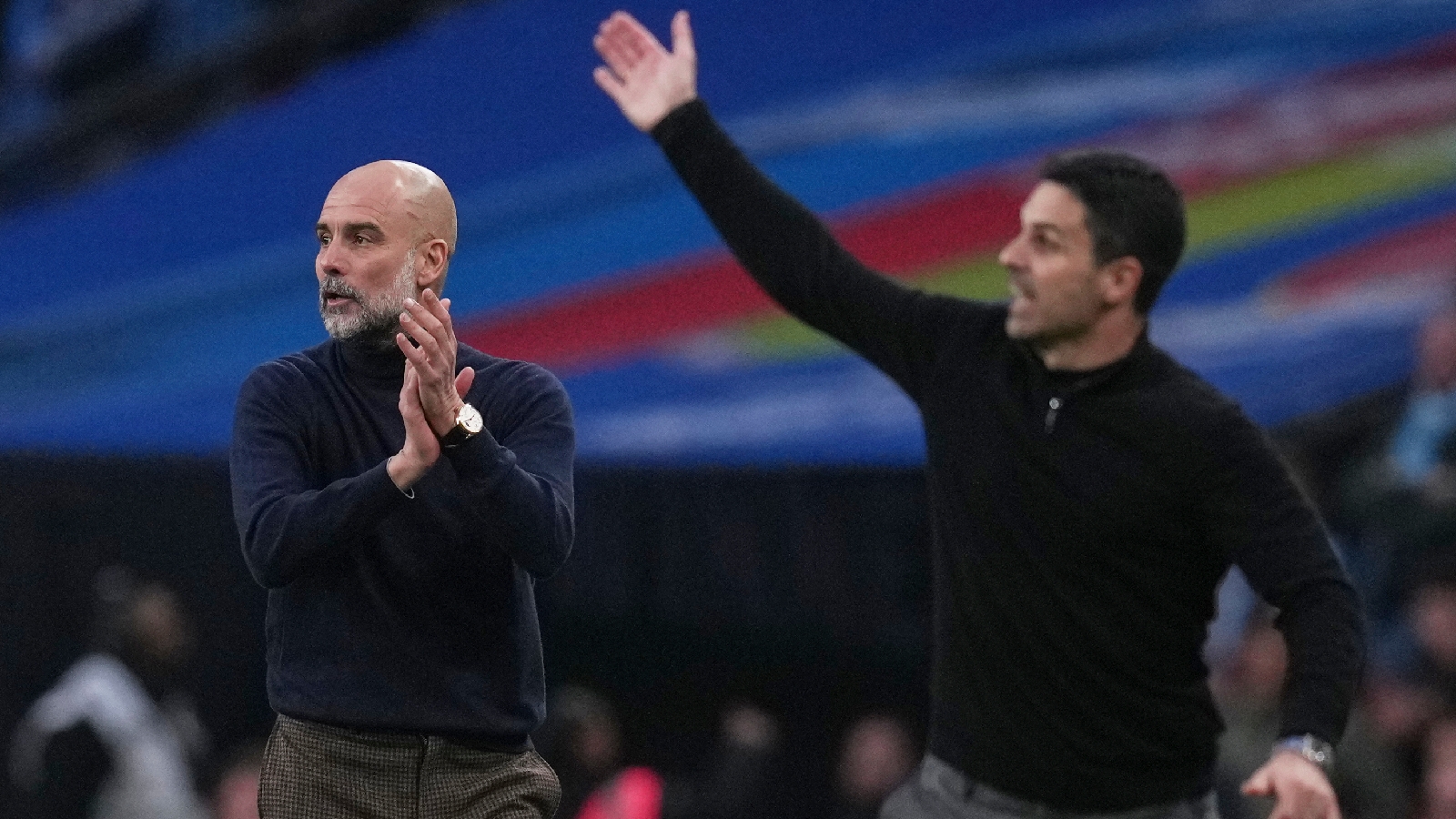
The introduction to the Pep Guardiola-Mikel Arteta action flick begins with a flashback set in the Catalan heartland at the stroke of the century. Guardiola, the midfield don of Barcelona, is watching a youth tournament with his understudy Xavi Hernandez. A skinny boy from the beaches with thick dark hair from the La Masia Academy impresses him. He whispers to his heir apparent, “You will retire me. This kid will retire both of us!” It turned half prophetic. Xavi became Barcelona’s rhyme and rhythm. The guy who was to retire them both, Mikel Arteta, waited futilely on the doors of one of football’s greatest empires and left disillusioned.
But the bond of the La Masia brethren runs deep. Guardiola, by then the Czar of modern football coaching, had kept his ears firmly to the ground. He had heard that the boy anointed to retire them all, having ended a successful but not spectacular career, was nursing coaching ambitions. So, when Guardiola embarked into building the Manchester City dynasty, he checked with Arteta if he wanted to join.
Arteta had two offers then—one from Arsene Wenger to take over as the head of Arsenal’s academy and the other from his friend, Mauricio Pochettino, to be his deputy at PSG. He refused both and joined the Guardiola revolution, because, at the heart of everything he wanted to achieve, he would say he “wanted to be like Guardiola.” Guardiola saw shades of himself in Arteta, too. In how they perceived the game, the Cruyff-ian ideals they shared, and the ferocious passion that seized both on the touchline.
Together, they took the kingdom to new heights. Arteta was the accomplice Guardiola turned to in crises. He thrust onto him the hard responsibility of talking one-on-one with the players, listening to their grievances, explaining their roles, and, in an elder-brotherly way, instructing them. He was the ice to Guardiola’s fire in half-time meetings, even though at Arsenal, Arteta’s rage overflowed in the locker-room. Together, they stirred and celebrated two successful seasons.
The half-time curtain draws with the accomplice joining a rival gang, a fallen giant that was his refuge in his darkest days. The don knew about this all along. “I remember when we were together, when we scored goals he jumps a lot and celebrates — except (against) one team. I jump, look back and he was sitting there. It was at that moment I said: ‘That guy likes Arsenal’.”
Partners turned rivals
The second half cuts straight to a chilling rivalry of the present, where the master still remains inscrutable, losing minor battles but always winning the war (except one season for Arne Slot, with the mean James Bond villain looks), popping up from the shadows to steal the title from Arteta’s slippery palms. Each time, Arteta had to defeat City, Guardiola and even his shadow. Often, he did not just lose to the team, but the man and the shadow too.
The script recurs when they duel on Sunday, in Guardiola’s fiefdom. But the plot thickens. This could be the most important of all the games they have been on the touchline together. It could be a symbolic coronation or dethroning, an old empire crumbling or the new one emerging, the last meaningful dance of the don, or the first conquest of his new emperor. The fate is in their own hands. Teams that lose not only lose points, but momentum and belief too. Five game-weeks (six for City) after this week mean both teams have time yet to slip, but this one seems the only game that matters, a knockout in a league.
Story continues below this ad
The past, present and future blend imperceptibly into the game. In each other’s reflections, they see the changes time has thrust upon them. Arteta has delineated from the Guardiola clone he once was. The early years were an ode to his master: inverted full backs, false nines, ball-retaining midfielders, and goalkeepers playing from the back. But he has wedded pragmatism, compromising beauty for functions, scraping past rather than crushing opponents. He has not been averse to parking buses, grinding out draws as they performed against Sporting CP in the Champions League this week, but can get his side to play fluidly if the situation warrants so. He foresaw the games changing tides and realised the importance of set-pieces earlier than most.
Guardiola, without veering from his fundamentals, wedded still to technical players, has embraced a more direct approach. None more symbolic than installing a true number nine, reposing faith on wingers and dribblers, spreading the game to the flanks than shrinking it to the centre of the pitch. Their equations, too, have changed. The frostiness has melted, but Arteta, rightfully, sees him as an equal, not a mentor or master anymore. Some months ago, he likened their rivalry to the frenemity of Roger Federer and Rafael Nadal.
“The biggest lesson sport has given us was the relationship that Rafael Nadal and Roger Federer had. We are not at that level. But they were two of the best friends in history, even though they had to play in finals,” he said.
Guardiola and Arteta would never be true friends, but Sunday would be a defining chapter in the riveting tale of two foremost managers of our times. When the credits roll after the Sunday show, perhaps, Arteta could metaphorically “retire” Guardiola. Or the ending could be familiar, the don killing the imposter.