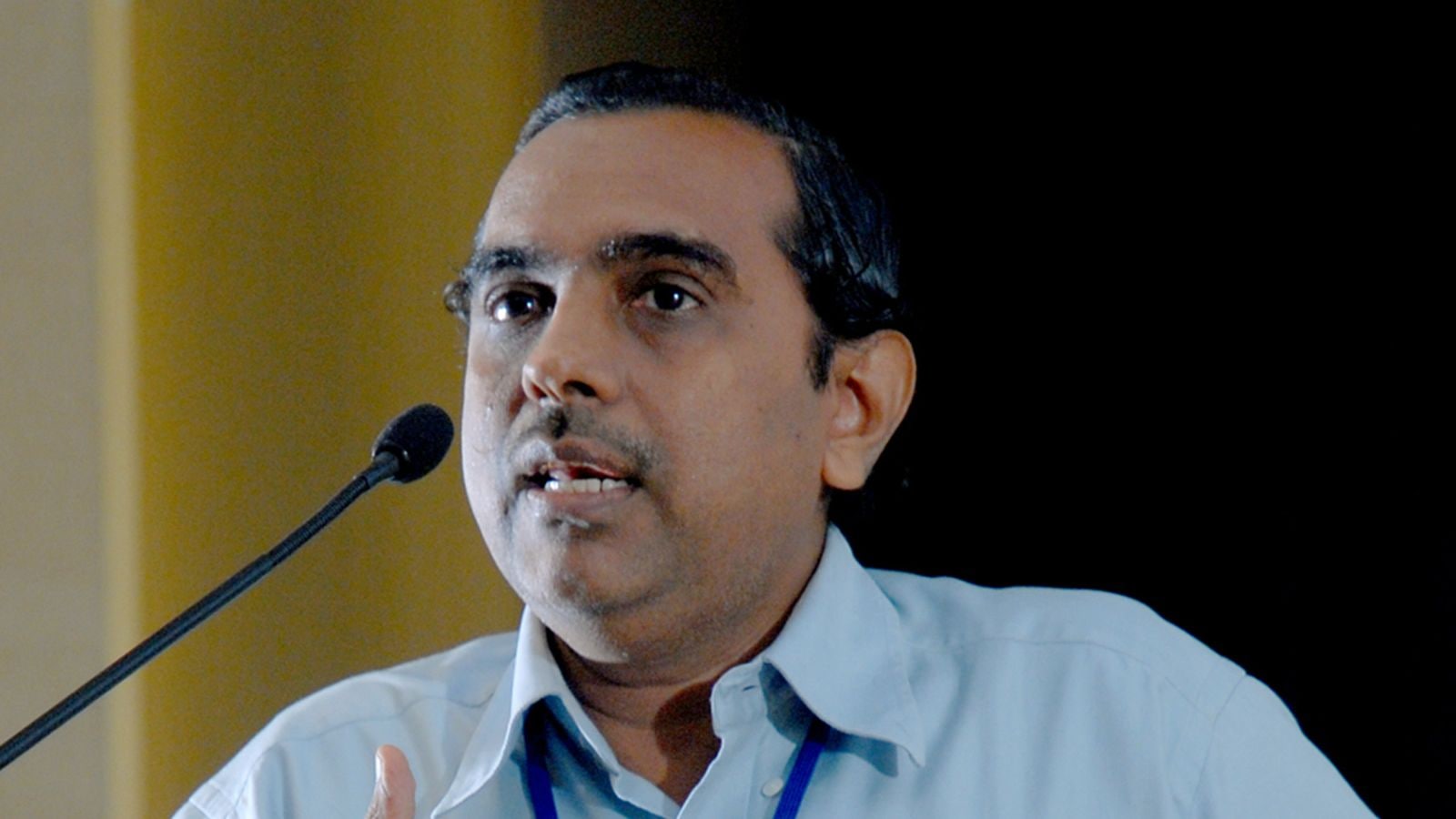
An engineering graduate from IISc, Narahari completed his PhD from the institute’s Department of Computer Science, and has been associated with IISc ever since.
He currently works in the area of artificial intelligence (AI)/Machine Learning (ML) and game theory, applying these tools to the agriculture sector to help governments and farmers plan their crops, predict prices, get timely information and advice, and move towards a concept he calls ‘carbon farming’.
Narahari has been a postdoctoral researcher at the Laboratory for Information and Decision Systems (LIDS), MIT, US, and was also a visiting scientist at the National Institute of Standards and Technology, US.
He spoke to indianexpress.com on the low-hanging innovations that could change the face of Indian agriculture, tech adoption challenges, and how AI could change the agri sector. Edited excerpts:
Venkatesh Kannaiah: Tell us briefly about your research interests and the themes that relate to larger social impact.
Prof. Yadati Narahari: My research interests have evolved over a period of nearly four decades.
I began my work in areas such as manufacturing systems, scheduling, and optimisation, primarily using mathematical models. This eventually led to the first book on performance modelling of manufacturing systems.
Story continues below this ad
My interest in computerised manufacturing and supply chain management then naturally evolved into the study of problems related to the design and optimisation of supply chains.
This, in turn, led me to e-commerce and e-business, and later to the science underlying e-business, namely economics and game theory.
From then on, I have worked extensively in the general area of game theory and mechanism design, which involves the design of auctions and markets.
I have applied these ideas to a wide range of problems, including market design, internet advertising, social network analysis, and, more recently, applications in social good. Game theory also connects with AI, which is a long-standing interest of mine.
Story continues below this ad
In 2021, we offered, for the first time, a course on AI and social good, which was very popular. The course focused on three themes: AI in healthcare, education, and agriculture.
I expected AI for public health to be the highlight of the course. However, most students gravitated toward AI in agriculture, which significantly deepened my interest in that area.
Venkatesh Kannaiah: Tell us about low-hanging tech themes/initiatives that can change the face of Indian agriculture.
Prof. Yadati Narahari: Several things can be done, and many of them are already happening in one form or another.
Story continues below this ad
One of the initiatives we explored as part of our NABARD project was how to make the procurement of agricultural inputs more cost-effective while also assuring quality for farmers.
Poor quality of inputs is a problem for Indian agriculture. The presence of intermediaries makes input procurement expensive, especially for small and marginal farmers.
Our idea was that a farmer cooperative or a farmer producer organisation could aggregate the requirements from individual farmers. We developed a simple mobile application to collect and aggregate the same. These could then be shared with suppliers, with the procurement being done with an eye on quality and volume discounts.
Another low-hanging fruit is crop recommendation. Due to poor decision-making, peer pressure, and, in many cases, cultural factors, farmers often choose inappropriate crops. This can be corrected through data-driven recommendations.
Story continues below this ad
A third is agricultural advisories, particularly those issued through Agro-Meteorological Field Units (AMFUs). These advisories are released based on weather forecasts provided by the India Meteorological Department. They are reasonably accurate, but could be improved upon.
The advisories can be made more accurate by using simple machine learning models, and the distribution could be made better through mobile phones and in vernacular languages.
Venkatesh Kannaiah: Tell us about your GRAMA project and what it seeks to achieve.
Prof. Yadati Narahari: The GRAMA project grew out of the work we initiated with NABARD. GRAMA is an acronym, and each letter reflects a core pillar of the project.
Story continues below this ad
G stands for game theory, R stands for randomness, A stands for Artificial Intelligence, M stands for machine learning, and the final A stands for agriculture.
For Indian agriculture, crop planning is key. Take Karnataka, which has 31 districts. Each district has a traditional portfolio of crops, and these have remained largely unchanged over time.
We formulated a simple mathematical optimisation problem with the objective of maximising the total revenue of all farmers in Karnataka. These included accurate demand matching, optimal use of irrigation facilities, efficient utilisation of available warehouses, and alignment between soil types and suitable crops.
By solving this problem, we derived slightly modified crop portfolios for different districts. These changes alone, without introducing any new technology, can increase productivity and farmer revenues by nearly 70-80 percent.
Story continues below this ad
Then, we moved to crop recommendation at the farmer level. Using information provided by the farmer, along with insights from the crop planning stage, we can recommend a set of crops that are better aligned with local conditions and market demand, thereby improving the farmer’s revenue.
The third component is input procurement. Once crops are chosen, farmers need to procure seeds, fertilisers, and pesticides. We focus on procuring high-quality inputs in a cost-effective manner.
The fourth component, and perhaps the most challenging, is price prediction. If solved even partially, it would be beneficial for farmers as well as policymakers. Price predictions will help governments to plan timely interventions, protecting both farmers and consumers.
We are also working on a mobile application that covers the entire lifecycle of paddy cultivation.
Story continues below this ad
Another interesting theme we are working on is carbon farming — a set of best practices in sustainable, regenerative, and organic agriculture that help mitigate climate change. Carbon farming can generate carbon credits for farmers, which they may be able to monetise in the future.
Venkatesh Kannaiah: There would be a large number of groups working on commodities that would have built such price prediction algorithms. How would yours be different?
Prof. Yadati Narahari: While hundreds of papers have already been published on price prediction, there is still significant scope for improvement. The accuracy achieved in many existing models is typically around 75-80 percent. Our goal is to push this closer to 90 percent.
Much of the research on price prediction carried out in the United States or Europe is not directly applicable to Indian agriculture. Indian agriculture has several unique characteristics that must be explicitly captured in the models. Addressing this gap has been a central focus of our work.
Venkatesh Kannaiah: Tell us about your paddy project.
Prof. Yadati Narahari: We are working with Land Optimiser International, a startup founded by a progressive farmer for the Paddy project. This is a key component of the GRAMA project.
Paddy has a lifecycle of roughly 150 days, comprising about 12 to 14 distinct phases. We examined each of these phases and asked a set of fundamental questions: What decisions does the farmer need to take at each stage? How can data help in making these decisions? How can models support them? And what kind of advisories should be provided at each phase?
Based on this, we developed algorithms and corresponding advisories. These advisories are in a simple, easy-to-digest language. We aim to build a digital companion that “shadows” the farmer.
The fundamental principle underlying this approach is that, over a 150-day paddy lifecycle, there exists an optimal growth trajectory. However, depending on the paddy variety and real-world conditions, the actual state of the crop at any given point may deviate from this ideal.
Our approach is to measure this deviation, determine how the current state differs from the ideal condition, and then identify the most effective way to bring the crop back onto the optimal trajectory as quickly as possible. Based on this analysis, we provide the farmer with a clear, actionable advisory with an explanation.
At present, we are focusing exclusively on paddy. The intention is to do a good job with a single crop first. Once this system is perfected, many of the underlying principles can be extended to other crops as well.
Over the next year, we expect to have the complete framework worked out. Following that, we will move into full-scale design and implementation.
Venkatesh Kannaiah: What are the tech adoption challenges in Indian agriculture?
Prof. Yadati Narahari: The key challenge is convincing farmers. They are not fully convinced about how technology can help them. Their decisions are often influenced by more immediate concerns regarding credit, subsidies and insurance coverage.
Unless farmers are incentivised in a way that reduces their anxiety around credit, insurance, and risk, technology adoption will remain difficult. Equally important is demonstrating, on the ground, that a particular solution actually works.
Venkatesh Kannaiah: What kind of tech works and what does not work in Indian agriculture?
Prof. Yadati Narahari: Hundreds of mobile applications for agriculture have been launched over the years, and at any given time, there are a lot of such initiatives in India, yet nearly 90 percent of these mobile apps have died a natural death.
If a mobile app is to be effective, there are a few minimum requirements that must be met. First, the bandwidth requirement for delivering advisories must be extremely low. Second, it needs to be easy to digest. It need not be highly precise in a technical sense. Unless significant effort is put into usability and acceptability, agricultural mobile apps are unlikely to succeed.
The other issue is data availability. Data, when available, can be extremely powerful and enable high-quality decision support. However, in the Indian context, data availability is a serious challenge. Organisations and individuals who possess data are often reluctant to share it, and there is apprehension around data sharing.
Coming to the question of which technologies are likely to succeed, there are a few I have in mind. For instance, a simple sensor that can tell a farmer the temperature, humidity, and the likelihood of rainfall the next day can be useful.
Similarly, affordable drone services, applications for targeted spraying of pesticides and small devices that help farmers evaluate seed quality would add value.
Venkatesh Kannaiah: AI in agriculture: What can work, and what can go wrong?
Prof. Yadati Narahari: The price predictions, AI-based crop recommendations and crop planning work we have done are valuable.
Where AI can sometimes fall short is in the use of large language models, such as GPT-5, Gemini 3, or similar systems, to provide direct advisories to farmers. These global models are trained largely on non-Indian data, and patterns that hold globally do not necessarily apply to Indian conditions. Moreover, the amount of Indian-specific data used in training these models is relatively small.
As a result, advisories generated by such models need to be taken with a pinch of salt, especially when they are consumer-facing. At the enterprise level, or as tools for researchers and analysts, these models can still be useful.
Venkatesh Kannaiah: Any other tech interventions you are optimistic about?
Prof. Yadati Narahari: Precision farming is one. It requires large volumes of data to be analysed. For example, computer vision can be used to assess the status of a growing crop and detect and classify leaf diseases. In this context, AI plays a crucial role. Technologies such as remote sensing, computer vision, and image processing are going to be extremely important, and they can deliver significant benefits to farmers.
The use of autonomous vehicles and drones will also continue to scale up, and this is already happening.
Venkatesh Kannaiah: Tell us about some failures in tech adoption in Indian agriculture.
Prof. Yadati Narahari: One clear failure that comes to mind is the death of hundreds of agricultural mobile apps.
Another area that has not yet delivered satisfactorily is the detection and classification of crop diseases, particularly leaf diseases in vegetables and greens. Many companies are attempting to address this problem, but the quality of service is still not at the level one would expect.
I would not call this a failure. It is an area that is still evolving and needs further maturity before it can deliver a reliable impact.