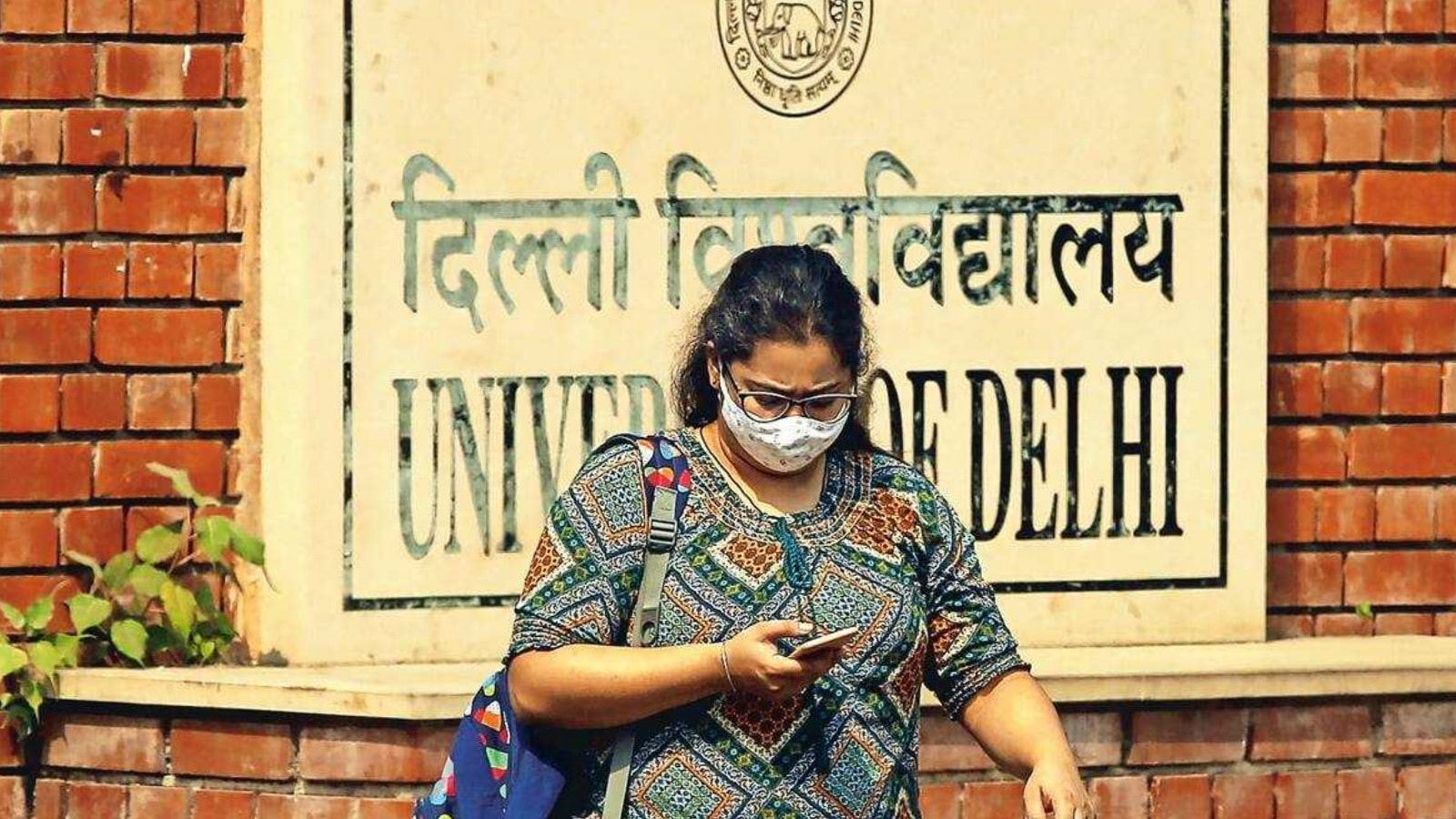
Teachers and students of Delhi University’s School of Open Learning (SOL) have written to the Vice Chancellor (VC) of the university expressing “sincere concerns” over the ongoing controversy over alleged offensive content in SOL’s study material for Bachelor’s students of political science.
“We write to express our sincere concerns about the defamation of our institute,” the representation, sent to the VC last week, says. “We…strongly condemn and oppose any material which mentions abusive, oppressive and negative terms for women and Ambedkar.”
It adds, “We completely stand together united against any person who writes or expresses such thoughts.”
Disciplinary proceedings are currently underway against Saripalli V Ravikiran, an assistant professor at SOL, who is accused of including allegedly erroneous and offensive content in the study material.
Internal documents of SOL allege the Self-Learning Material (SLM) prepared by Ravikiran contains “numerous factual errors” and “derogatory terms” that portray women as “seductresses, cunning and dishonest”, and describes Dr Babasaheb Ambedkar as a “militant”.
The university has accused Ravikiran of “gross misconduct”, and has reiterated that the ancient Indian legal text Manusmriti, which the SLM allegedly quotes, will not be taught “in any form”.
Several elected members of the Executive Council, the highest executive body of the university chaired by VC Yogesh Singh, are learned to have demanded that Ravikiran’s tenure be terminated.
Story continues below this ad
On this subject, a senior official of the university administration told The Indian Express, “The process of decision-making on the action to be taken against this particular faculty member is still underway.”
Ravikiran joined SOL in February 2024 and was assigned the task of preparing the Hindi-language SLM for ‘Understanding Political Theory’, which is part of the Semester 1 curriculum for the BA (Hons) Political Science course.
Early criticisms of the material described certain sections about women as being “extremely offensive”. Internal reviews subsequently found that content that went beyond the syllabus had been included, including references to caste practices and the consumption of beef.
Ravikiran was also accused of plagiarism and of delaying the submission of the learning material to the university.
Story continues below this ad
An external review of the SLM for the discipline specific elective (DSE) course on ‘Understanding Ambedkar’ described the material as “biased”, overly reliant on references to the Manusmriti, and insufficiently attentive to Dr Ambedkar’s own writings.
In December 2025, the university instituted a formal inquiry, which concluded that Ravikiran had been “negligent and careless” about the material.
In his written defence submitted to the university, Ravikiran “categorically denied” that his conduct “constitute[d] ‘gross misconduct’ or ‘negligence’”, and argued that he had carried out his work “in good faith” and under “severe institutional constraints”.
The assistant professor submitted that he had been given fewer than 50 days to prepare the full course material, without “any orientation, prior institutional handover, collaborative team, or structured editorial support”.
Story continues below this ad
He said that the compressed timeline and “…the absence of formal review input constrained the opportunity for deeper revisions”.
Ravikiran has also disputed the accusation that the content was ideologically driven or deliberately provocative. The material on Ambedkar, he has said, was designed to engage students critically with primary texts and debates. “[It] was aimed not to provoke but to faithfully reflect the scope of Ambedkar’s analysis and to enhance the students’ critical faculties.”
Engaging with texts such as ‘Against The Madness of Manu: B R Ambedkar’s Writings on Brahmanical Patriarchy’ was academically relevant to understanding Ambedkar’s critique, he has said, adding that excluding such references would “amount to misrepresenting Ambedkar’s scholarly method”.
Ravikiran has also said he was not given a meaningful opportunity to respond to the criticism: “I was denied access to the external reviewer’s report… Even in cases involving serious academic allegations…institutions follow a transparent, multi-stage process… In this matter, I was not provided with any such process.”
Story continues below this ad
He framed the alleged omissions and controversial references as systemic or editorial issues rather than his personal failing. “Academic production is by nature collaborative… Holding me solely accountable…disregards the principle of shared responsibility,” he said.
The Indian Express reached out to Payal Mago, Director of SOL, for a comment, but did not receive a comment.