

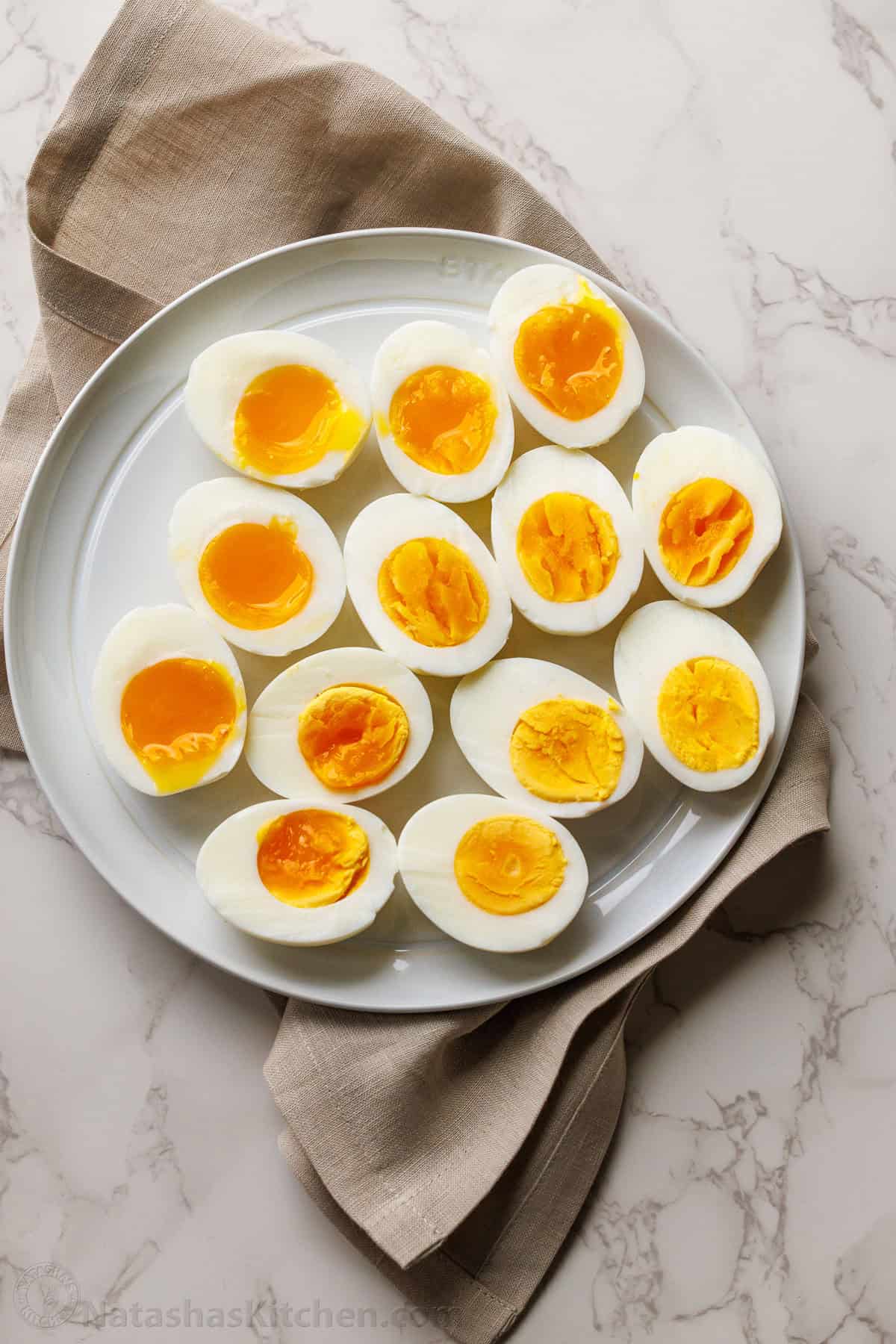
How long should you boil eggs? It depends on how you like the yolks—soft, jammy, medium, or fully set. This easy guide includes exact cook times for every level of doneness, plus my favorite tips for easy-peel eggs that turn out just right every time.
This post may contain affiliate links. Read my disclosure policy.
Quick Answer: How Long to Boil Eggs?
Lower cold eggs into boiling water and cook for 6 to 7 minutes for soft-boiled eggs, 8 to 9 minutes for medium-boiled eggs, or 10 to 12 minutes for hard-boiled eggs. Transfer the eggs to an ice bath for 10 minutes to stop the cooking and make them easier to peel.
How to Boil Eggs Video
Boiled eggs are one of those simple kitchen basics that are easy to overcook or undercook. Whether you’re making soft-boiled eggs for breakfast, hard-boiled eggs for Egg Salad, or a batch of Deviled Eggs for Easter, my stovetop method makes it easy to cook eggs exactly how you like them. You’ll love how easy they are to peel, too.
Helpful Reader Review
“This detailed guide for how to cook boiled eggs is so helpful! I can never get my boiled eggs cooked right, with this post I can now make perfect boiled eggs every time!” – Valentina ★★★★★
How I Tested This Method
I tested several ways to boil eggs, including starting them in cold water and lowering cold eggs directly into boiling water. The most consistent results came from lowering cold eggs into boiling water, then transferring the hot eggs straight into an ice bath.
That quick temperature change helps the egg pull away from the shell membrane, which makes the eggs easier to peel. It also makes the timing more reliable, since the eggs start cooking right away instead of warming up gradually in the water.
Tips for Perfect Boiled Eggs
- Use a 3-quart saucepan – This size works well for 8 large eggs. Add about 5 to 6 cups of water, or enough so the eggs will be covered by 1 inch once added.
- Lower eggs gently – Use a slotted spoon or skimmer to carefully lower cold eggs into the boiling water so they don’t crack.
- Keep a gentle boil – After adding the eggs, adjust the heat to maintain a steady boil, not a hard, rolling boil.
- Set the timer right away – Start timing as soon as the eggs go into the boiling water.
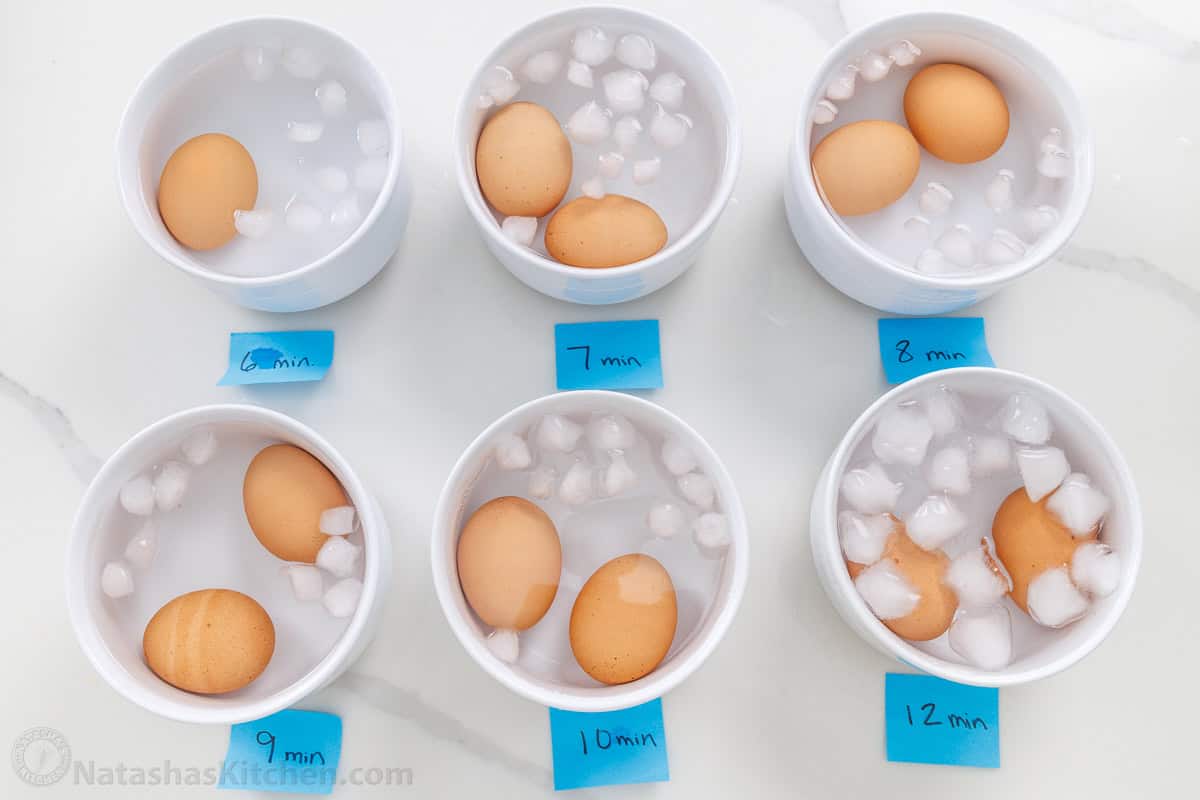
- Use an ice bath – Chill the eggs for 10 minutes to stop the cooking and help the shells release.

How to Boil Eggs
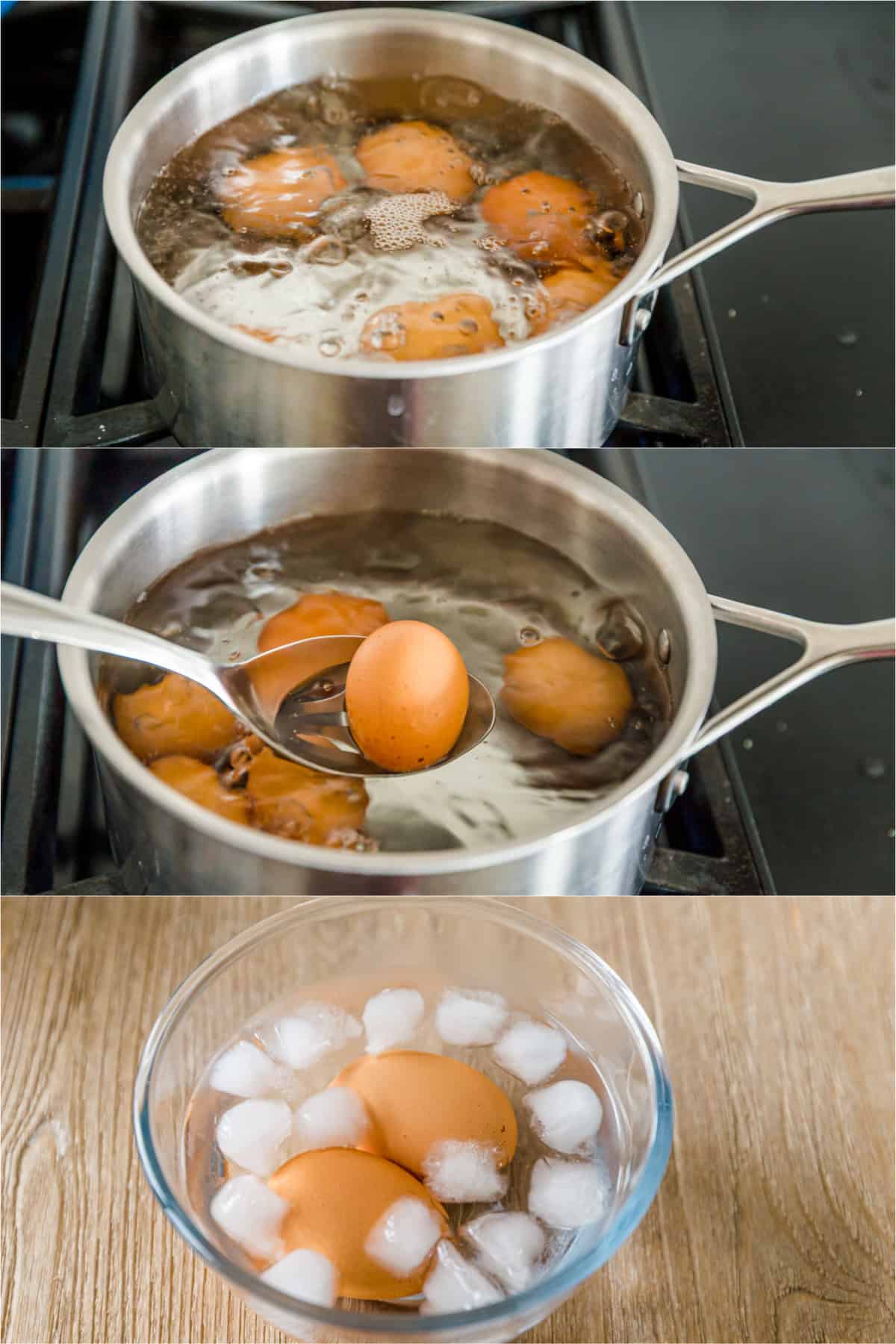
- Boil the water – Fill a 3-quart saucepan with enough water to cover 8 large eggs by about 1 inch, about 5 to 6 cups. Bring to a boil over high heat.
- Add the eggs – Carefully lower cold eggs into the boiling water using a slotted spoon or skimmer. Reduce the heat to keep them at a steady boil.
- Cook to your desired doneness – Once the eggs are in the water, start the timer and cook uncovered according to the timing chart below. While the eggs are cooking, prepare the ice bath.
- Transfer to an ice bath – Move the eggs (a spider strainer or slotted spoon is handy) to a bowl of ice water right away and let them chill for 10 minutes before peeling or storing.
Boiled Egg Doneness Chart
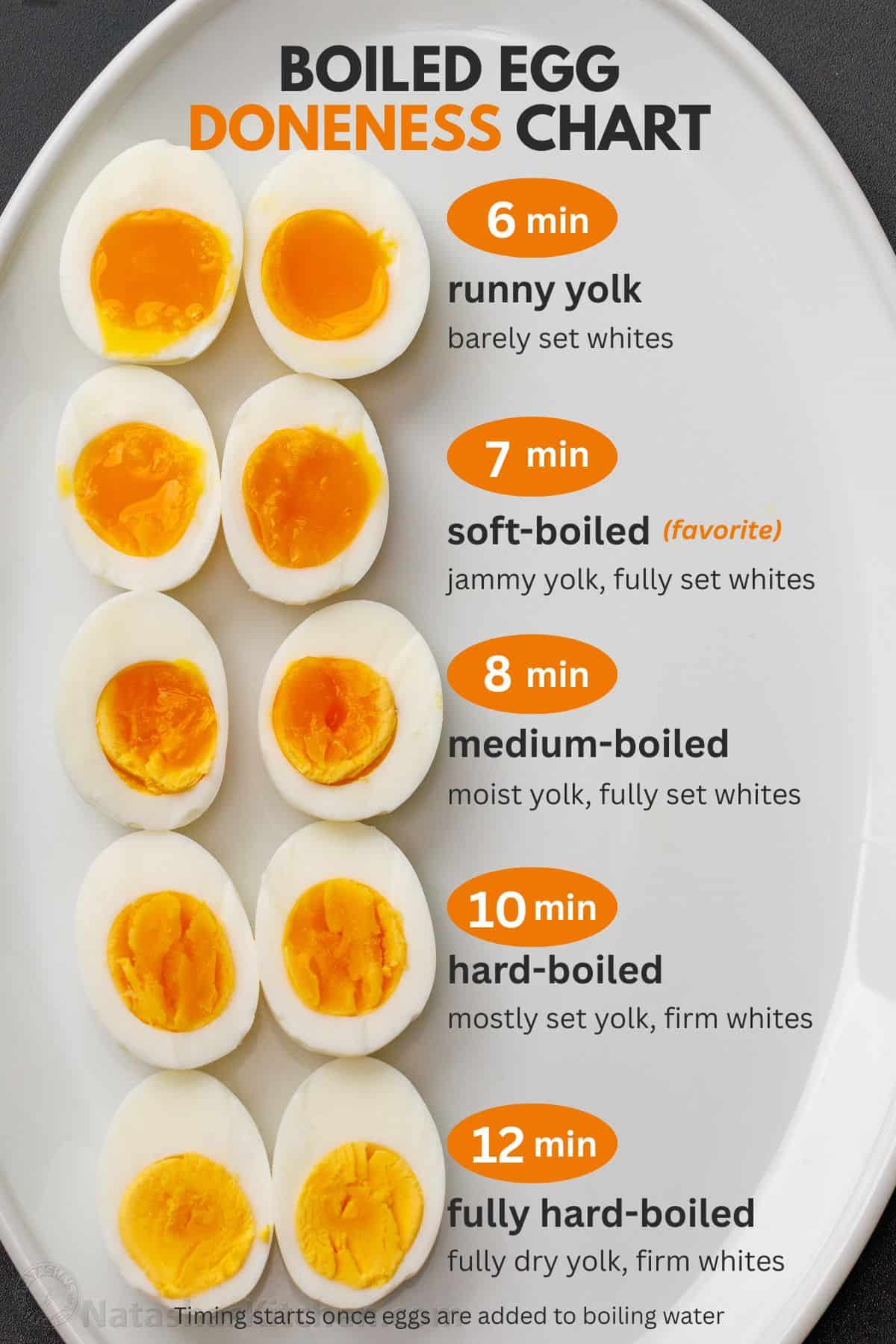
Use this chart for large eggs added to boiling water:
- 6 min – Runny yolk, soft set whites
- 7 min – Jammy yolk, set whites
- 8 min – Moist, softly set yolk
- 10 min – Tender hard-boiled egg
- 12 min – Firm hard-boiled egg
For the best texture, don’t cook eggs for less than 6 minutes or the whites may be underdone. I don’t recommend boiling longer than 12 minutes, since the yolks can overcook and develop a greenish ring.
Best Eggs for Boiling
Egg size and freshness can affect how long eggs take to cook and how easily they peel. Here’s what to know before you start:
- Egg Freshness – Older store-bought eggs are easier to peel. For farm-fresh eggs (from backyard chickens) my instant pot boiled eggs method makes them easier to peel.
- Size Matters – We use Large Grade AA eggs. Large eggs (2 ounces each) are the standard size in most recipes so we stick with those. Medium eggs will cook faster, and Extra Large or Jumbo eggs will take a little longer.

Should You Add Salt or Vinegar to Boiled Eggs?
Salt and vinegar are optional. Vinegar may help if an egg cracks, and salt can help reduce how much egg white leaks into the water. I don’t rely on either for easy peeling—the hot-water start and ice bath make the biggest difference.
How to Peel Boiled Eggs Easily
Crack the egg firmly at the wide end where the air pocket is, then peel from that end to get under the membrane. Peeling under cool running water can also help loosen the shell.
If you’re peeling a whole batch for Deviled Eggs, try my Easy Peel Eggs method for peeling several eggs quickly at once.

How to Store Boiled Eggs
Boiled eggs should be refrigerated within 2 hours of cooking. Keep them unpeeled when possible to prevent drying out and odor absorption. If peeled, store them in an airtight container.
- Hard-boiled eggs can be stored in the refrigerator for up to 1 week.
- Soft-boiled eggs are best enjoyed right away, but leftovers can be refrigerated in an airtight container for up to 2 days.

Once you try this boiling-water method, it just might become your go-to way to boil eggs for breakfast, snacks, salads, and Easter eggs.
How to Boil Eggs
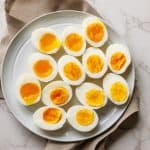
This method for making hard-boiled eggs or soft-boiled eggs will get you perfect results every time, and it’s really easy! Adding the eggs to boiling water also makes them easy to peel.
-
Fill a large saucepan with enough water that it will be about 1″ above the surface of the eggs. With the lid off, bring to a rolling boil over high heat.
-
Gently lower cold eggs into the boiling water (a spider strainer or slotted spoon is helpful), taking care not to crack them.
-
Reduce the heat to keep the water at a gentle boil – not aggressively boiling, which can cause cracks. As soon as the eggs are in the water, set a timer for your desired doneness: 7 minutes for soft-boiled or 10 minutes for hard-boiled (see timing chart below).
-
Prepare your ice water bath, and as soon as the timer is done, transfer the eggs to an ice bath right away and let them sit for 10 minutes before peeling or storing*.
- Boil 6 min: Runny yolks with soft-set whites
- Boil 7 min: Soft-boiled, jammy center, set whites
- Boil 8 min: Medium-boiled, soft-set yolk, set whites
- Boil 10 min: Tender hard-boiled egg, firm whites
- Boil 12 min: Fully hard-boiled eggs with firm, dry yolk
Storing Boiled Eggs: Refrigerate boiled eggs within 2 hours. Hard-boiled eggs, peeled or unpeeled, should be used within 1 week. For the best quality, store them unpeeled. Soft-boiled eggs are best fresh but can be refrigerated in an airtight container for up to 2 days.
63kcal Calories0.3g Carbs6g Protein4g Fat
Nutrition Facts
How to Boil Eggs
Amount per Serving
% Daily Value*
* Percent Daily Values are based on a 2000 calorie diet.
Recipes with Boiled Eggs
Boiled eggs are perfect for quick breakfasts, snacks, salads, and appetizers. Here are some of my favorite ways to use hard-boiled eggs:


