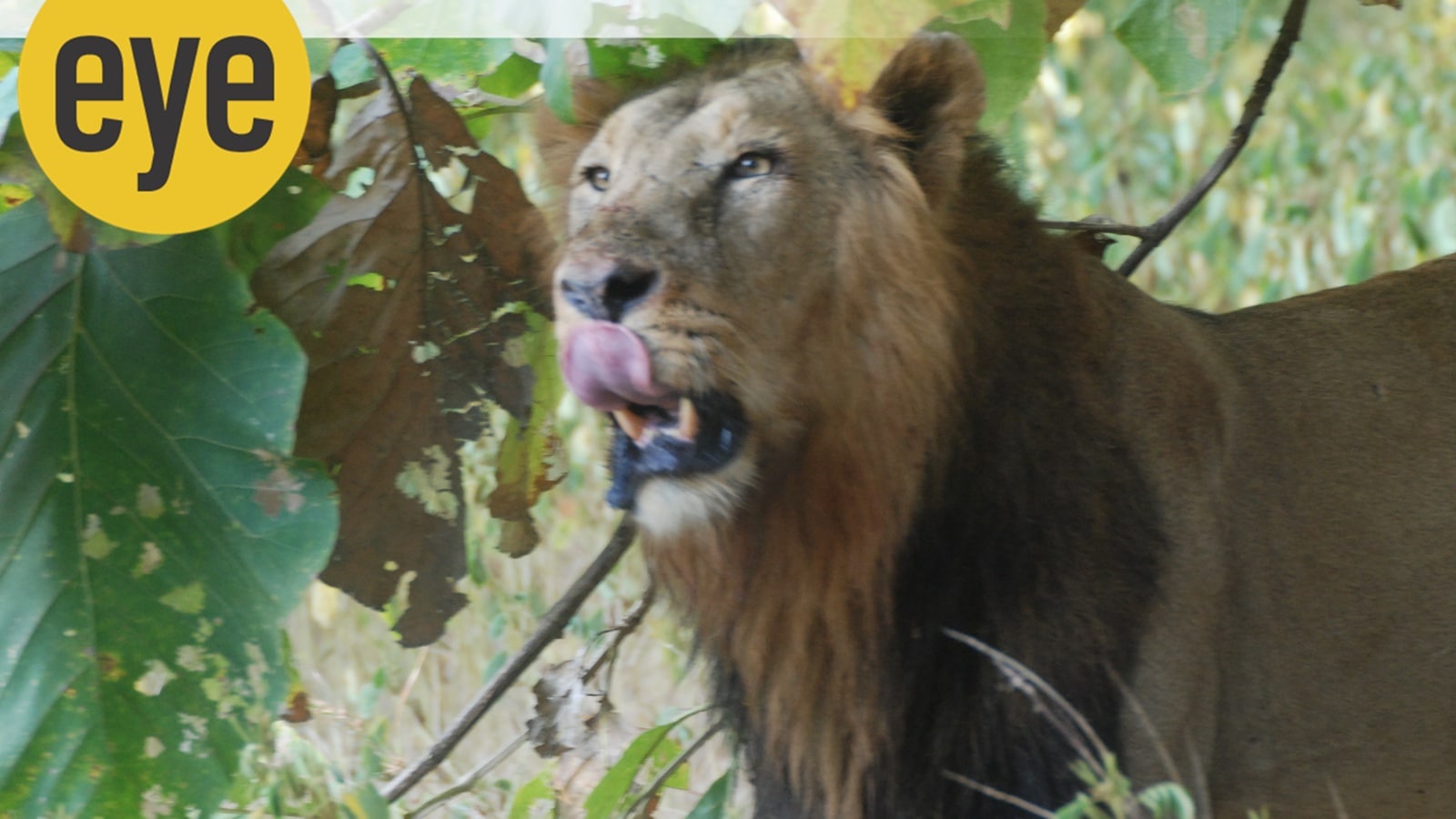
‘The tiger is a big-hearted gentleman,’ Jim Corbett once famously wrote. And we all know that
tigers are solitary animals that carve out their territories, patrolling them assiduously and taking on would be usurpers. Yes the territories of tigresses may overlap, but usually they simply avoid each other and will only come out claws extended, roaring if they sense a takeover bid. In some cases they have been recorded patrolling their borders across a boundary line – such as a river or stream and don’t put a foot wrong. (Unlike so many of us who will slyly infringe on the neighbour’s property by extending a fence or wall inch by inch…) They do tolerate males as well, especially those in search of a ladylove. Bottom line – they love their privacy.

And in National Parks and Sanctuaries all around India, they get no, or very little privacy. Imagine walking down a jungle trail perhaps on the lookout for a chital or sambar, while being followed by a cavalcade of 40-50 Gypsies, (more than what the Prime Minister has) crammed with yammering tourists, firing away machine-gun like with their cameras, all jostling for the best position. Most tourists at these places come with a single-point agenda – to see the tiger – come what may. So much so it becomes obligatory for the forest department staff – the wardens, guards and drivers, to ensure that they do. So if a tiger is spotted, the message goes out and all the Gypsies in the area converge on it like ants to a honeypot literally gheraoing the animal. (There have been several horrifying videos of tigers being literally squeezed between the jeeps.)
Not the ideal scenario if you’re looking for a ladylove or gentleman friend or want to hunt or fool
around with your cubs. Would you appreciate an audience of 200-250 people stalking, watching and photographing you as you walk hand in hand with your beloved, or just as you are about to pop the question or begin the honeymoon? It really is the height of gross voyeurism. And so far, the tiger has proved to be a thorough big-hearted gentleman because he (or she) hasn’t as yet leapt roaring into a Gypsy, jaws agape, flaying out with those claws, clearing the field in two seconds flat.
No sudden moves, no camera flashes, keep as quiet as you can, you are warned by the guides, but who listens? Ah, the counter-argument goes, the tigers are becoming used to this and behave normally in our presence. Like the lions, leopards and cheetahs of Africa do and that will often seek refuge from the sun by crawling under tourist vehicles. (Tourists there are much better behaved than those at home.) So many intricate documentaries have been shot, without the animals being unduly disturbed. That’s because veteran documentary makers keep their distance – or send a remote camera disguised as a dung ball, or rock or tree trunk to follow the animals.
They say all this close contact is stressing out the tigers, especially those in the core zones, and this might have a deleterious effect on their reproductive rates. Frankly it would stress anyone out. And sooner or later, something will give. A Gypsy will bump against another, a tourist will fall off with a yell and scream, and the tiger stressed beyond endurance will pounce. And that will be that.
Story continues below this ad
Many tigers and tigresses – and their families – have had huge fan followings – Maya of Tadoba,
the notorious Ustad from Ranthambore, Machchli from there too – who was virtually kept alive
artificially long after her expiry date – and even Avni, the alleged man-eating tigress from Tadoba, who was gunned down by a hunter who virtually gloated over his kill. Repeat visitors who find their favourite tiger or tigress missing, get hugely upset and point fingers at the staff accusing them of not protecting the animals properly. And, no news is often bad news – the tiger or tigress may have been killed in a territorial fight, been banished from his or her territory, or worse taken out by poachers. Or it may be very good news – as when a tigress reappears after months with a tiny family in tow.
And, we are told, some tigers revel in the attention they get – Maya from Tadoba was said to have literally posed for photographs, as if knowing she’d be a star on YouTube and other social media. We like to blame the British and the Indian Maharajas for decimating our tiger population. The Brits killed thousands and returned to their sanitized dank island, the Maharajas cannily converted their hunting grounds into sanctuaries and National Parks, once Project Tiger came into force as did the WPA (1972) and all are now so holier-than thou about tiger conservation.
Story continues below this ad
But what is happening now is far more dangerous and insidious. We’re killing them off with a thousand cuts – infringing upon and fragmenting their territories, building six-lane expressways through their forests (would you like one such to run through your living or bedroom?), blocking off their corridors and basically destroying the places they live in whether it is for mines or dams, all in the name of ‘development’.
Tigers are great wanderers, and will now have to take expressways to get from point A to point B, which is not safe given the way we drive. I have not yet seen a tiger in the wild (except perhaps the vanishing tail of one in Sariska a long, long time ago) and frankly would not like to amid a scrum of 200 jostling, hyperventilating people. It would be better to simply go to the zoo.