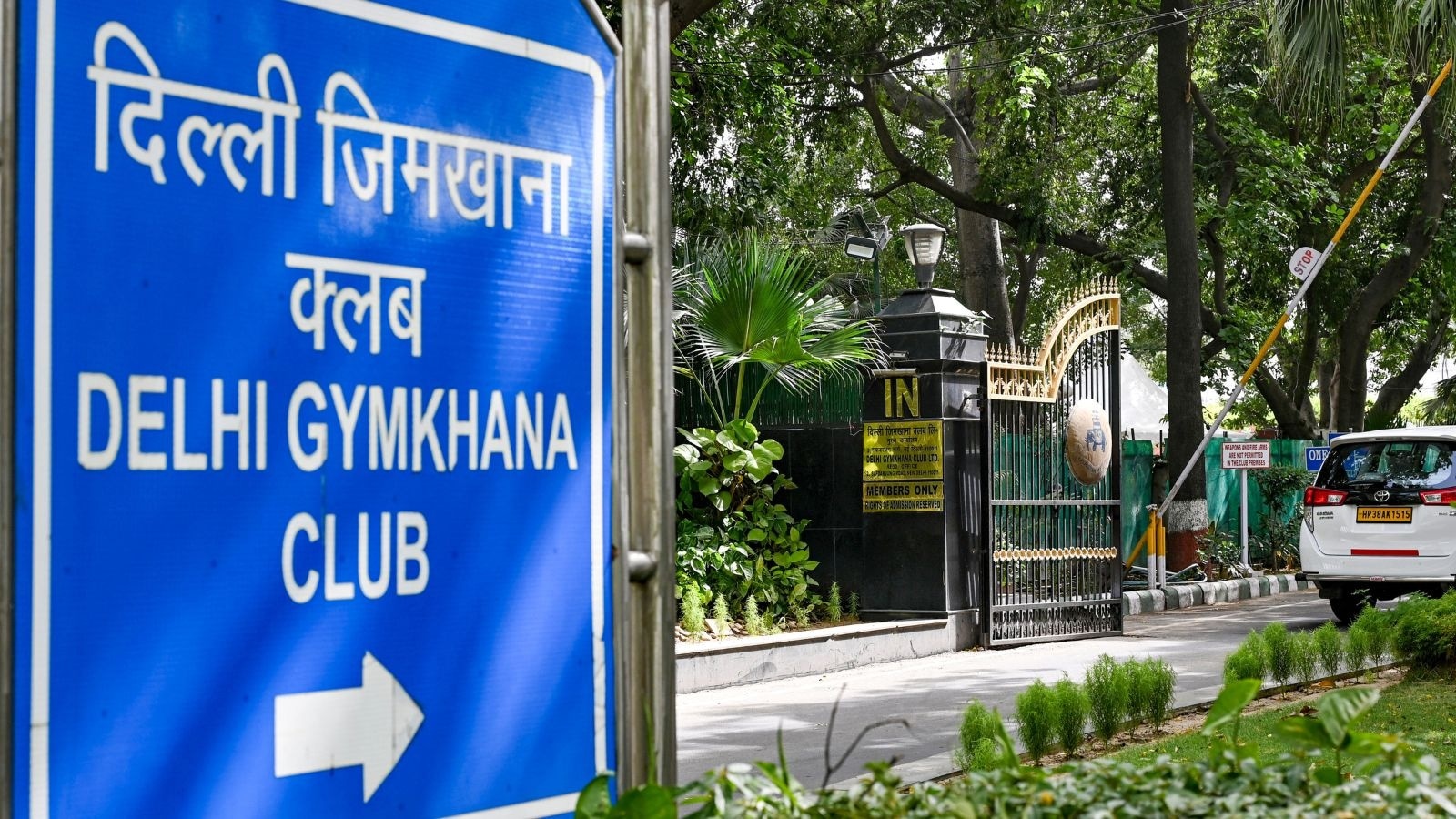
The controversy surrounding Delhi Gymkhana Club has cast fresh attention on Mumbai’s own network of colonial-era gymkhanas, many of which occupy prime public land in one of the world’s most space-starved cities.
With the Maharashtra government now considering a comprehensive gymkhana policy, questions are being raised about how these elite institutions acquired vast land parcels, how they evolved over the decades, and whether they continue to serve a public purpose.
A fresh controversy over the century-old Delhi Gymkhana Club has once again put the spotlight on elite sporting institutions that occupy prime public land. According to Collectorate records, 11 of Mumbai’s 20 gymkhanas, including the iconic Bombay Gymkhana, stand on land leased from the district collector. The debate is especially significant in a city starved of open spaces. According to a report by the Observer Research Foundation (ORF), gymkhanas and elite clubs occupy nearly 664 acres, or about one-fifth of Mumbai’s 3,780 acres of open space. The report notes that Mumbaikars have access to just 1.28 square metres of open space per person.
Origins in colonial Mumbai
The term “Gymkhana” is believed to have originated from the Persian *jamat-khana*, meaning “place of assembly”. During British rule, gymkhanas functioned as social and sporting clubs catering exclusively to colonial elites.
Membership largely comprised senior government officials, administrators, businessmen and philanthropists. Indians were barred from entering many of these establishments.
“Till 1860, Kolkata had more importance than Mumbai. Later, the advent of railways and the breakout of the American Civil war led to a boom in the cotton industry. These phenomena led to the opening of Suez Canal, as a result of which Mumbai became the main port for incoming European Ships, leading up to establishments of Gymkhanas in the city as a means of recreation,” Bharat Gothoskar, founder of Khaki Heritage Tours, told The Indian Express.
Apart from sporting facilities, these clubs also provided accommodation and dining facilities for travelling government officials and businessmen. Since hotels were scarce at the time, many gymkhanas became important social hubs for European visitors. Most were established on government land leased for this purpose.
Story continues below this ad
The roots of Mumbai’s gymkhana culture go back to the 19th century. While official records identify the Bombay Gymkhana in Fort, established in 1875, as the city’s oldest, historians point to an even earlier institution in Byculla.
“The Byculla Club existed during the early 1800, with its border stretching from the present day Maratha Mandir theatre at Mumbai Central to Jacob Circle. While it was named Bombay Turf Club, the place was also locally known to be Byculla Club because of its location,” researcher and author Nitin Salunkhe told Express.
According to Salunkhe, the rapid industrialisation of central Mumbai in the mid-19th century gradually made the area less attractive to European members.
In 1864, the club was shifted to present-day Mahalaxmi and renamed the Western India Turf Club. In 1935, King George V permitted it to use the prefix “Royal”, leading to its present-day name, the Royal Western India Turf Club (RWITC).
Story continues below this ad
“Till date, the RBI colony road in Byculla is called ‘Club Road’ because of the erstwhile Byculla Club and the lane opposite Agripada Police station is called ‘Ghaas (Grass) Gulli’ since it used to house stables for horses in the erstwhile club before it was relocated to Mahalaxmi,” Salunkhe said.
Gymkhanas for Indians
As Mumbai emerged as India’s principal port and commercial centre in the late 19th century, more gymkhanas came up across the city.
Around the same time, Indians increasingly embraced sports such as cricket and football, both introduced by the British. Matches played by Indians at the Esplanade Maidan, then a continuous stretch encompassing today’s Azad Maidan and Cross Maidan, often clashed with British polo games, leading to frequent disputes.
Sports during that era were organised largely along communal lines. To ease tensions, Governor Lord Harris allotted playgrounds to different communities along the reclaimed seafront near present-day Marine Drive.
Story continues below this ad
This led to the establishment of the Islam Gymkhana in 1892 and the Hindu Gymkhana in 1894. The Parsee Gymkhana had already been established in 1885, reflecting the community’s economic prominence in the city.
Historical records of Islam Gymkhana show that the land was initially leased by the government at an annual rent of just Rs 12.
Despite rising to prominent positions in government and administration, Indians continued to face restrictions at many European-only clubs.
That changed in 1917 when Governor Lord Willingdon established the Willingdon Sports Club to entertain Indian guests who were otherwise excluded from elite colonial institutions.
Story continues below this ad
After Independence
Following Independence, ownership and management of many gymkhanas passed into Indian hands. Several also lost portions of their land to urban infrastructure projects.
During the 1960s, for instance, the Hindu, Parsee and Islam gymkhanas lost significant land for railway expansion. Today, the railway tracks between Charni Road and Marine Lines run along the outer edges of these clubs.
Government directives later required gymkhanas to end community-based membership restrictions.
“Today, we have members from different communities. From cricketers Sunil Gavaskar to Sameer Dighe, all are members in our clubs,” said Mohsin Shaikh, secretary of cricket at Islam Gymkhana.
Story continues below this ad
An office-bearer of Parsee Gymkhana said around 12 per cent of the club’s membership is reserved for people from other communities.
Today, each of the three community gymkhanas has more than 2,000 members.
Yet membership remains beyond the reach of most Mumbaikars. Entry into Bombay Gymkhana reportedly costs around Rs 1 crore, excluding taxes, while annual membership at Islam Gymkhana exceeds Rs 4 lakh.
Members include industrialists, celebrities, businessmen, senior IAS officers and IPS officers. In some clubs, senior bureaucrats are granted honorary service memberships.
Story continues below this ad
Even where membership is available, opportunities are limited. Bombay Gymkhana last opened applications in 2023; before that, the window had opened only in 2003. Islam Gymkhana, meanwhile, admits around 200 new members annually before closing applications for the year.
As Maharashtra considers a comprehensive policy for gymkhanas, questions surrounding public land, accessibility and the future of these colonial-era institutions are likely to come under greater scrutiny.