6 min readTaipei, TaiwanJun 1, 2026 10:14 PM IST
When asked about the challenge of reaching India’s smallest towns, Arnold Su, vice president of ASUS India, did not reach for a marketing playbook. He reached for a water bottle. “There is a brand in China. Nobody outside China knows it, but it is the number one bottled water brand there. And, not because of advertising, but because if you are in the Himalayan mountains on the Chinese side, it is the only brand you see,” Su shared.
“When you are thirsty, you do not care about the brand. You just buy what is there.”

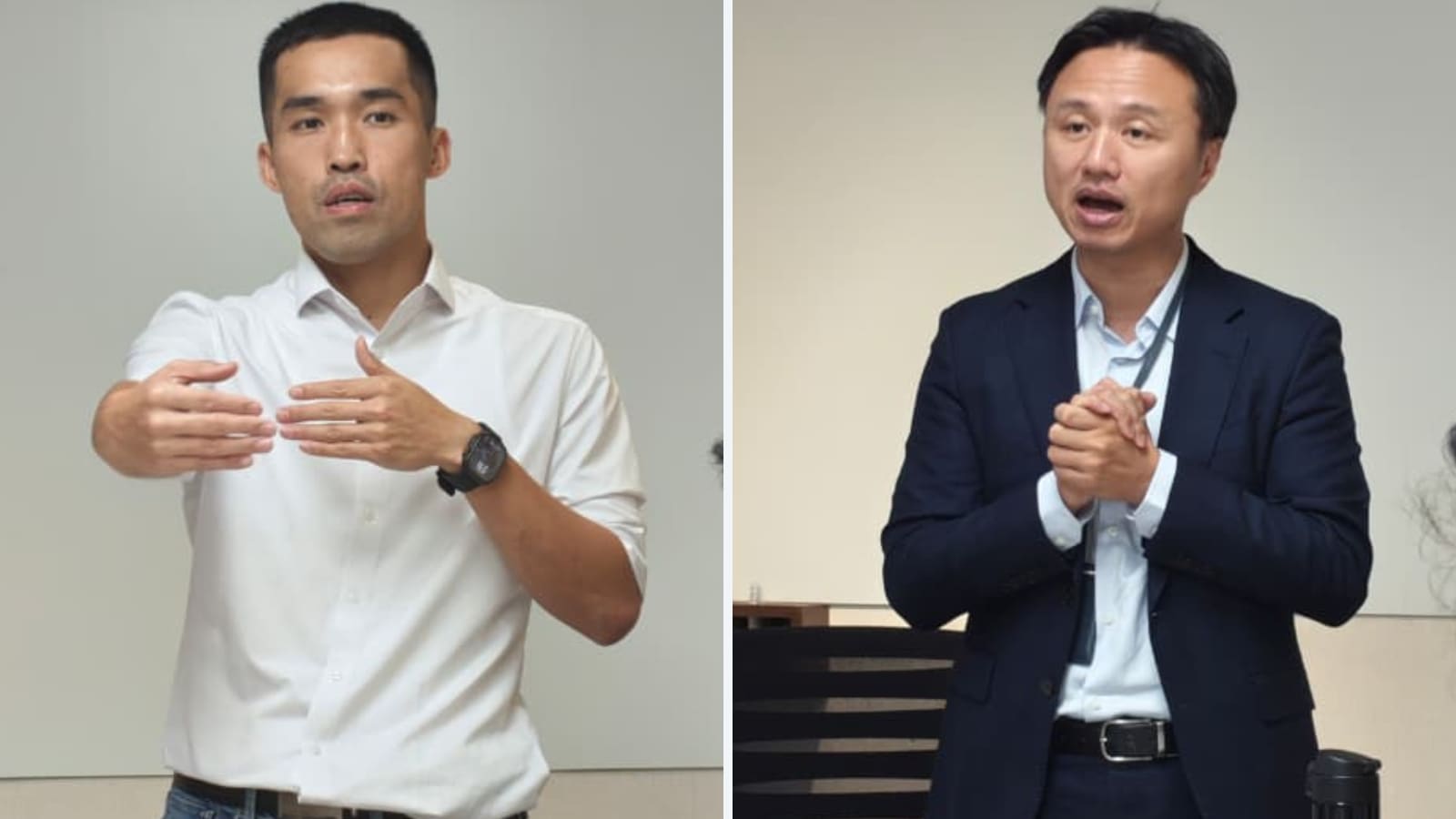
Their philosophy is remarkably simple. Asus is in the middle of one of the most ambitious retail expansions in India’s consumer technology sector. The technology giant is currently present in 624 of India’s 800 districts and about 2,000 from over 6,200 talukas. Su was accompanied by Peter Chang, general manager, Asia Pacific, System Business at ASUS.
The duo unanimously shared that the goal of the company is not merely to fill the map; rather, it is to be the dominant force on the shelf when a first-time laptop buyer walks into a store in a district town. “When we are the only brand available in a small town, customers buy us,” Su said plainly. “That is the HP advantage we have been chasing. Their (HP’s) distribution in India has historically been far better than everyone else. We are now catching up, and in some towns, we are already the only brand available,” he told indianexpress.com.
According to the executives, the organic nature of that demand is surprising. Further, during the interaction, they shared that when the company launched its AMD-powered ROG Strix Scar in 2019, a laptop priced around Rs 3.5 lakh then, the first order came not from Mumbai, Delhi, or Bengaluru, but from Varanasi. Su revealed that his sales manager made a trip to Varanasi to personally deliver it. “We were so surprised. We wanted to know who, in Varanasi, was buying a Rs 3.5 lakh machine,” recalled Su.
The answer was a customer who had found the product, researched it independently, and reached out despite the absence of a local store. This anecdote, more than any market survey, seemingly shaped ASUS’s conviction that premium demand exists well beyond the metros – it just needs to be met with availability.
It seems the company’s distribution logic has since evolved into something closer to ecosystem-building than traditional retail expansion. Su pointed to a case study from West Bengal that illustrated the idea. ASUS found that 50 to 60 per cent of customers visiting its stores inside Kolkata malls were not from Kolkata at all; they were travelling from Durgapur, Asansol, Midnapore, and surrounding districts. However, the company opened stores in those towns; footfall at the Kolkata stores did not drop but held steady. The new stores served a different, local catchment or people for whom the district town was their version of the big city.
Story continues below this ad
Even with their rapid expansion across India, Su, while answering a question about the issues pertaining to service centers, candidly acknowledged that the service challenge is harder to solve than sales. Asus has about 200 dedicated service centres in India, a number that is growing but still lags the pace of its retail expansion. However, the company has responded with two structural changes. First, it has flipped its service centre opening logic: rather than waiting for sufficient service cases to justify a new centre, it now looks at volumes based on units sold in each area and opens proactively. In the past year, the company had opened about 20 service centres compared to one or two in a typical prior year.
Secondly, the PC giant has introduced around 2,000 drop zones at its exclusive stores, allowing customers in towns without a service centre to hand over a faulty device locally and receive it back once repaired, without the need to travel. On the other hand, from January 2026, a component replacement programme has been added: for defective keyboards, mice, or adapters, ASUS now dispatches a replacement directly to the customer’s home and collects the faulty unit, a model Su claims was inspired by Lego’s spare parts service. “If Lego can send a single missing brick from Denmark to Taiwan, there is no reason we cannot send a replacement keyboard from Mumbai to any taluka in India.”
The broader backdrop to all of this is India’s remarkably low PC penetration rate, estimated at between 10 and 15 per cent of households when compared against 50 to 60 per cent in China. Chang noted that India is already the number one ASUS market in Asia Pacific and the third largest globally. If penetration reaches 30 per cent, the scale of India’s population would likely make it ASUS’s single largest market in the world.
That prospect explains why the distribution-first strategy may not just be a retail tactic. It seems like a long-term effort in a market that most global brands choose to serve only in parts. Based on Chang and Su’s views, ASUS is not waiting for India to come to it; rather, it is going to where India already is.
Story continues below this ad
The writer was at the ASUS Design Centre in Taipei, Taiwan, on the invitation of the company.