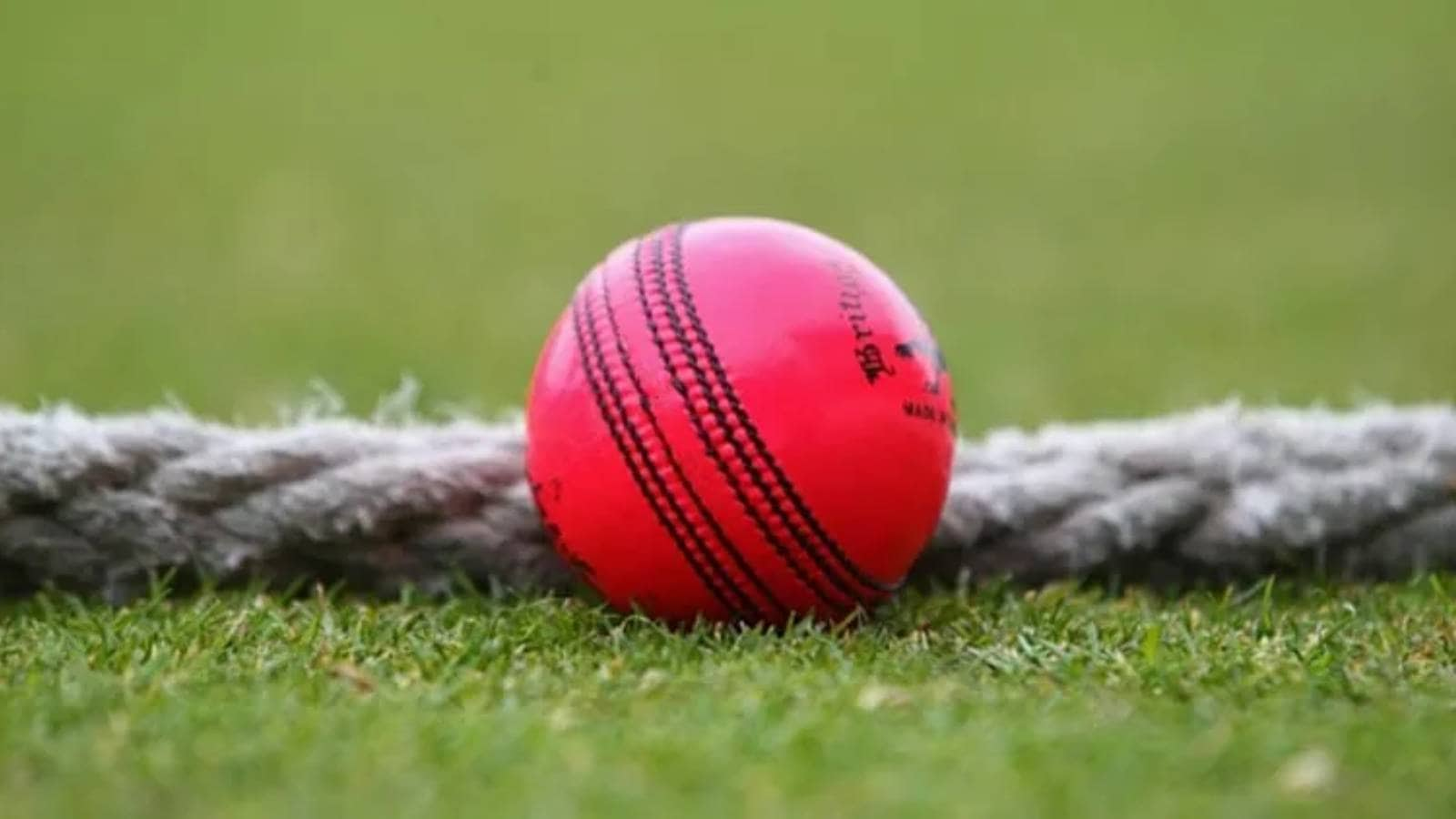
The International Cricket Council (ICC) has approved the trial run for a switch from red ball to pink ball midway through a Test deal with the issue of bad light reducing playing time. Both teams would have to agree before the start of the game to the change in the colour of the ball if the weather dictated so and play under lights.
The ICC board approved the recommendations of its Chief Executives Committee during the meeting in Ahmedabad on Sunday. The proposal to use different balls during a Test was among the many that the ICC board has approved. So far in Test matches, teams can either use the red ball or pink.

The pink ball was first used in a day-night Test between Australia and New Zealand at Adelaide in 2015. Though Australia continues to host a day-night almost every season Down Under, the innovation hasn’t taken off in other parts of the world. India hasn’t hosted a day-night Test since the game against Sri Lanka in Bengaluru in 2022. England, another venue where there are enough takers for Test cricket, has only staged one – against the West Indies in 2017.
Hence, it would be interesting to see how many teams actually take the trial run, considering World Test Championship (WTC) points would be up for grabs. The pink ball has a history of favouring seam bowlers, with batters finding it tough, especially during the twilight period.
As per current playing conditions, if both teams agree before the start of a Test series, they can use floodlights in case of bad light. But artificial light shouldn’t dominate the natural one. With the new recommendation, if both teams agree, they can play with a pink ball under floodlights to avoid losing time.
In India, Test matches in Kolkata and Guwahati have seen bad light intervening due to the early sunset in the eastern region. During the winter months, natural light can be an issue at some venues in north India. With India scheduled to play a Test in Guwahati against Australia next year, given the latter’s familiarity with the pink ball, whether the hosts agree to the new recommendation remains to be seen.
The ICC has said that it is undertaking research in lighting technology for match officials and venues to reduce time lost due to poor light. The world body will be co-funding the R&D project along with the Marylebone Cricket Club (MCC).
Story continues below this ad
In other decisions, the ICC will grant its match officials access to Hawk-Eye data for reporting illegal bowling actions.
Also, a ball that passes the popping crease between the leg stump and the protected area marker will not be called a wide from now on. In case the batsman moves before the ball is delivered, the deemed markers will also move correspondingly as was seen during the IPL.
The leg-side wide rule has now become a permanent part of the Laws of Cricket. After trials since last October, it has now been introduced in white-ball cricket.
In other changes, the head coach or support staff can enter the field of play during scheduled interval breaks in ODIs, as they do in T20Is.
Story continues below this ad
With T20 leagues mushrooming across the world, with two new tournaments upcoming in Europe, the ICC has expressed concerns and decided to form a committee to ensure it doesn’t affect the international calendar adversely.
“The Board expressed concern regarding growing expanse of franchise cricket and resolved to form a committee to assess harmonisation of franchise cricket with international calendar within the current structure,” a statement said.
Other decisions:
ICC Women’s Champions Trophy 2027 has been moved forward from June-July to February 14-28.
The ICC will pilot the Women’s Emerging Nations Trophy 2026 as a 10-team event featuring five Full Members and five Associate Members, selected based on rankings and prior T20 World Cup qualification.
Story continues below this ad
To establish a Global Qualifier for ICC Men’s T20 World Cups. The competition structure and qualification pathway for a 16-team Global Qualifier to be revealed soon.
The ICC Board resolved to suspend Cricket Canada from ICC membership with immediate effect due to serious breaches of its membership obligations.