3 min readFeb 18, 2026 06:19 PM IST
(Written by Khushi Mohunta)

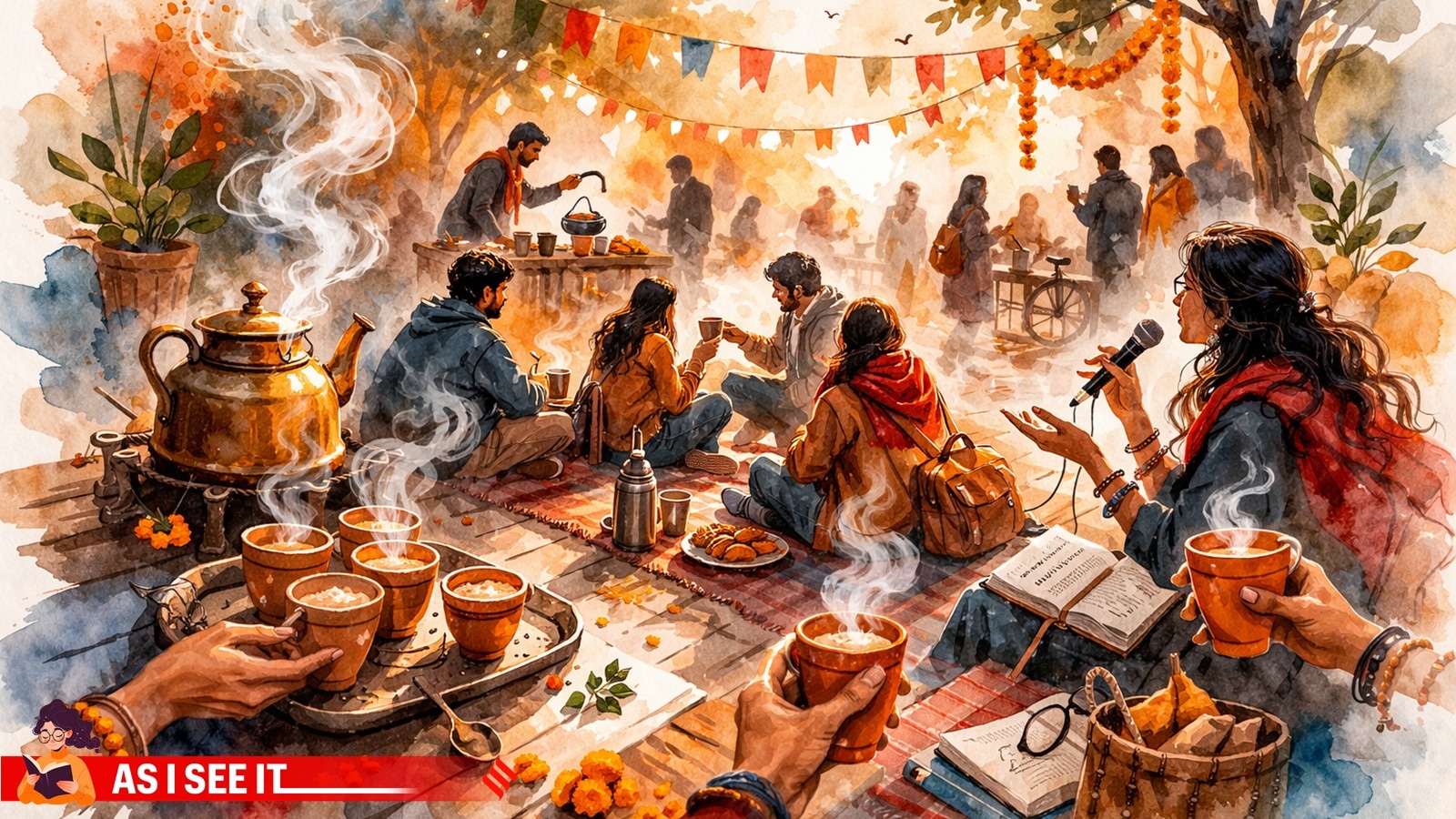
In a country where chai has long transcended its status as a domestic staple to become a cultural metaphor for reunion, apology, warmth, and camaraderie, the Jaipur Literature Festival—in collaboration with a major tea brand—displaced this intimate ritual from the private sphere and resituated it on a public stage.
What is typically a quiet exchange of ghazals, shayari, and poetry over tea was rendered collective and visible. There is something intrinsically intimate about a cup of chai; it has never been solely about taste. It is memory. It is inheritance. The festival drew people from across the country, each bringing their own recipes, memories, and affective ties to the brew.
Chai as cultural strategy
In these moments, chai ceased to function merely as an object of consumption and became what Michel de Certeau would call a use—a way of “making do” with what is available. The simple act of sharing tea transformed an orchestrated cultural strategy into something lived, inhabited, and subtly altered through practice.
De Certeau distinguishes between strategies, which belong to institutions that organise and secure space, and tactics, which are temporary, improvisational, and dependent on time rather than place. At the Jaipur Literature Festival, chai functioned tactically. Within an event carefully mapped by venues and scheduled programming, the act of drinking tea produced fleeting interruptions—pauses that reclaimed time, softened boundaries, and allowed participants to reappropriate the space in small but meaningful ways. These were not acts of overt resistance, but of quiet negotiation.
Between sessions, near stalls, and along the festival’s winding paths, tea operated as a spatial practice—a way of inhabiting the festival otherwise. Much like de Certeau’s pedestrian, who “writes” the city through movement, festival-goers inscribed intimacy onto the grounds through repetition and habit, transforming abstract cultural space into a lived place. A single cup of chai can hold weather, fatigue, companionship, and care—even what de Certeau might recognise as a form of everyday defiance.
Chai and democracy
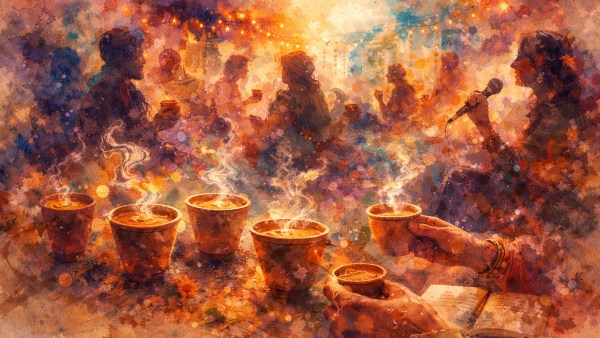 Clay cups of chai rise like small hearths of memory, their steam dissolving into a dreamlike crowd of voices and silhouettes. (Express Photo/AI)
Unlike coffee, which often signals urgency or intellectual seriousness, chai remains insistently democratic. It belongs as much to the kitchen stove as to the roadside stall, as readily to a shared hostel thermos as to the manicured lawns of a literary festival. Each cup, then, matters less for its precise recipe than for the moment it frames: a pause between sessions, a shield against the winter chill, a gesture of generosity.
Story continues below this ad
In foregrounding chai, the Jaipur Literature Festival reveals something essential about culture itself: that it is not produced only through texts and performances, but through the tactical, ordinary practices by which people continually remake spaces designed without them in mind.
(Khushi Mohunta is a researcher and writer interested in everyday life, cultural practice, and the intersections of space and intimacy.)
(As I See It is a space for bookish reflection, part personal essay and part love letter to the written word.)
© IE Online Media Services Pvt Ltd