

Four years ago, much of the Western football world discovered its conscience.
Ahead of the 2022 World Cup in Qatar, federations from Norway, Denmark, and Germany — and many more — questioned the host’s human rights record. Armbands were designed. Statements were issued. Football, we were told, was about values as much as goals. The tournament became a referendum on Qatar itself.

Fast forward to 2026, and the contrast is impossible to ignore.
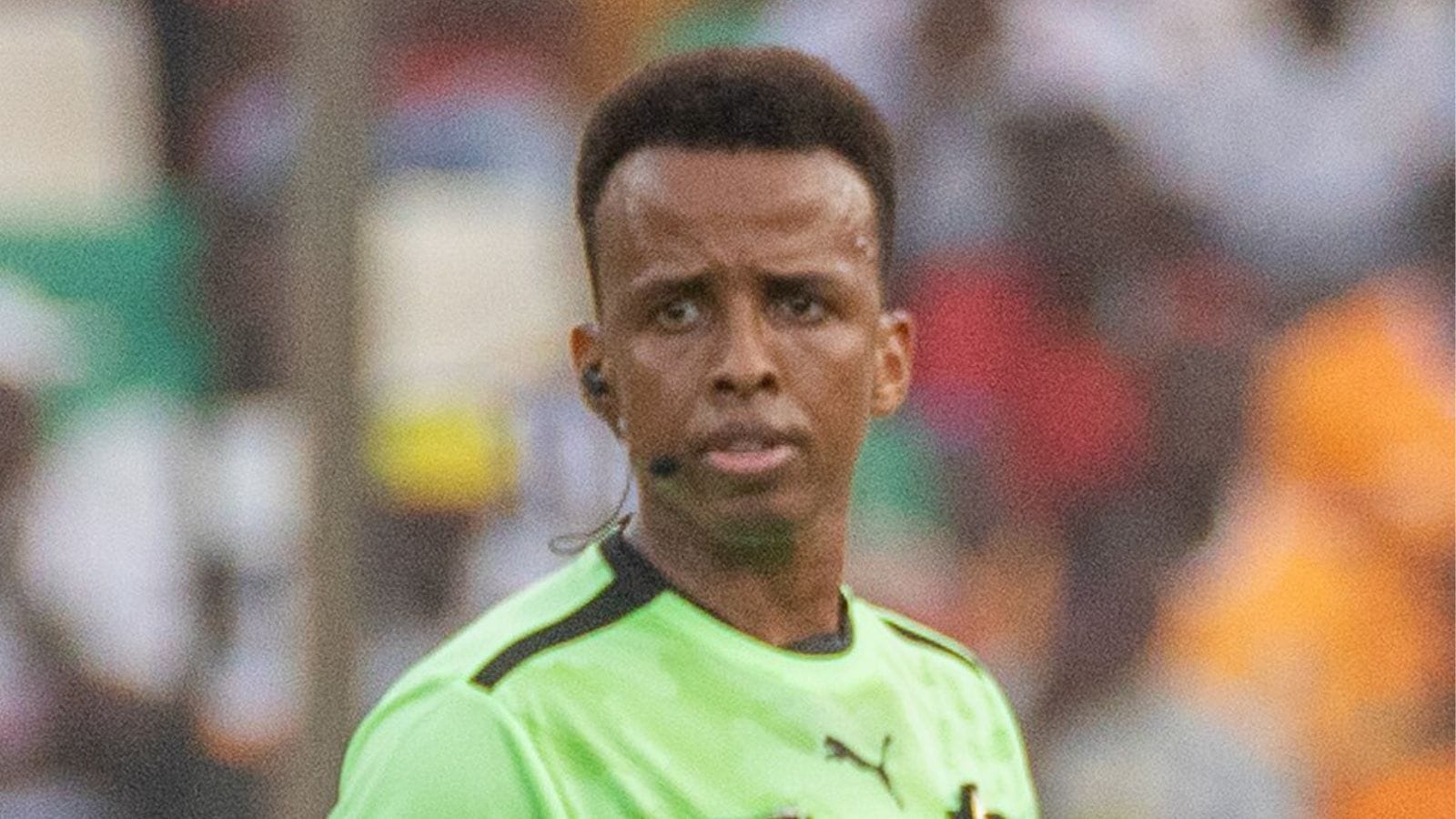
Days before kick-off, Somali referee Omar Artan — selected by FIFA and due to become the first from his country to officiate at a men’s World Cup — was denied entry into the United States despite holding a valid visa. FIFA confirmed that he would miss the tournament entirely because all referees are required to operate from the World Cup’s central training base in the US. Artan is not some obscure official caught in bureaucratic crossfire. He is one of Africa’s most respected referees, having worked the Africa Cup of Nations, and was named Africa’s best male referee last year. Yet, his World Cup dream ended not on a football field, but at an immigration desk.
The reaction? Muted.
What if it wasn’t America?
Former tennis great Martina Navratilova was among the few prominent sporting voices to publicly question the episode. But compared to the moral outrage directed at Qatar before 2022, the silence has been deafening. Imagine, for a moment, if Qatar had denied entry to a referee because of his nationality, religion, or sexual orientation on the eve of the World Cup. The condemnation would have been immediate and relentless. Editorial boards, politicians, and sporting bodies would have demanded answers. But when the host nation is the United States, the standards suddenly appear more flexible.
The Artan affair is not an isolated incident.
Iran, one of the qualified teams, has spent the build-up navigating a maze of restrictions. FIFA regulations ordinarily guarantee each federation a share of tickets for distribution among supporters, yet Iran says that allocation has effectively been withdrawn. Journalists, officials, and ticket-holding fans from other countries, too, have complained about visa troubles. Last weekend, Iraq striker Aymen Hussein was questioned for nearly seven hours, and his phone was checked when the team arrived in Chicago. The team’s photographer was held for more than 10 hours and was denied entry.
This comes against the backdrop of broader American travel restrictions that affect citizens from several nations. Security concerns and the Ebola outbreak are cited as other reasons for the strict procedures. Nevertheless, the contrast with another episode from global sport is striking.
Olympic Committee – universal values, selectively applied
In 2019, when India denied visas to Pakistani shooters ahead of a shooting World Cup in New Delhi following the Pulwama terror attack, the reaction from the Olympic movement was swift and severe. The International Olympic Committee suspended discussions on future events in India and advised international federations against awarding Olympic qualification competitions to the country until guarantees were provided. The message was clear: Host nations cannot selectively exclude eligible participants.
That principle appears considerably harder to enforce when the host is the world’s most powerful country.
Qatar was scrutinised partly because scrutiny came at little geopolitical cost. The US occupies a different place in world sport. FIFA’s commercial future is deeply tied to the North American market. Broadcasters, sponsors and governing bodies all understand where influence resides. Criticising Doha carried few consequences. Criticising Washington is another matter altogether.
That does not mean every criticism of Qatar was wrong. Many were justified. Nor does it mean the United States should be held to an impossible standard. Every host nation faces legitimate security concerns and immigration challenges.
But consistency matters.
The issue is not that Qatar was scrutinised. The issue is that similar scrutiny has largely vanished when comparable questions emerged elsewhere.
It’s not just about football
The implications extend beyond football. In just two years, Los Angeles will host the 2028 Olympics, likely during the final months of Donald Trump’s presidency. Athletes, coaches, officials, and journalists from countries currently facing travel restrictions will all need access. The International Olympics Committee’s charter promises universality. Ensuring that the promise survives contact with immigration policy may become one of the biggest administrative challenges of the Games.
Previous World Cups have shown how quickly controversy fades when the first whistle blows, and the tournament produces its own drama. Great goals, underdog stories, and unforgettable matches have a way of pushing politics into the background.
That may happen again. But long after the final is played, the memory of this World Cup may not simply be about football. It may also be remembered for exposing a truth about global sport: That principles are often applied unevenly, outrage is frequently selective, and morality sometimes depends on who holds the power.
That, more than any result on the field, is what makes 2026 feel like the World Cup of hypocrisy.
The writer is Deputy Associate Editor, The Indian Express. mihir.vasavda@expressindia.com


