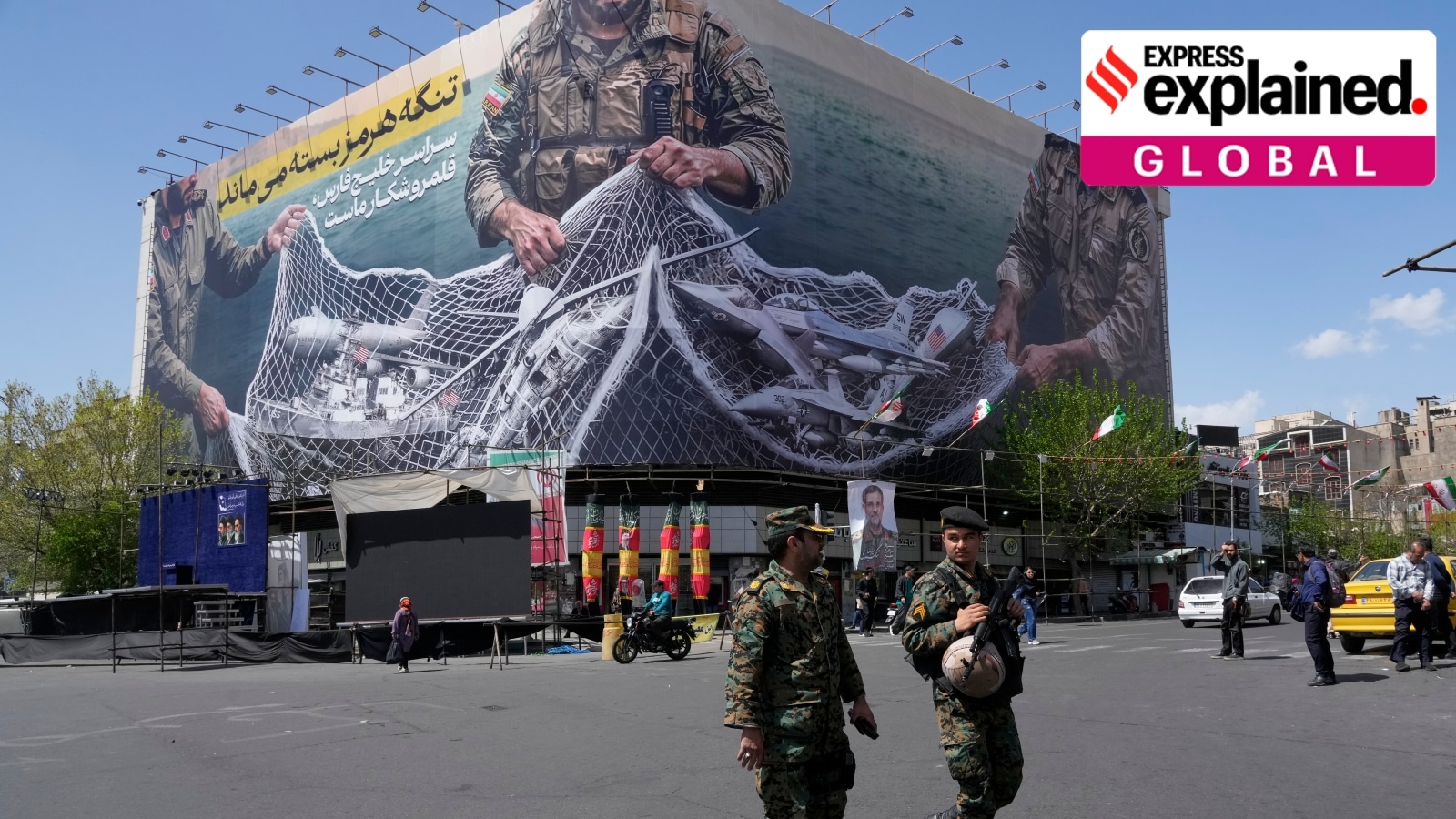
The ceasefire in West Asia appears increasingly fragile, with Israel stepping up its bombing of Lebanon and prompting Iran to again block the movement of vessels through the Strait of Hormuz.
The two-week period for talks between the US and Iran, therefore, becomes crucial to not just strike a lasting peace but also to ensure the flow of energy through the maritime chokepoint that accounts for a fifth of the world’s oil demand during peacetime.
Ajay Singh, an energy and shipping executive based in Tokyo, tells Anil Sasi that even if the ceasefire holds, restarting and stabilising production and exports from the Persian Gulf could possibly take weeks. Singh, who is a former Shell and Japan Petroleum Corporation executive with considerable experience of West Asia, also explains why the US and Venezuela cannot replace the Gulf as a supply source even in the long run. Edited Excerpts:
With a ceasefire having been announced between the US-Israel and Iran, what are the prospects for oil and gas exports to resume out of the Persian Gulf?
A ceasefire has been announced but it is still unclear whether all three warring countries are fully on board, and whether it will fully take effect and hold. That is essential for substantial oil and gas exports through the Strait of Hormuz to resume. Disagreements have been reported among the parties concerned about the terms of the ceasefire.
Meanwhile attacks have continued in Kuwait, the UAE, Saudi Arabia, Iran and Lebanon including on oil and gas facilities. Therefore, it is currently too early to say that oil and gas exports can substantially re-commence.
If the ceasefire actually takes effect and holds, then exports could resume relatively quickly but they will initially be quite limited. Tankers are at hand in the Persian Gulf region, as are stocks of oil and gas at export terminals, but everything has been idle for weeks and it will take time for volumes to build up. Various problems will need to be sorted out, from fixing accumulated technical issues at export terminals and aboard ships, to seeing to essential supplies and relief for seafarers stuck on board, to coordination between exporters and buyers of oil and gas, shipping companies, insurers and the authorities exercising control over the Strait of Hormuz.
Story continues below this ad
We need to bear in mind that there are around 500 tankers and gas carrier ships stuck on either side of the Strait of Hormuz, which could make for a sort of maritime traffic jam. Moreover, production across various oil and gas fields, refineries and LNG plants had been reduced and even shut down in many cases. Restarting and stabilising production and exports will take several days, possibly weeks.
The ceasefire has been announced for two weeks. How significant is that timeframe for energy markets?
The period is insufficient to make a major and reliable difference to global oil and gas supply. The main considerations behind that timeframe would be military and negotiation-related. During this, the parties will remain positioned to resume combat.
Story continues below this ad
Meanwhile, whether merchant ships can be sent back into the Gulf will depend on what confidence can be gained from the progress of expected negotiations.
Until the parties agree to a settlement or at least stand down from combat readiness, supply out of the Gulf will remain limited. For oil and gas consuming countries, the main relief currently lies in the partial cooling down of prices. Sourcing of supply will remain a challenge. It is important to continue preparations for a scenario of prolonged conflict, at a higher or lower level of intensity than thus far.
What role, in your view, did the oil price play in the push for a ceasefire?
It played a key role. Gasoline prices at the pump in America had risen by 35% since the start of the war and the stock markets had taken a beating, causing political concern on the US side.
Story continues below this ad
Second, although the military action against Iran has caused immense damage, there are doubts over its efficacy in ending the alleged nuclear weapons programme and missile capability.
Meanwhile, further stoppage of oil and gas exports via Hormuz, beyond the six weeks that have already elapsed, raises the prospect of much higher and prolonged rise in prices and a global recession. So, reopening the Strait of Hormuz rightly became the pressing central issue. Reports from Washington and Islamabad indicate that China nudged both sides toward a ceasefire.
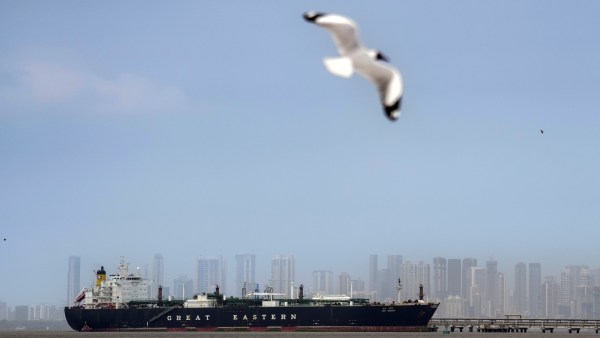 LPG tanker ‘Jag Vasant’ in Mumbai after transiting the Strait of Hormuz. PTI
A view has been expressed that the US has ‘plenty of oil’ and that countries concerned about the Strait of Hormuz blockade could buy American and Venezuelan oil instead. Could this alleviate the situation?
The blockade of the Strait of Hormuz — even after some diversion of exports through pipelines — has choked off perhaps 15 million barrels of oil supply per day. That is more than total current US production, which in any case is mostly consumed internally.
Story continues below this ad
Venezuela has huge reserves but they are of very poor quality and expensive to produce. The country also has a poor record as a reliable producer.
Around 90 million tonnes in annual Qatari and Emirati LNG exports have also been shut in. Most current US LNG production is already committed for export on a long-term basis to various buyers. And new exports that will come on stream in the US and elsewhere in coming months will make up for less than half of the choked-off volume.
Even in the long term, it is unlikely that the US along with Venezuela can substantially displace the Persian Gulf as a supply source. Moreover, the cost of production of oil and gas in the Persian Gulf region is the lowest in the world, and diversification of supply sources dictates continuing to buy substantial volume from there.
What are the prospects for success of the negotiations?
Not bright at the moment, at least not within the stated two-week ceasefire duration. The gap between the respective positions of the two sides is wide and the underlying issues have proven intractable over decades. The results of the fighting so far have likely changed the power balance among the parties, as well as with the Gulf Cooperation Council countries, quite significantly.
Story continues below this ad
Iran is reaching for deeper, long-lasting strategic outcomes, such as removal of sanctions and the military withdrawal of the US from West Asia.
Breaking out of the economic isolation of decades is vital for Iran to restore prosperity to its people, and for the ruling dispensation to endure. The last six weeks would have brought about sobering realisations on all sides. It will require a great deal of sagacity, mustering of hitherto-absent mutual goodwill, walking back of hardened positions and willingness to live-and-let-live by all sides to reach accommodation. One hopes for the best.
What do you think about the proposed toll for ships to transit the Strait of Hormuz?
Story continues below this ad
As an economic cost it would not be unviable, if reports of the proposed toll effectively working out to $1/barrel of crude oil are correct. But it is a major political question.
Unlike waterways such as the Suez Canal and the Panama Canal, which are human-made assets built within the territories of Egypt and Panama respectively, straits are natural waterways and there is generally no toll charged for transit through them.
There is an exception in case of the Bosporus and the Dardanelles — straits which lie within the territory of Turkey — where a special international treaty, the Montreux Convention, allows Turkey to levy a toll.
I suppose such an arrangement could be worked out in the case of the Strait of Hormuz. But this should be through a broad agreement among countries that would be affected, such as major petroleum supplier and buyer nations, and in exchange for strong and enforceable guarantees that transit would not be interfered with in future for whatever reason. Even so, such a change could set a problematic precedent where all manner of settled matters are opened up by countries.