

After the opening of MacBook Neo a few days agoiFixit is back with a full teardown of the new iPhone 17e, revealing some surprisingly repair-friendly changes inside. Check it out below.
Cross-compatibility gives it a 7 out of 10 repairability score
One of the biggest knocks against the iPhone 16e was the lack of MagSafe support.
Despite the widely held notion that this wouldn’t be a big deal for the device’s intended audience, Apple introduced MagSafe support with iPhone 17e.
Today, iFixit published its collapse of the iPhone 17e and showed that the back panel of the device with MagSafe is fully compatible with the iPhone 16e.
In practice, this means iPhone 16e owners may be able to add MagSafe support to their devices simply by swapping out the back panel, with a few caveats:
“The 16e doesn’t seem to have the software to recognize the MagSafe plug, so the signature ‘thunk’ and animation I was expecting to see are missing. The jury is out on whether a 16e with a 17e back cover can match the 17e’s 15W charging speed, we’ll test it and report back once we know.”
In fact, iFixit notes that most components are cross-matched between the iPhone 16e and iPhone 17e. They even managed to boot an iPhone 17e using an iPhone 16e logic board, although Face ID didn’t work.
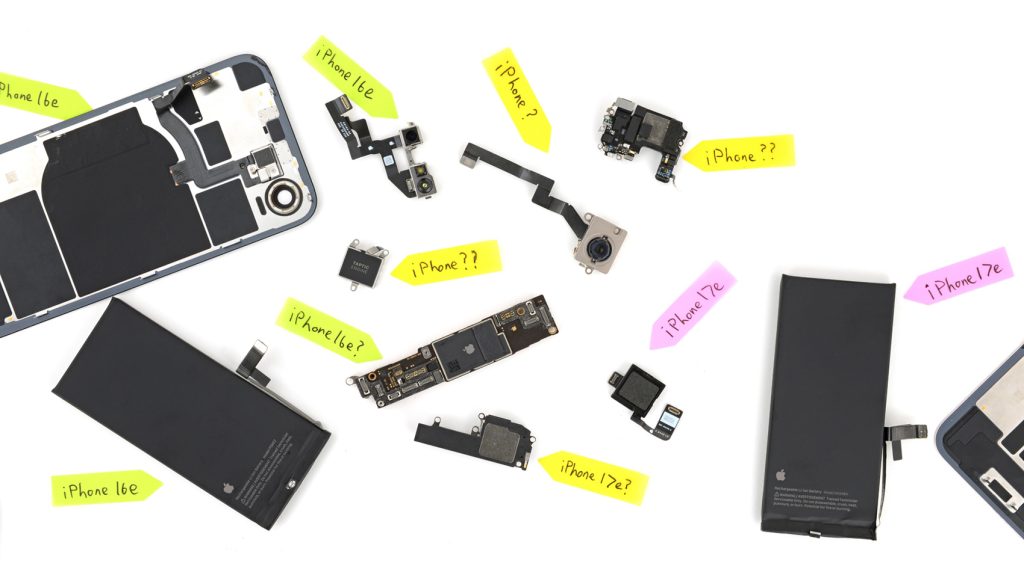
As iFixit notes:
“That kind of interoperability matters. It makes repairs easier, parts easier to get and upgrades cheaper.”
In closing, iFixit notes that the iPhone 17e disassembly process is very similar to that of the iPhone 16e and other recent iPhones, in which the front and back panels can be opened independently. This, in turn, means “you can change a battery without having to go through a fragile screen”.
On the other hand, iFixit notes that removing the USB-C port is still a much more complicated process than it needs to be, given that it needs to be replaced or repaired much more often than the components underneath.
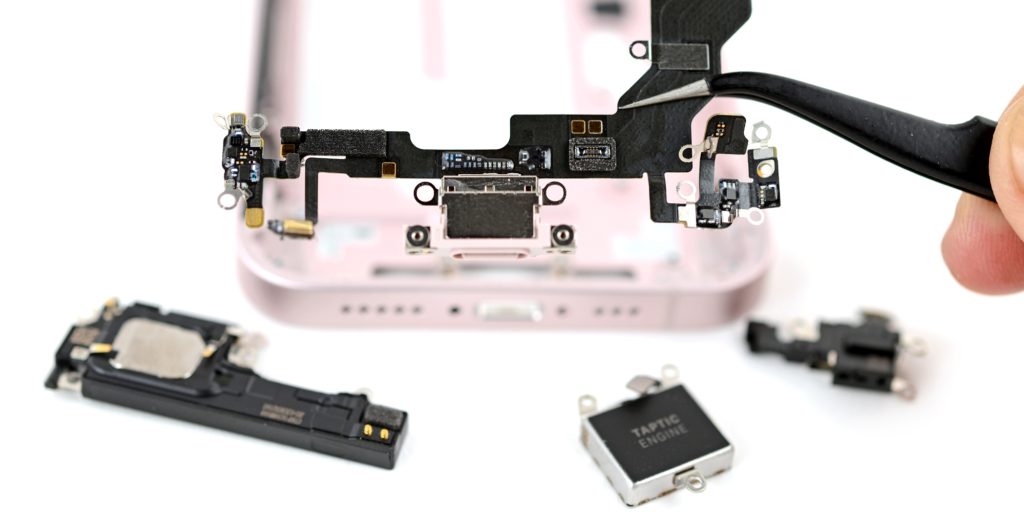
Overall, the iPhone 17e (provisionally) scores a 7 out of 10 on iFixit’s repairability scale. This is largely due to the high level of parts interchangeability, which they note is either a deliberate attempt to make repair easier, or a byproduct of Apple’s efforts to streamline manufacturing.
Either way, the iPhone 17e looks like a win for DIY consumers, including those who own an iPhone 16e.
Check out the breakdown below:
It’s worth checking out on Amazon


FTC: We use automatic affiliate links to earn income. More.