

Across the quiet farmlands of Hassan, Mandya and Mysuru stand some of Karnataka’s most remarkable yet overlooked Hoysala-era monuments — temples and basadis (shrines) that once formed the spiritual fabric of a thriving medieval kingdom. Built between the 11th and 13th centuries, these shrines reveal the dynasty’s signature blend of devotion and sculptural mastery, extending far beyond the celebrated sites of Belur, Halebidu and Somanathapura.
Carved from the soft, malleable soapstone favoured by Hoysala artisans, the structures rest on star-shaped platforms and feature sanctums arranged in ekakuta, dvikuta and trikuta formations. Their walls unfold like stone tapestries: celestial dancers, finely turned pillars and friezes dense with epic narratives.
Once a vibrant Hoysala outpost, Koravangala is home to three temples built by three brothers. The Nageshwara and Govindeshwara temples (1160 CE) showcase an early phase of Hoysala workmanship. A decade later came the village’s architectural peak — the Bucheshwara temple (1173 CE), raised by Buchi in honour of Veera Ballala II. Today, Bucheshwara stands restored, while the older shrines linger in graceful decay.
Long before it lent its name to fast bowler Javagal Srinath, the village was a key commercial centre under King Vira Someshwara. Its jewel is the Lakshminarasimha temple (1250 CE), a striking trikuta shrine known for its elegant elephant sculptures and a later Vijayanagara-era gateway.
The Lakshmidevi temple at Doddagaddavalli (1114 CE) is among the earliest surviving Hoysala structures. Its stark lines set it apart from later ornate creations, while its rare Mahakali shrine, guarded by skeletal betalas (guardian deity), hints at ancient tantric traditions. Built by merchant woman Sahaja Devi, the temple’s four-shrine plan — dedicated to Lakshmidevi, Shiva, Vishnu and Kali — captures a moment of early Hoysala ambition.
The 12th-century Hulikere Kalyani near Halebidum, with its stepwell, showcases the dynasty’s imagination in water architecture. Commissioned around 1160 CE by Lattayya, an official of Narasimha I, it is also steeped in local lore as the private bathing pond of Queen Shantala Devi.
A short walk from the exuberant Hoysaleshwara temple lies the Jain Basadi complex. The Parshvanatha (1133 CE), Shantinatha (1192 CE) and Adinatha Basadis reflect Jain principles of restraint and clarity.
Together, these sites reveal an intricate world beyond the kingdom’s famous temples, one in which the Hoysala imagination continues to whisper through stone.
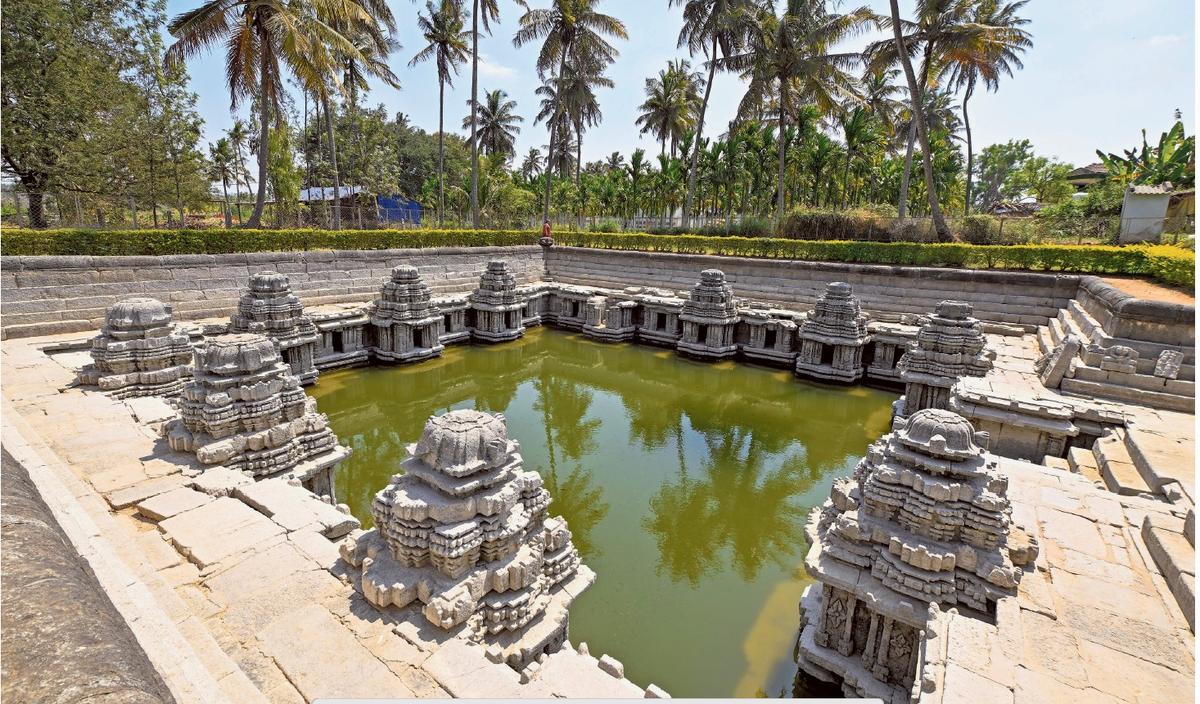
Photo:
K. Murali Kumar
Ritual descent: The 12th-century Hulikere Kalyani is among the finest examples of Hoysala water architecture. Built below ground level with steps descending on all four sides, it includes 12 shrines with shikharas and 14 without, symbolically linked to the zodiac and the 27 nakshatras.
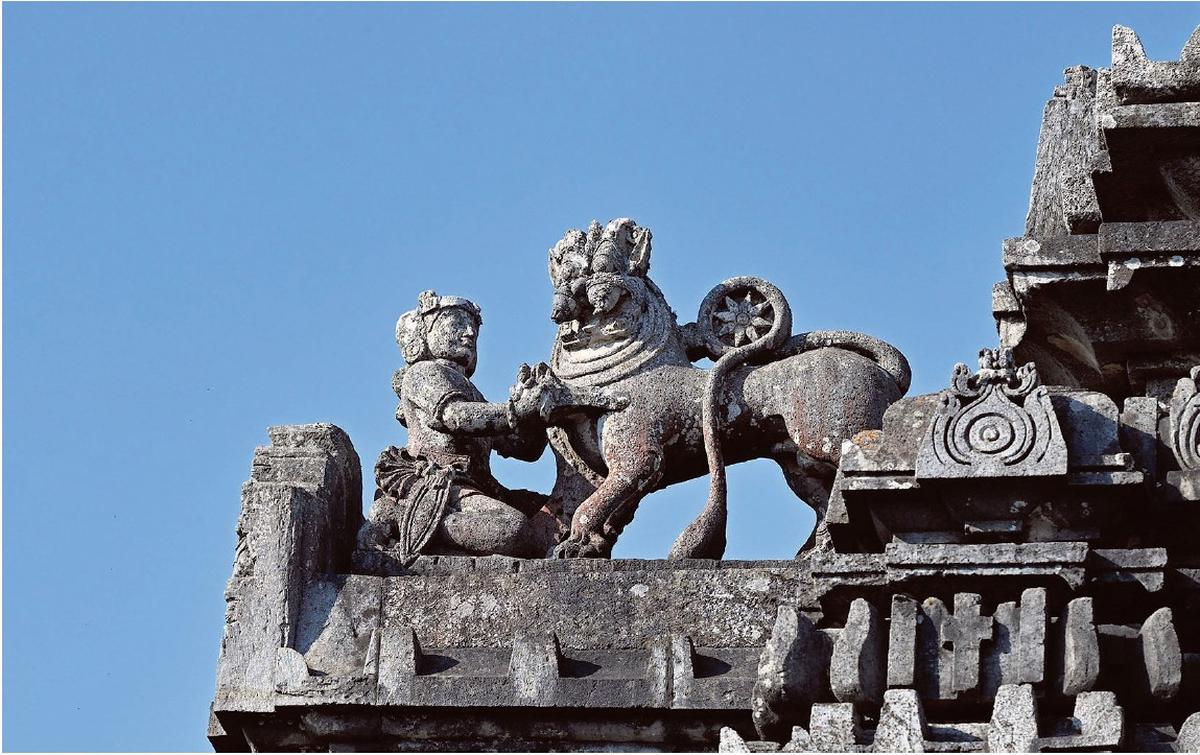
Photo:
K. Murali Kumar
Dynastic mark: The Hoysala lanchana, depicting the legendary founder Sala slaying a tiger, is carved atop the Lakshmidevi temple.
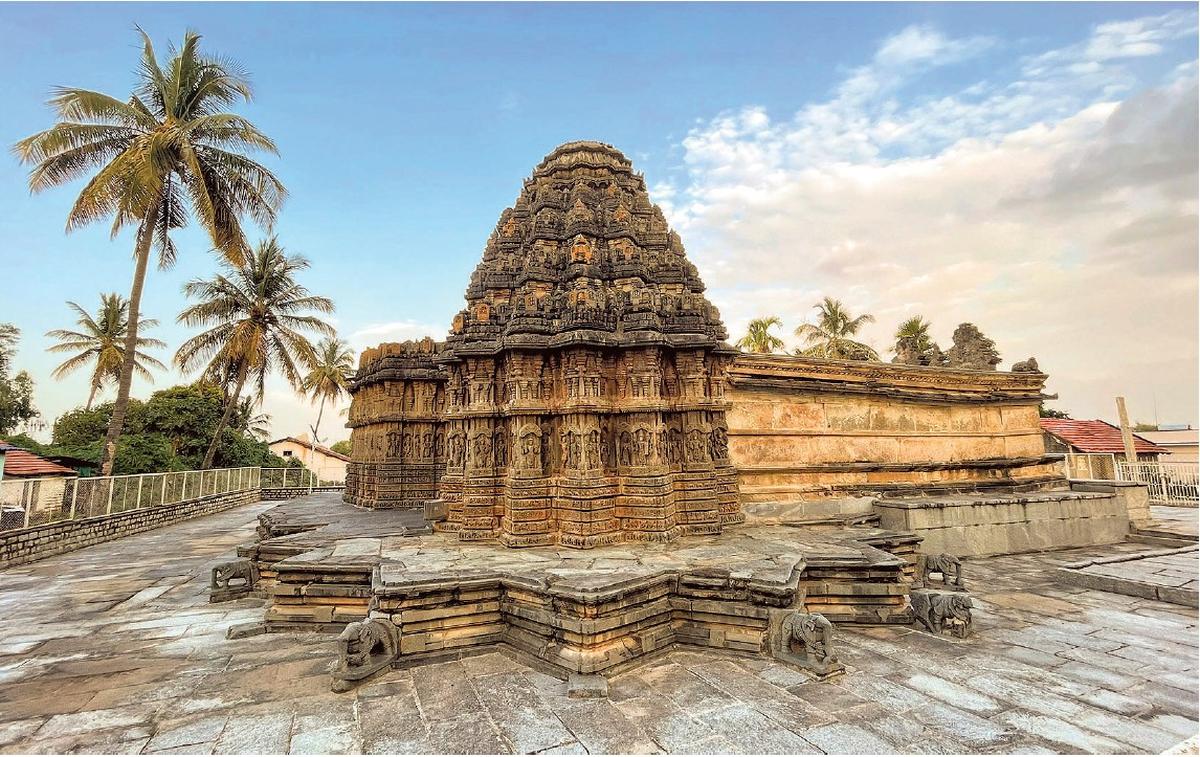
Photo:
K. Murali Kumar
Pointed base: The 13th-century Chennakeshava temple, built under King Vira Someshwara, stands on a striking 16-pointed star-shaped raised platform (jagati).
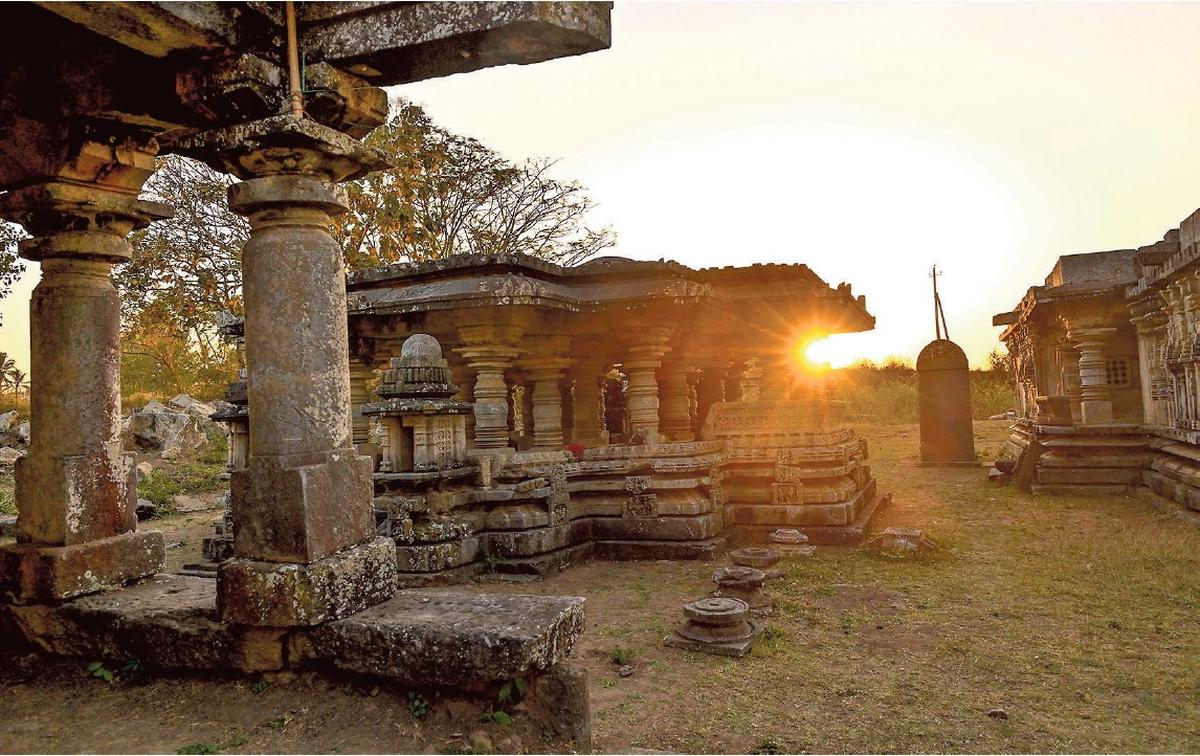
Photo:
K. Murali Kumar
Fading grandeur: The sun’s rays thread through the temples of Koravangala, Nageshwara and Govindeshwara, in the Hoysala-era village where three brothers built three shrines.
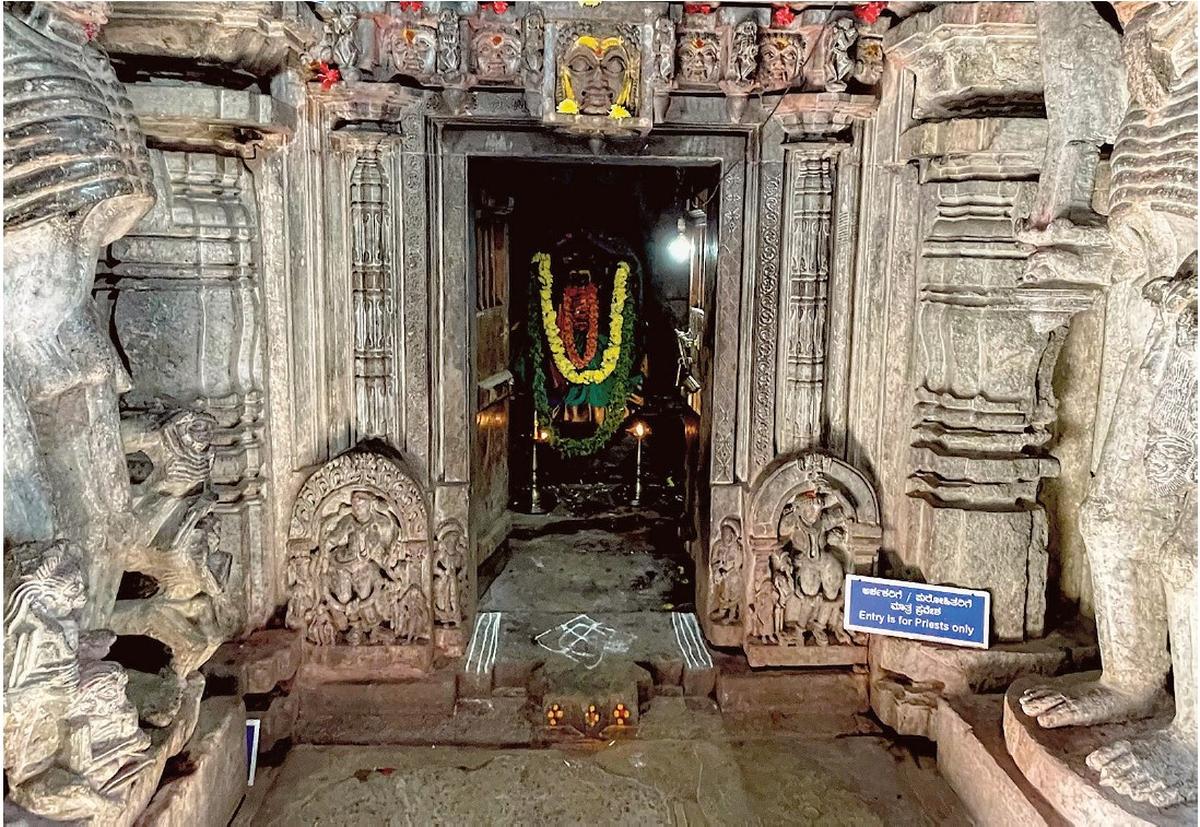
Photo:
K. Murali Kumar
Tantric trace: Built in 1114 CE, the Lakshmidevi temple stands in stark contrast to the dynasty’s later creations, with its highly ornate architecture. Its stone-cut towers frame a rare Mahakali shrine guarded by skeletal betalas, figures associated with early tantric traditions.
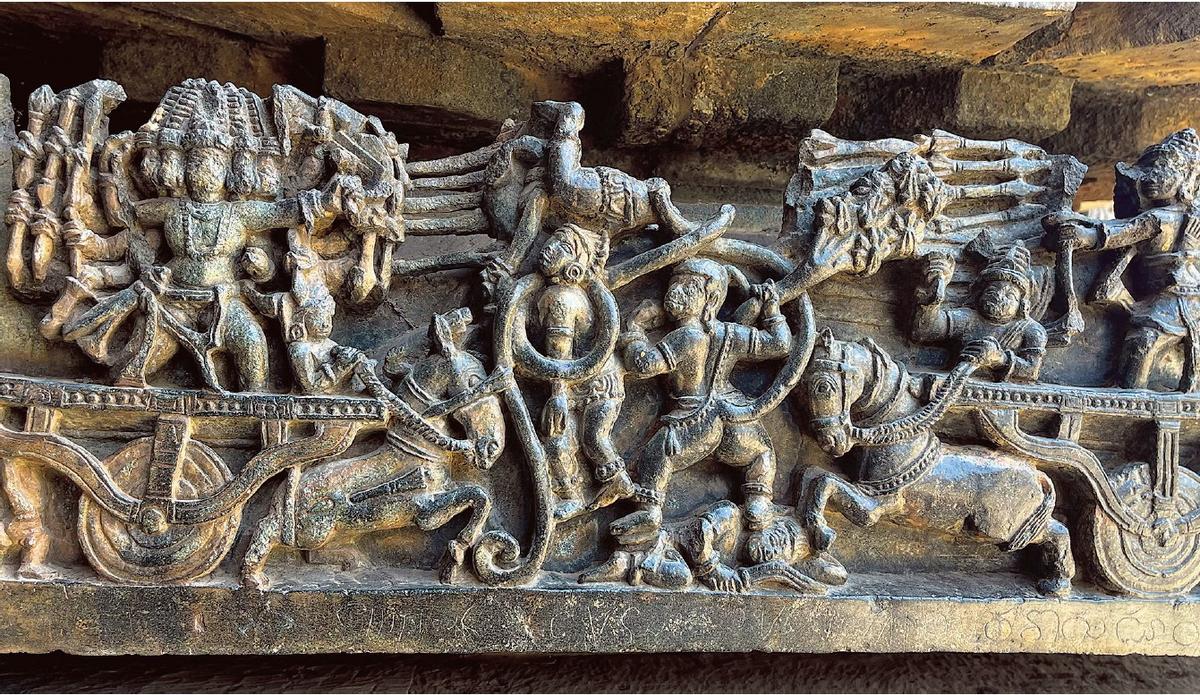
Photo:
K. Murali Kumar
Epic in stone: A raging battle between Rama and Ravana is depicted across the walls of the Hoysaleswara temple, a 12th-century Shiva temple.
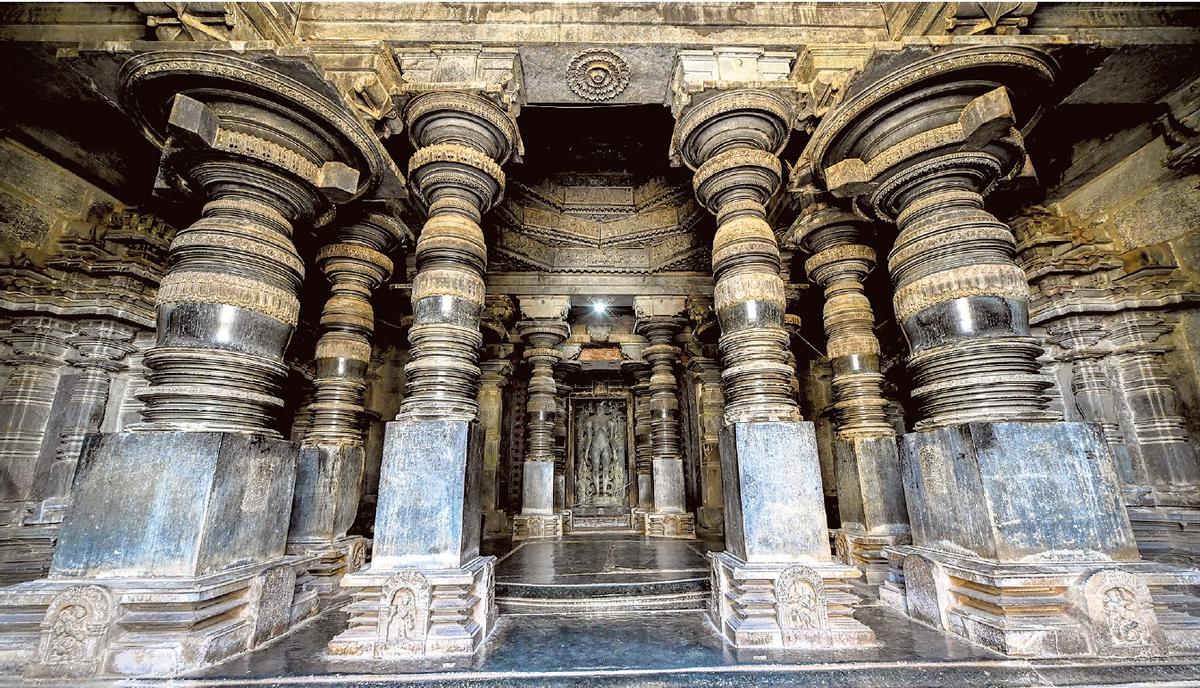
Photo:
K. Murali Kumar
Sacred restraint: A short walk from the ornate Hoysaleswara temple stands the Jain complex of Halebidu. The Parshvanatha (1133 CE), Shantinatha (1192 CE) and Adinatha shrines embody Jain ideals of restraint and contemplative stillness
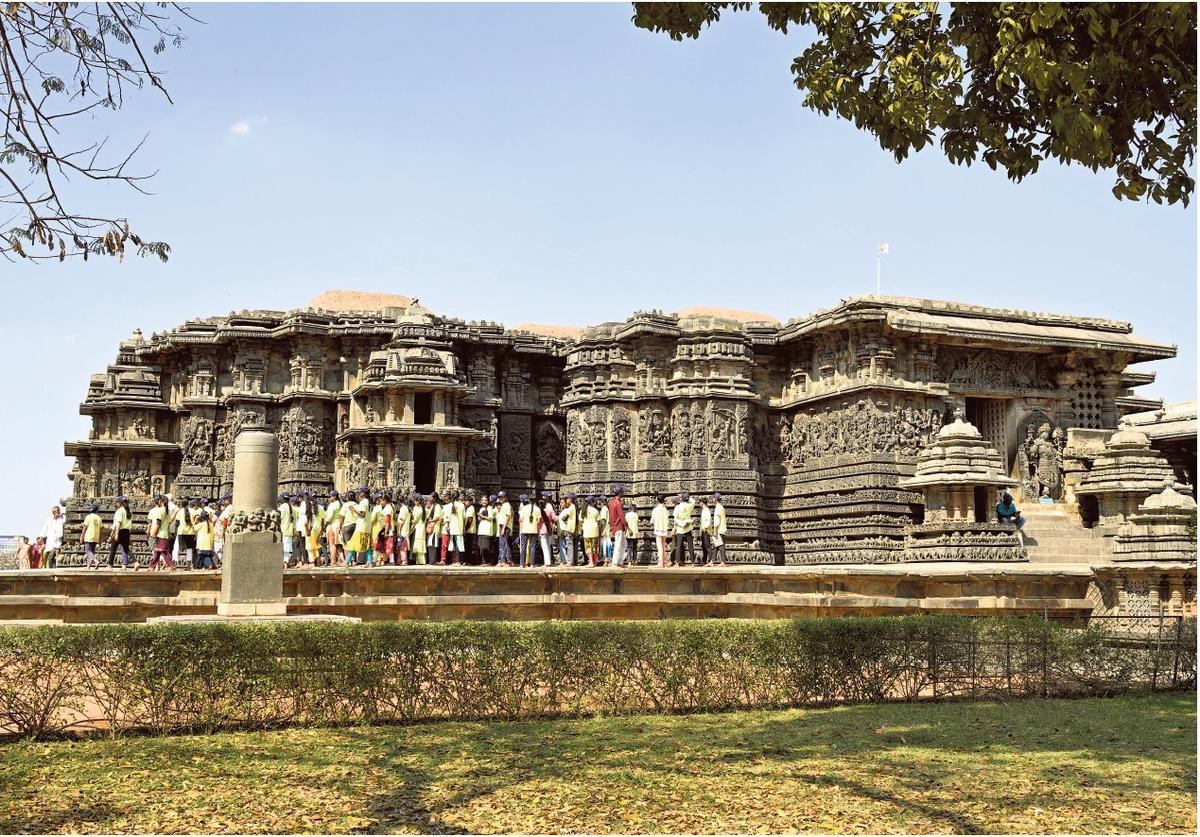
Photo:
K. Murali Kumar
Living legacy: Visitors gather at the Hoysaleswara temple, where intricate 12th-century carvings continue to draw crowds centuries after their creation.
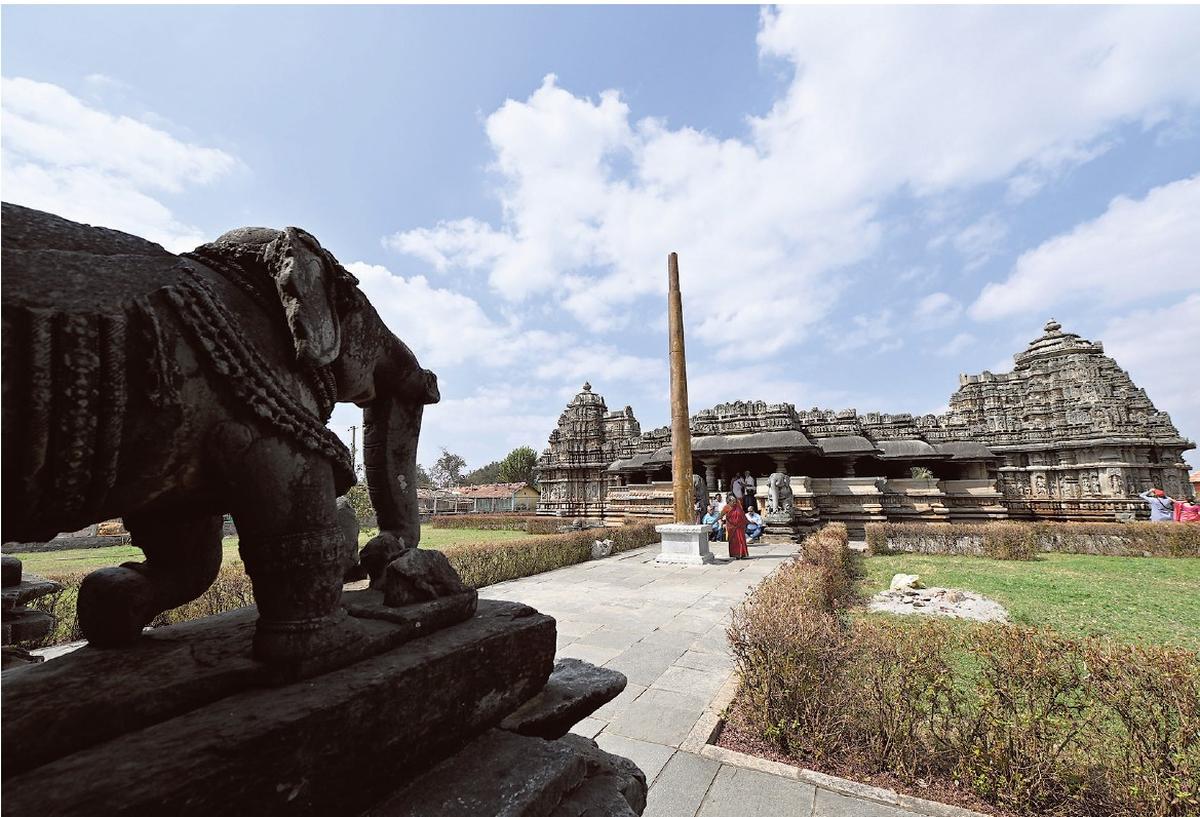
Photo:
K. Murali Kumar
Golden hour glory: Morning light washes over the Veera Narayana temple. Built around 1200 CE by King Veera Ballala II, the temple is renowned for its expansive ranga-mandapa and rows of uniquely carved elephants inside.
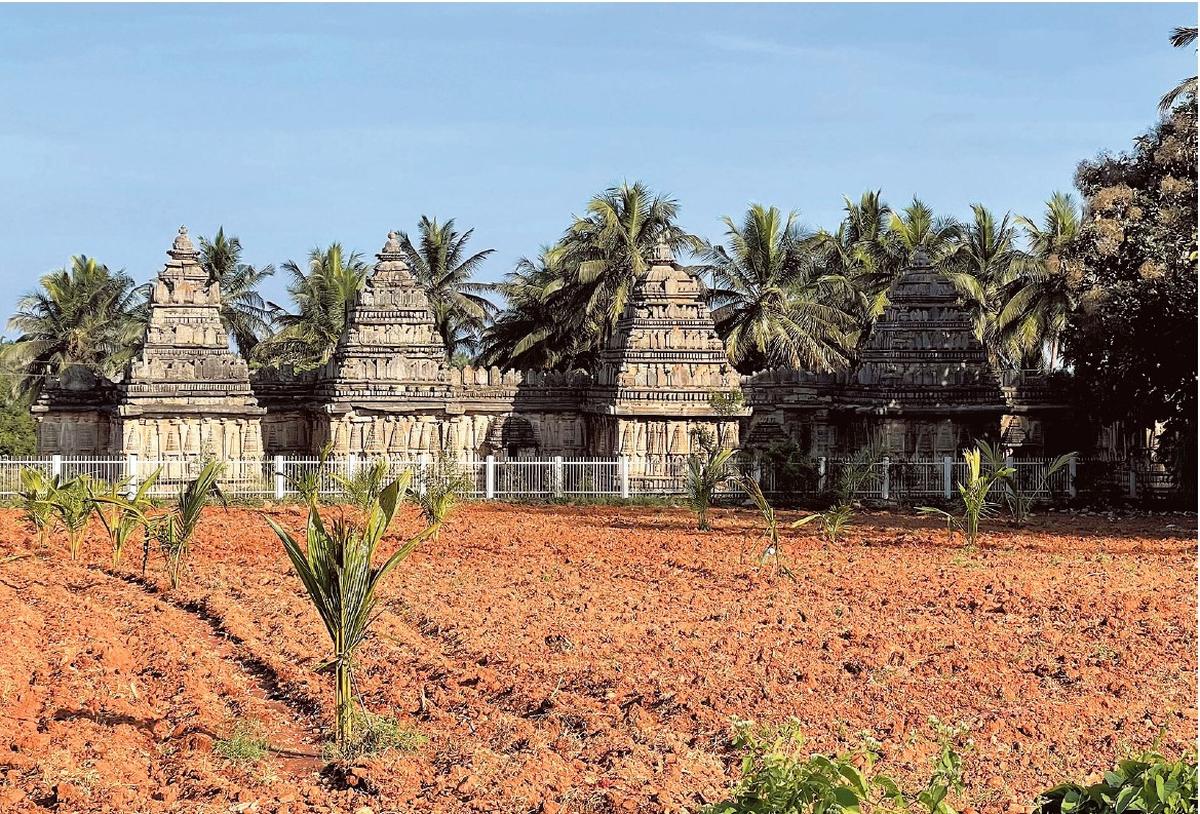
Photo:
K. Murali Kumar
Enduring wonder: Set amid agricultural fields in Mandya district, the 13th-century Panchalingeshwara temple shows a rare Panchakuta design, five east-facing Shiva shrines aligned in a row and connected by a pillared hall, all set in understated yet refined stonework.
Published – February 22, 2026 08:59 am IST