

Is India the most vulnerable to prolonged oil supply shocks in wake of the ongoing Middle East tensions post Israel-US strikes on Iran and the latter’s retaliation? India, a fast-growing oil consumer, is the country most vulnerable to crude supply shocks if the Middle East conflict leads to a prolonged disruption in shipments from the region, mainly because of its thin reserves, analysts said.India is the world’s fastest growing major economy and a fast-growing consumer of oil. Its vulnerability to supply shocks stems from the relatively small reserves and strategic oil reserves. This is especially much lower than its neighbour China which has a six months buffer in case of continuing disruptions. Nearly 90% of Middle Eastern oil exports are destined for Asia. Japan and South Korea rely even more heavily on the region, sourcing about 95% and 70% of their oil, respectively.Also Read | Oil prices spike! Will petrol, diesel rates be hiked in India as crude nears $80 mark on Middle East tensions? However, both countries maintain far larger reserve buffers than India and China. Japan’s oil stockpiles are sufficient for around 254 days of consumption, while a South Korean government official said the country’s reserves can cover roughly 208 days.
India vs China Oil Reserves
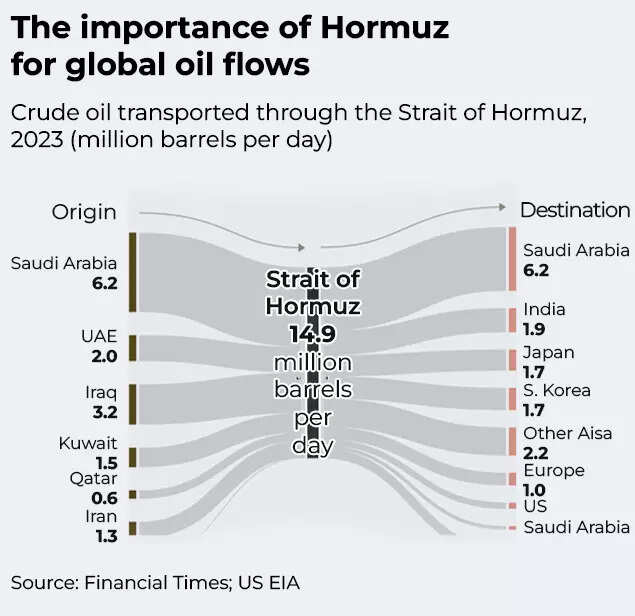
Both India and China are big consumers of oil from the Middle East. In fact, around 50 per cent of India’s crude imports make their way through the Strait of Hormuz. However the vulnerabilities differ due to oil storage capacity differences, according to a Reuters report.India’s dependence on oil from the Middle East and transiting through the Strait of Hormuz has also gone up in the last few months after it reduced crude oil procurement from Russia.
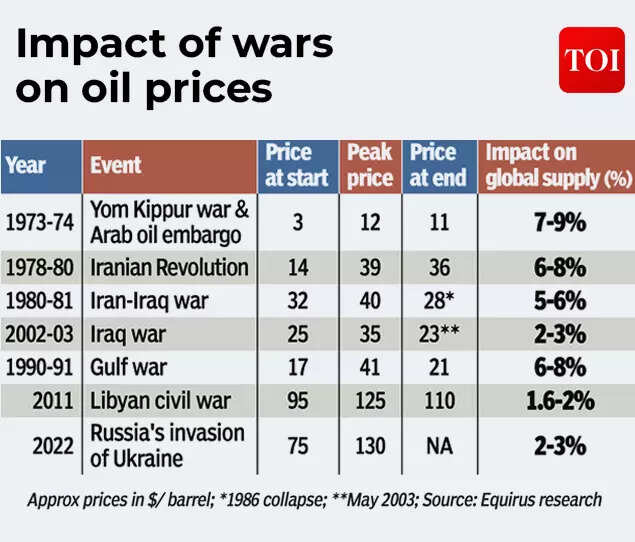
“China has at least six months’ worth of crude supplies in storage. Indian inventories are much lower though, and so (it) is much more vulnerable in this situation,” Ajay Parmar, director of energy and refining at ICIS, a commodities research group was quoted as saying by Reuters.The vulnerability facing these major Asian economies highlights the widespread fallout from the Israeli and US strikes on Iran, which have escalated into a broader regional confrontation and shut down the Strait of Hormuz. This narrow passage is a critical chokepoint, handling about one-fifth of global oil shipments. Analysts have warned that an extended conflict could drive fuel costs higher. As of January, India was importing approximately 2.74 million barrels per day from the Middle East, which is around 55% of its total crude purchases. That share marks the highest level since late 2022, after Indian refiners scaled back Russian oil intake amid pressure from Washington.
Last month, Oil Minister Hardeep Singh Puri said that India has sufficient crude and fuel stocks to meet demand for about 74 days. A supply disruption of this scale could compel India to diversify its sourcing. In a post on X on Monday, the oil ministry said that the government would take all required measures to maintain fuel availability at reasonable prices.Also Read | Middle East oil shock risks: How much do China, India, Japan depend on Middle Eastern crude, gas?
Wider global impact
Although Europe and the United States are not major direct importers of Middle Eastern crude, analysts caution that a prolonged halt in flows through the Strait of Hormuz would still affect them through higher global prices.“If we see a prolonged war, with the Strait out of use for an extended period, it would mean all countries globally competing for every incremental barrel of oil possible,” said Parmar.Matt Smith, an analyst at Kpler, noted that Europe could encounter difficulties securing jet fuel, as the Middle East Gulf supplies about 45% of Europe’s seaborne jet fuel imports.In recent years, the United States has reduced its dependence on Middle Eastern oil as it emerged as the world’s largest oil and gas producer. According to US data, the country imported less than 900,000 barrels per day from Gulf nations last year. A US official said Washington is not currently considering a release from the Strategic Petroleum Reserve, although previous administrations have drawn on it during periods of conflict.