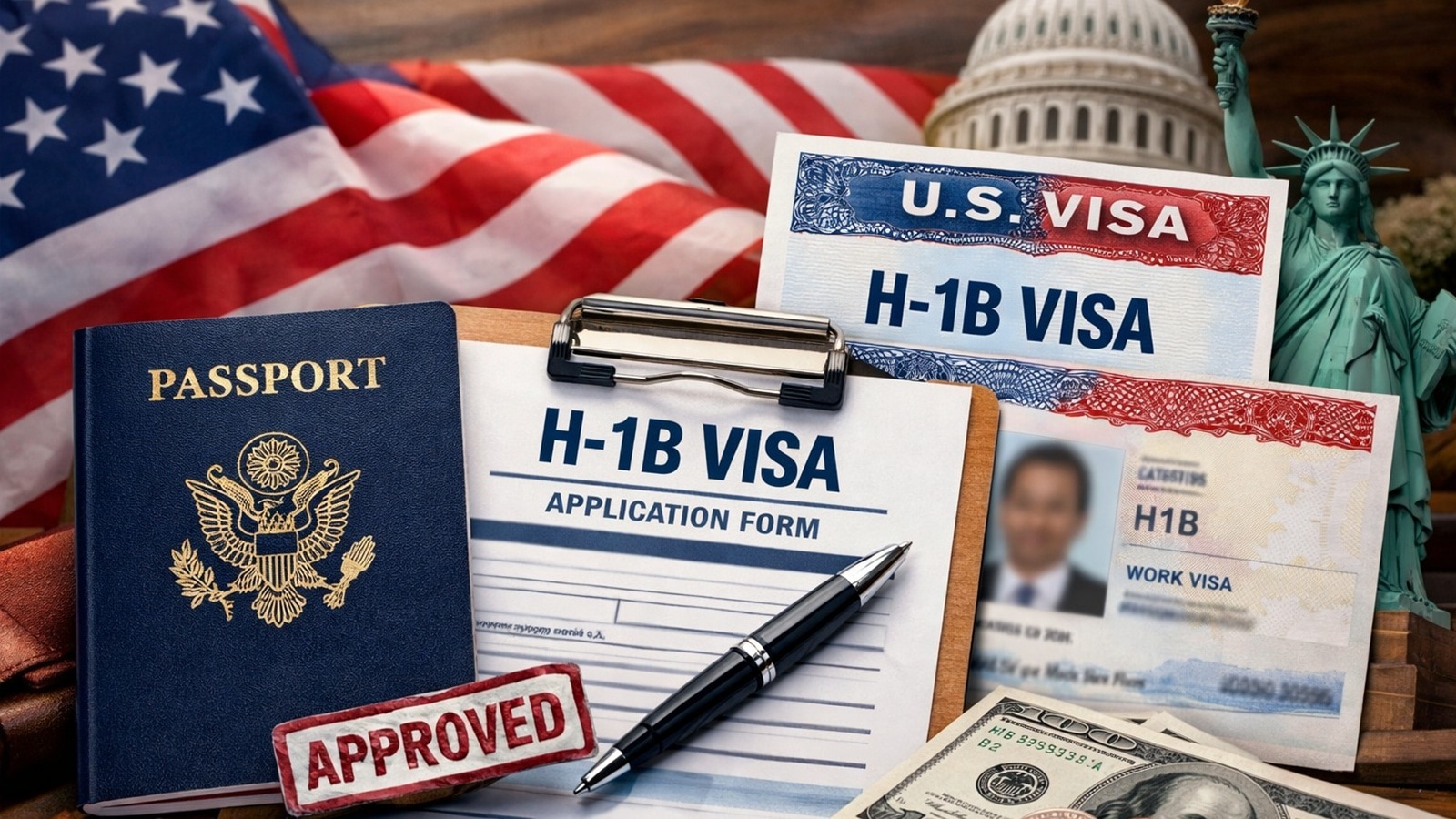
The United States will expand its screening process for visa applicants, including those applying for H-1B visas, by requiring a broader review of their online presence and mandating public access to social media profiles, the State Department said in an official announcement.
According to the US Department of State, the new rules will take effect from March 30. The expanded review will cover a wide range of non-immigrant visa categories, including domestic workers of diplomats and international officials (A-3, C-3, G-5), trainees and their dependents (H-3, H-4), and family-based visas such as fiancé(e) and spouse categories (K visas).
The policy also extends to cultural and religious visas (Q, R), as well as special categories such as informants and victims of crime or trafficking (S, T, U). These additions expand existing screening measures that already apply to H-1B workers and student and exchange visa holders under the F, M and J categories.
OVERVIEW
Who can work in the US on a visa?
The US issues work-related visas for skilled professionals, trainees, domestic staff of foreign officials, and religious workers. Each category comes with strict eligibility conditions — and in most cases, employer sponsorship is required.
H-1B
Most sought-after work visa
6
Work-related visa types listed
65K
H-1B cap per fiscal year
💼
H-1B Skilled Foreign Workers
For workers in specialised occupations — typically requiring a bachelor’s degree or higher. The most common route for tech, finance, and healthcare professionals.
🎓
H-3 Trainees
For non-employment training programmes not available in the applicant’s home country. Does not permit productive employment.
🙏
R-1 Religious Workers
For ministers and religious workers employed by a non-profit religious organisation in the US.
🏛️
A-3 · C-3 · G-5 Diplomatic Household Staff
Domestic workers employed by diplomats (A-3), foreign officials in transit (C-3), or international organisation staff (G-5). These visas have faced scrutiny over labour exploitation risks.
FAMILY IMMIGRATION
Visas that keep families together
The US issues several non-immigrant visas specifically for family relationships — covering fiancé(e)s, dependents, and spouses awaiting green cards. These are distinct from immigrant (permanent residence) family petitions.
💍
K-1 Fiancé(e) of a US Citizen
Allows the foreign-national fiancé(e) of a US citizen to enter the US to marry within 90 days. Popularised (and scrutinised) via the TV show 90 Day Fiancé.
👧
K-2 Children of K-1 Holders
Issued to unmarried children (under 21) of K-1 visa holders so the family unit can enter the US together.
👫
K-3 Spouse Awaiting Processing
For the foreign-national spouse of a US citizen who is waiting for their immigrant visa petition to be processed. Allows them to live in the US in the interim.
👨👩👦
H-4 · R-2 Dependents
H-4 covers spouses and children of H visa holders. R-2 covers dependents of religious workers. Both allow the family to live in the US but typically restrict employment.
EDUCATION & EXCHANGE
Four visas for learners and visitors
The US runs several programmes for students, researchers, interns, and cultural exchange participants. The J visa is the broadest — covering everyone from au pairs to Fulbright scholars.
F
Academic students (universities, colleges)
M
Vocational & non-academic students
🔬
J Exchange Visitors
The widest exchange category — covers students, researchers, professors, interns, au pairs, and camp counsellors. Many J-1 holders must return home for two years after their programme ends.
🎭
Q Cultural Exchange
For participants in international cultural exchange programmes that share the history, culture, and traditions of their home country with Americans — often through work or training.
PROTECTION & SPECIAL PURPOSE
Visas for the vulnerable and law enforcement
Three visa categories exist specifically to protect crime victims and support US law enforcement. The T and U visas were created by the Trafficking Victims Protection Act (2000) to encourage victims to come forward without fear of deportation.
🚨
T Victims of Human Trafficking
Allows trafficking victims to remain in the US, access federal benefits, and work. Requires cooperation with law enforcement. Capped at 5,000 per year.
⚖️
U Victims of Certain Crimes
For victims of qualifying crimes (e.g. domestic violence, sexual assault, kidnapping) who have suffered abuse and are helping police or prosecutors. Capped at 10,000 per year.
🕵️
S Informants & Witnesses
Issued to foreign nationals who possess critical reliable information about criminal organisations or terrorism and assist US law enforcement or courts.
Sources: US Department of State · USCIS · Trafficking Victims Protection Act, 2000
Applicants asked to make social media profiles public
The United States has urged all visa applicants to make their social media activity publicly accessible as part of the new screening requirements.
“To facilitate this vetting, all applicants for A-3, C-3 (if a domestic worker), G-5, H-3, H-4 dependents of H-3, K-1, K-2, K-3, Q, R-1, R-2, S, T, U, H-1B, H-4, F, M, and J nonimmigrant visas are instructed to adjust the privacy settings on all of their social media profiles to ‘public’ or ‘open’”, the US Department of State said.
Visa decisions linked to national security
According to the SD, the move is aimed at strengthening security checks, adding that the department uses “all available information” to identify applicants who may be inadmissible or pose risks to national security or public safety.
Story continues below this ad
“Every visa adjudication is a national security decision,” the State Department said, stressing the need for vigilance in ensuring applicants do not intend to harm US interests.
The expanded screening builds on exisFting checks already applied to categories such as H-1B workers and student visas, and comes amid a broader tightening of immigration oversight.
The statement also reiterated that a US visa “is a privilege, not a right,” and applicants must clearly demonstrate their eligibility and intent to comply with visa conditions.