

Paytm parent One 97 Communications Ltd. could be poised for a potential re‑rating due to several positive triggers. These include valuation catch‑up potential with Flipkart-owned PhonePe, expected Reserve Bank of India approval for its wallet business, strong technical support near its 200 day daily moving average, and solid third quarter results.
Founder and Chief Executive Officer Vijay Shekhar Sharma has emphasised improving revenue and profit momentum, intent to offset PIDF impact, plans to revive the Paytm Wallet, renewed focus on the core business model, and significant upside potential in the merchant segment. Paytm Wallet ceased operations after the RBI shut down Paytm Payments Bank in January 2024.
“I would rather say, as a promise, we will bring the Wallet back home,” Sharma told analysts at the recent post-earnings call, as per a media report. However, he did not specify a timeline for the relaunch.
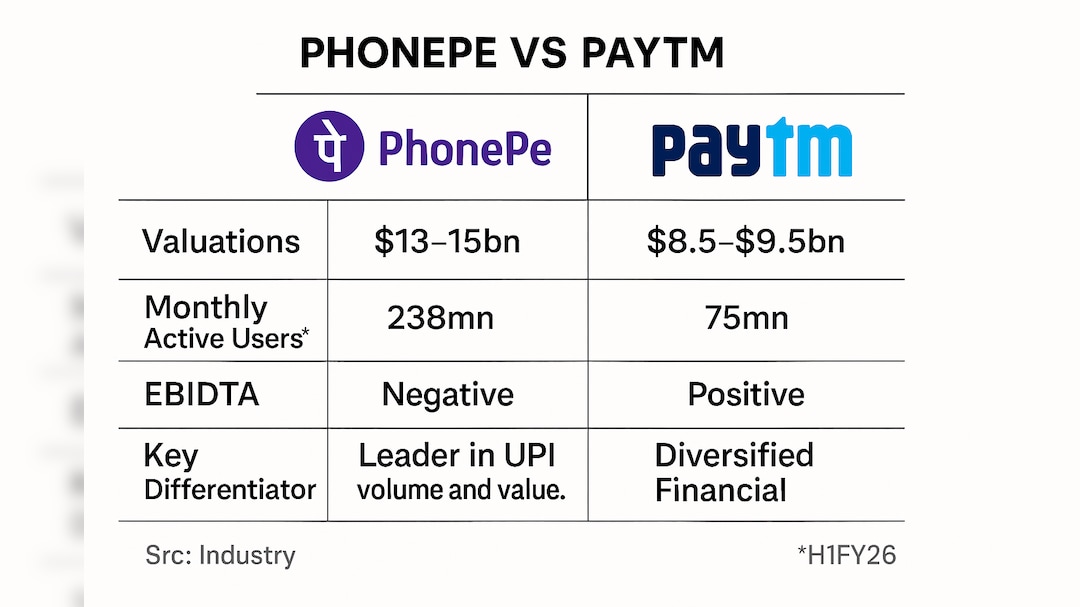
The RBI’s Payment Infrastructure Development Fund (PIDF) incentive was aimed at accelerating digital payments infrastructure across Tier-3 to Tier-6 centres, as well as underserved regions including the Northeastern states and the Union Territories of Jammu, Kashmir and Ladakh. It was valid until December 31, 2025. For the six months ended Sept. 30, 2025, Paytm recognised Rs 128 crore in incentive revenues under the scheme.
In the third quarter, Paytm reported a 6.5% year‑on‑year rise in revenue to Rs 2,194 crore, while Ebitda grew 11% to Rs 156 crore, leading to a marginal improvement in margin to 7.1% from 6.8% a year ago. Net profit saw a sharp jump to Rs 225 crore compared with Rs 21 crore in the same quarter last year.
The growth was driven primarily by higher traction in financial services and supported by lower indirect costs, which helped boost profitability. According to Morgan Stanley, the contribution margin would have been in the mid‑50% range in Q3 if not for the impact of the PIDF incentive.
During the concall, management expressed strong confidence in sustaining high growth and margins, reiterated its focus on the core business model, pointed to significant upside in the merchant business, highlighted the role of subscription revenues and cross‑selling in supporting growth, and indicated plans to bring back the Paytm Wallet.
Paytm share price has risen 56% in the last 12 months but down 11% year-to-date. Fourteen out of the 21 analysts tracking Paytm have a ‘buy’ rating on the stock, six recommend a ‘hold’ and one suggests a ‘sell’, according to Bloomberg data. The average of 12-month analyst price targets is Rs 1,380, which implies a potential upside of 19%.
ALSO READ: Paytm Logs Another Quarterly Profit In Q3, Records Over 10x Surge
Essential Business Intelligence,
Continuous LIVE TV,
Sharp Market Insights,
Practical Personal Finance Advice and
Latest Stories — On NDTV Profit.