

4 min readNew DelhiMar 18, 2026 04:28 PM IST
Chhattisgarh High Court news: The Chhattisgarh High Court has held that pension is not a bounty and the state cannot deny rightful dues to a retired employee or his family due to its own failure to conclude departmental proceedings in time, affirming interest on pensionary benefits delayed by nearly three decades.
A bench comprising Chief Justice Ramesh Sinha and Justice Ravindra Kumar Agrawal was hearing the state’s appeal against a single judge verdict granting 9 per cent interest on the release of pension of a government employee after 23 years.
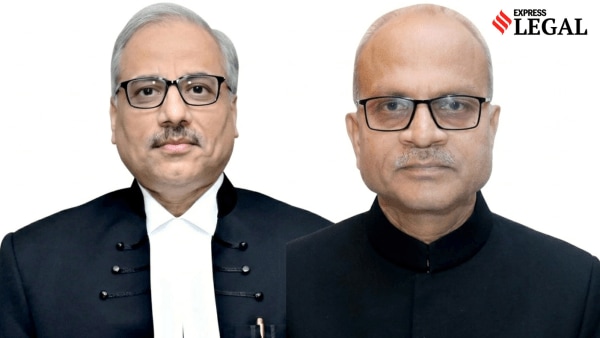 Chief Justice Ramesh Sinha and Justice Ravindra Kumar Agrawal observed that the state retained the money that was due for decades.

“Administrative inefficiency or delay in completing departmental proceedings cannot operate to the detriment of the retired employee or his family,” the court said on March 17.
Pension not bounty, delay extraordinary
- Pension and other retiral benefits are not a bounty but constitute a valuable and enforceable right of an employee earned by virtue of long years of service.
- Once such benefits become due, the employer is under a corresponding obligation to ensure their timely disbursement.
- Where there is an unjustified or prolonged delay in the release of such dues, the grant of interest is a recognised and appropriate remedy to compensate the retired employee or his dependents for the deprivation of money lawfully belonging to them.
- In the present case, the delay in release of the retiral benefits has undeniably extended over a very long period.
- The explanation offered by the appellants/state that the benefits could not be released due to the pendency of disciplinary proceedings does not satisfactorily justify the extraordinary length of time for which the inquiry remained inconclusive.
Interest justified on grounds of equity
- Addressing the absence of a statutory provision for interest, the court clarified that writ courts have inherent powers to grant relief based on equity, fairness, and justice.
- It held that the state retained money due for decades.
- Interest is a legitimate compensatory mechanism.
- The single judge’s order was legally sound.
- Dismissing the state’s appeal, the court upheld the direction to pay interest at 9 per cent per annum on delayed retiral dues, finding no illegality or perversity in the single judge’s order.
Inquiry lingering since 1994
- The case traces back to allegations of financial irregularities against the late R J Agrawal, an executive engineer in the Water Resources Department, in April 1994.
- He was suspended on October 7, 1994, and reinstated on May 1, 1995, pending departmental inquiry.
- Agrawal retired on July 31, 1995, but the inquiry remained unresolved for decades.
Closure after 23 years
- The state eventually closed the inquiry on March 8, 2019, citing the impossibility of concluding proceedings after more than two decades.
- However, retiral dues were released only in 2023, after further administrative processes, including certification and pension approval.
- Aggrieved by the prolonged delay and partial denial of benefits, Agrawal’s widow and son approached the high court.
- A single judge in December 2025 directed the state to pay interest at 9 per cent per annum on delayed dues.
- The state challenged this order in appeal.
State’s defence: Statutory bar on gratuity
- The state argued that under Rule 64(c) of the Chhattisgarh Civil Services (Pension) Rules, 1976, gratuity could not be released until disciplinary proceedings concluded.
- It also contended that the delay was procedural and not intentional.
- There is no statutory provision mandating payment of interest.
- The single judge erred in awarding interest without legal backing
Significance
- The ruling reinforces judicial intolerance toward bureaucratic delay in service matters and strengthens the principle that employees and their families can’t be penalised for administrative lapses.
- It also reiterates that courts can award interest even in the absence of explicit statutory provisions, particularly in cases involving long deprivation of rightful dues.

© IE Online Media Services Pvt Ltd