4 min readChennaiApr 11, 2026 10:10 PM IST
When Chennai Super Kings walked back to the dressing room at the interval against Delhi Capitals, they had 212/2 on board. Yet, there were two underlying questions. 1) Did they miss out on at least 20 more runs? 2) Could they have been quick to get off the blocks?
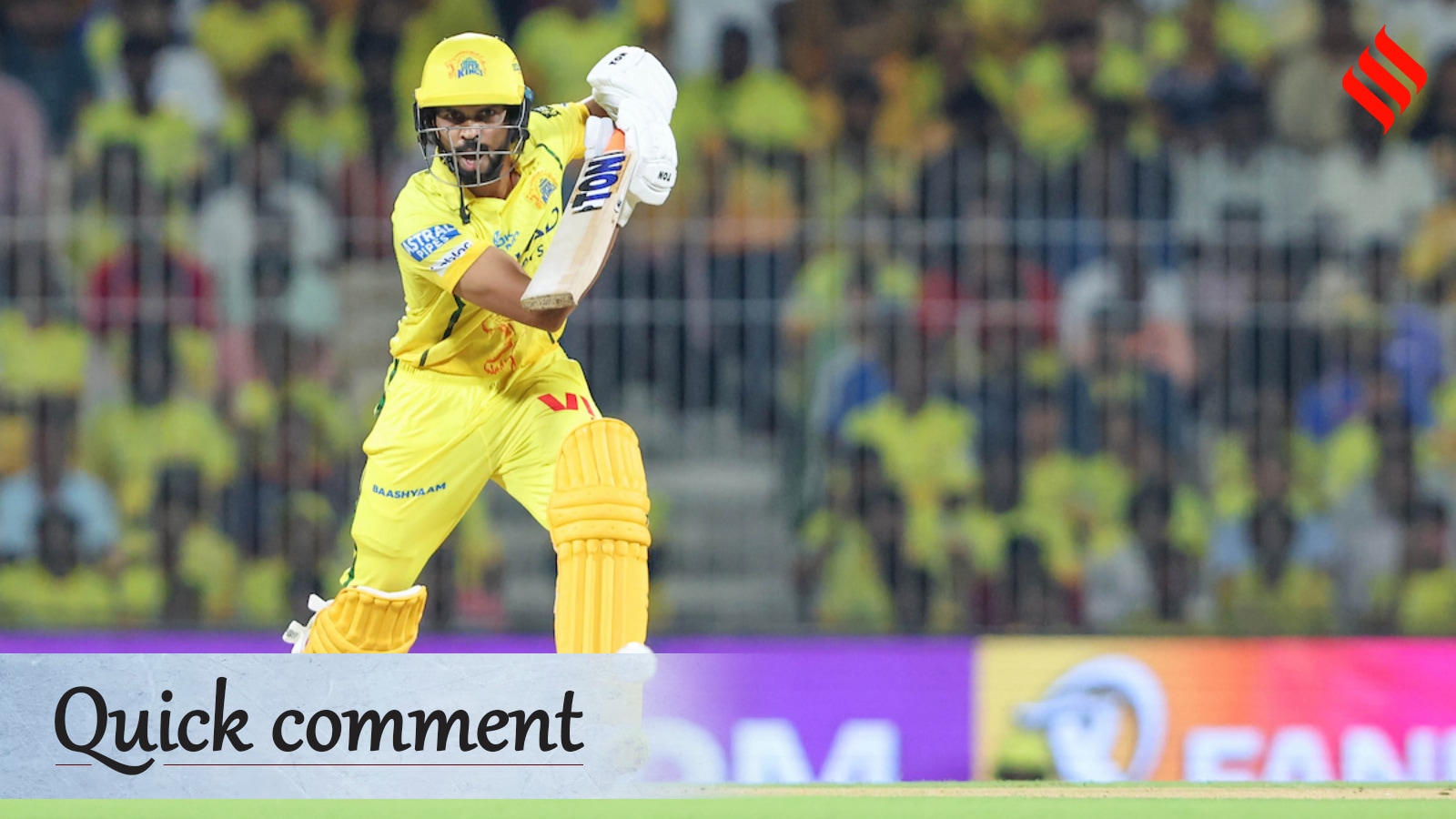
For both these questions, one had to take a hard look at Ruturaj Gaikwad’s innings, where he scored 15 off 18 deliveries on a flat deck where runs were there for the taking.

As CSK have endured another bad start to the season, losing three out of three, one of the bright spots has been the visible change in their batting approach. It is a team that is finally catching up with the pace at which T20s are being played, except for Gaikwad.
Before his innings against Delhi Capitals on Saturday, the CSK captain had scores of 6, 28 and 7. It was enough for pundits to raise a valid question. With Ayush Mhatre in the side and batting at No 3, shouldn’t the 18-year-old be paired at the top with Samson? After all, it is in the powerplay where batting teams set up games. It is where the matches are won and lost in the IPL.
Against a Delhi attack that started with debutant Auqib Nabi, Mukesh Kumar, T Natarajan and Axar Patel in the powerplay, Gaikwad seldom showed the intent. In that crucial phase, even as Samson managed to raise the tempo, Gaikwad was indulging in nudges and guides. The only boundary he scored off Axar was off a short delivery that was asking to be hit. If not, right through those first six overs, Gaikwad was content to hand over the strike to Samson, who seemed to have the licence to go for the kill.
It is the sort of innings that T20 outfits have long moved on from. Leaving it to the other batsman to show intent all the time is fraught with risk. In a format where batsmen embrace a high-risk approach, putting the onus on just one of them is what stops teams from ending up with totals that have few bonus runs in their pocket when factoring in dew and the odd big over that bowlers can go for.
Time and again, the message from CSK’s support staff, led by Stephen Fleming, has been the need to step away from that safety-first approach and improve the scoring rate. For the team to adapt that message and respond, it is pertinent that the captain leads from the front.
Story continues below this ad
Remember how Rohit Sharma was the one to put his hand up and lead India to a brave, new world from where they haven’t looked back? It is what Gaikwad has to do now. In none of the matches so far, he has not led the charge; instead has left it to his partner at the other end. That sort of approach is what Fleming himself admitted was outdated.
Gaikwad was in the reckoning for India’s T20 scheme of things when he won the Orange Cap. But he has fallen down the pecking order precisely for this reason. A strike-rate of 125 against pacers in the powerplay isn’t healthy anymore. It is what forces teams to look for alternatives. A career strike-rate of 140 for an opener looks below the modern standards. And the time has come for Gaikwad to evolve his T20 batting or risk being left behind. In the age of Vaibhav Sooryavanshis and Priyansh Aryas, Gaikwad appears from a bygone era.