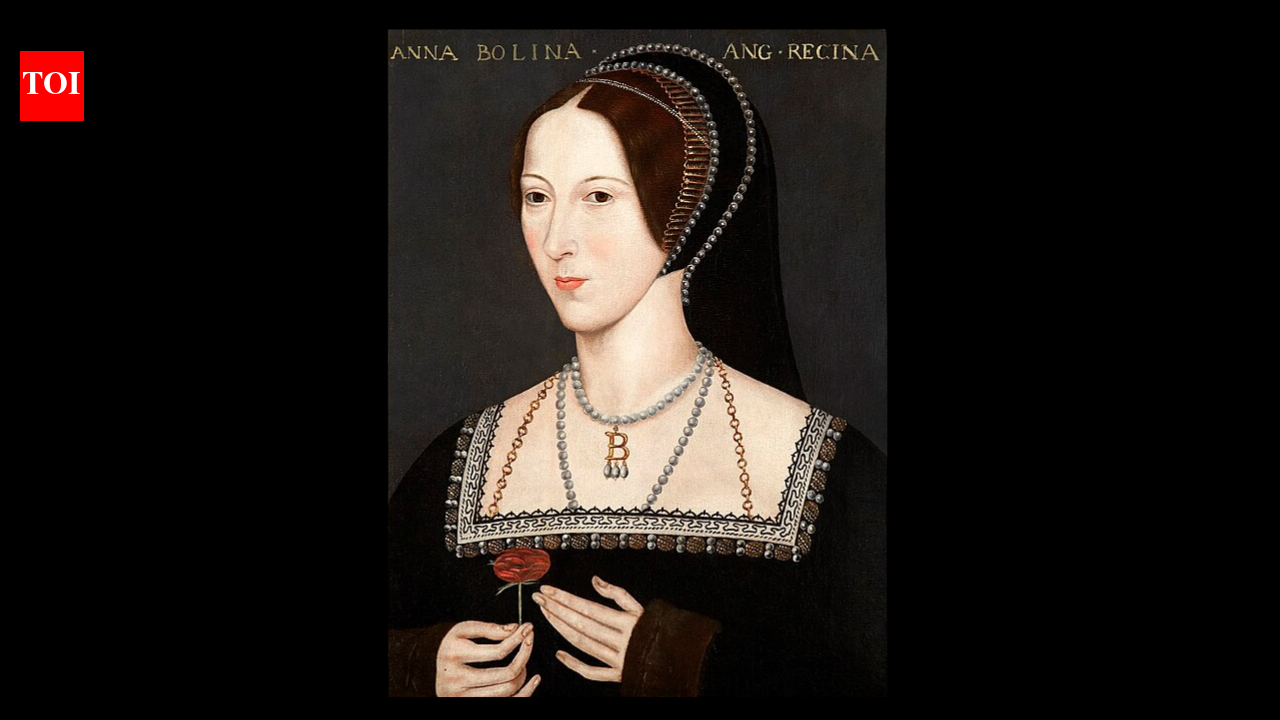
History has never been kind to Anne Boleyn, calling her a wicked wife, a seductress, and even a witch, and yet, she has remained one of the most controversial women in Tudor English history. However, beneath all this lies a much more complex and humanised version of Anne Boleyn, one who was not just a woman who “broke” a royal marriage, but a woman who was a political force to be reckoned with, and one whose life and death altered English history forever. Most of what we think we know about Anne Boleyn today comes from biased and political propaganda, and even from a misogynistic standpoint, and so, we must look beyond all this and delve into what history itself has to say about Anne Boleyn.
Anne Boleyn’s reputation: How the ‘most hated woman’ was created
Anne Boleyn’s image was not constructed based on facts, but rather on perceptions. There are historical writings that portray Anne Boleyn as a dangerous and manipulative person. As described and recorded in the thesis by East Tennessee State University, Cardinal Wolsey was essential to the King in negotiating the Great Matter with Rome. However, the consistent pushback led Anne to believe that Wolsey had a personal vendetta against her. He went to an extent to call Anne Boleyn “a seductress, power-hungry, and even a caw into the king’s private ear”Most historical sources, however, are biased, especially those written by people who did not favour Anne Boleyn. Eustace Chapuys, for instance, was the Imperial Ambassador and a supporter of Catherine of Aragon. Chapuys wrote a lot against Anne Boleyn, and this is now known to be biased.The perceptions and biased writings about Anne Boleyn, however, became the “truth” about her. The propaganda and biased writings that started as a means to win political support became a lasting image of Anne Boleyn, an image that portrayed a complex personality as a caricature.
The real Anne Boleyn: Intelligent, influential and misunderstood
If one strips away the myth, however, a very different image of Anne is revealed. She was universally acknowledged to be intelligent, witty, and refined. Descriptions of her, even in the early years, as Eric Ives’ definitive biography on Anne Boleyn, describe her as charming and charismatic, with one observer commenting that she was “remarkable, intelligent, quick-witted.” In recent years, historians have sought to correct the myth surrounding Anne Boleyn. Hayley Nolan, historian, writes, “Everything we’ve been told about Anne is not the truth.” This is to say that historians are now looking at the part she played in the religious reforms of the time.She was no pawn or temptress, but played an important part in the shaping of the English Reformation. Her marriage to Henry VIII was directly responsible for the split with the Roman Catholic Church, an event that changed the course of history in Britain.
Tudor politics and misogyny: Why Anne was vilified
In order to comprehend the extent to which Anne Boleyn was despised, it is necessary to consider the world in which she lived. In the world of Tudor England, women who sought power were generally viewed with contempt.As research conducted by historian Susan Bordo indicates, Anne Boleyn’s reputation varied depending on the political climate. Under Mary I, Anne Boleyn was depicted as a ‘scheming temptress,’ while under Elizabeth I, she was re-created as a Protestant icon.This ability to change image is indicative of the fact that Anne Boleyn’s life was re-created in a manner that suited those in power. Anne Boleyn’s ambition, which was admired in males, was viewed in a negative manner in females. As one historical analysis indicates, Anne Boleyn was ‘perhaps a figure to be admired more than liked.’
Execution and legacy: A queen remembered differently
Anne Boleyn’s fall was swift and brutal. She was charged with adultery, incest, and treason and was executed in 1536. However, these allegations against Anne Boleyn are now believed to be false. Anne Boleyn’s execution was not only the fall of the queen, but the rise of political expediency over justice and the law.Anne Boleyn’s legacy lived on, and her daughter, Elizabeth I, would become one of the greatest monarchs to rule England, changing the way in which Anne Boleyn was perceived. Joanna Denny, an historian, would later write, “Few have been so persistently maligned as Anne Boleyn.”Today, historians are rewriting the centuries-old story and giving the “wicked wife” a new image, an image not as the villain, but as the victim.
Reclaiming the truth behind the myth
The story of Anne Boleyn, however, is not one of merely rising and then falling, but rather one of the construction of history, both written and rewritten. Dubbed the ‘most hated woman of Tudor England’, Anne Boleyn, in reality, was far more than the myths which surrounded her.In re-examining the evidence, in re-evaluating the myths, we can start to see Anne Boleyn, rather than as a caricature, as a woman living in a very hostile world, and perhaps, once and for all, her story can be told in a manner which has been denied to her for so long.