4 min readMumbaiMar 29, 2026 01:34 PM IST
Written by Piyush Patil

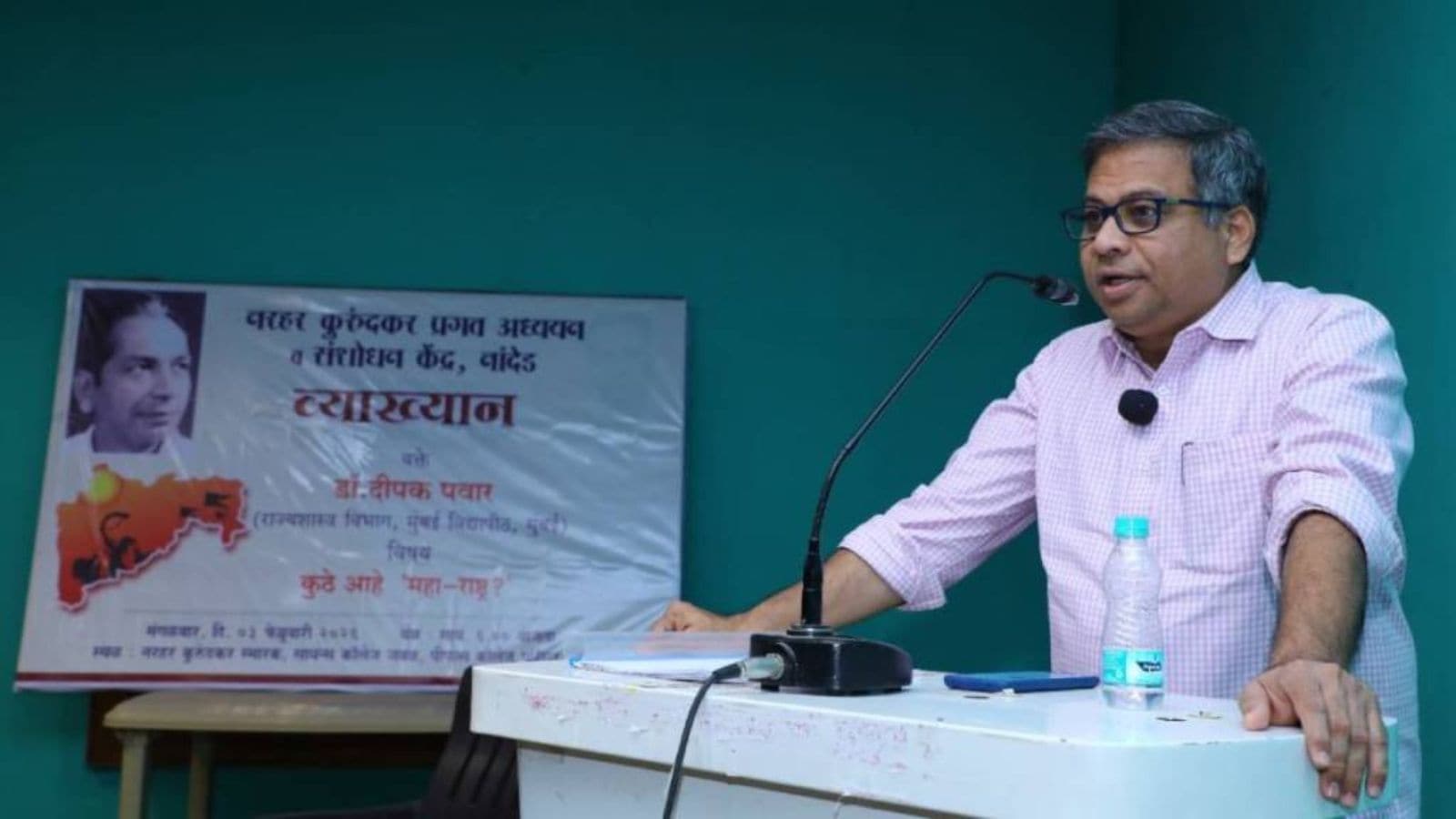
As a prolonged deadlock over elections at the Asiatic Society of Mumbai raises questions about transparency, Mumbai University professor Deepak Pawar, who is contesting the polls, tells Piyush Patil that delays, disputes over voter lists, and administrative lapses point to deeper concerns about accountability and control of cultural institutions. He also speaks about broader issues of governance, the status of cultural institutions in Mumbai, and the role of politics in academic spaces.
Q. As someone associated with a contesting panel, how do you view this deadlock?
Deepak Pawar: This election was originally expected between September and November but was later rescheduled to March 14. Now, the election has been postponed again by the charity commissioner. As the term of the previously active managing committee has already ended, elections should have been held immediately. However, the opposing panel has used all institutional and legal means, with support from the Government. Their aim is to delay the process.
When ideological battles cannot be fought through ideas, excessive use of financial and political power is resorted to. We cannot compete with them financially, as their resources come from positions of power. Repeated legal petitions have also increased the cost of contesting, which we are managing through public contributions.
We believe the strategy is to prevent members who enrolled last year from voting, as memberships expire in March. With the high cost of the membership fee, renewal may not be feasible for many. Ideally, in an election year, such members should have been granted voting rights.
Q. Allegations have emerged regarding irregularity in the voters’ list and the disappearance of rare books. How do you respond to these concerns?
Story continues below this ad
Deepak Pawar: In earlier elections, only around 100 to 150 members would vote. While many have lifetime memberships, their current status is often unclear—some may have passed away, while others may have changed their contact details. Institutions typically maintain updated records, but the Asiatic Society lacks such a mechanism. How can we be held responsible for that? Updating voter lists is the responsibility of the administration in charge at the time.
Similarly, how is our panel connected to the allegation regarding missing books from the library? A narrative is being created that holds us responsible for everything going wrong, whereas our only concern is that the institution’s prestige is not only maintained but also enhanced.
Q. Do you think it is appropriate for politics to play a role in a place of learning, such as a library?
Deepak Pawar: Politics exists in education, reading, and language issues across the world. To think otherwise is naïve. A library is a space of political consciousness—not in the sense of party politics, but in terms of ideas. Libraries house books representing diverse ideologies, and readers engage with them, shaping their worldview. The cultivation of ideas and awareness happens in such spaces. The RSS-BJP have influenced institutions such as the Marathi Sahitya Sangh, Maharashtra Sahitya Parishad, and Vidarbha Sahitya Sangh, and is now attempting to do the same with the Asiatic Society.
Story continues below this ad
Q. Tell us more about your organisation, Marathi Abhyas Kendra.
Deepak Pawar: We have been working towards the Marathi Abhyas Kendra since 2002, and it was formally established in 2009. Our primary aim was to build a movement around Marathi people, Marathi schools, and the Marathi language.
When the Maharashtra Government made a third language compulsory, we launched a statewide campaign opposing the move, presenting a well-reasoned case that eventually led to the Government withdrawing the decision.
Even earlier, through the centre, we worked to promote the use of Marathi in district and taluka-level courts to make legal processes more accessible. We advocated Marathi signboards on shops. The centre also encouraged the use of the Marathi script on computers. In 2010, we pushed for having a separate government department for the Marathi language.
Beyond language, we brought together individuals from various sectors to strengthen a broader cultural ethos.
Story continues below this ad
Piyush Patil is an intern with The Indian Express, Mumbai