

Truecaller has released its India Insights Report 2025, titled “India’s Spam Shield”, revealing the massive scale of spam and fraud affecting everyday communication across the country. According to the report, Indians received 4,168 crore spam calls in 2025, highlighting the growing risks of fraud, disruption and misuse of digital communication channels.
As India progresses towards a digitally empowered economy under the Viksit Bharat vision, Truecaller says trust in communication has become a critical pillar of national progress. The report provides a data-driven snapshot of how spam and fraud are evolving – and how technology and community reporting are helping to protect millions of users every day.
According to the report, India faced unprecedented levels of spam and fraudulent activity in 2025:
- Total spam calls identified: 4,168 crores
- Spam calls blocked by users: 1,189 crores
- Scam calls detected: 770 crores
- Average duration of spam calls: 1.8 minutes
- Spam detected: 12,903 crores
Truecaller noted that fraudulent calls often impersonated banks, government agencies, payment platforms and well-known brands, while spam volumes increased significantly in the second half of 2025.
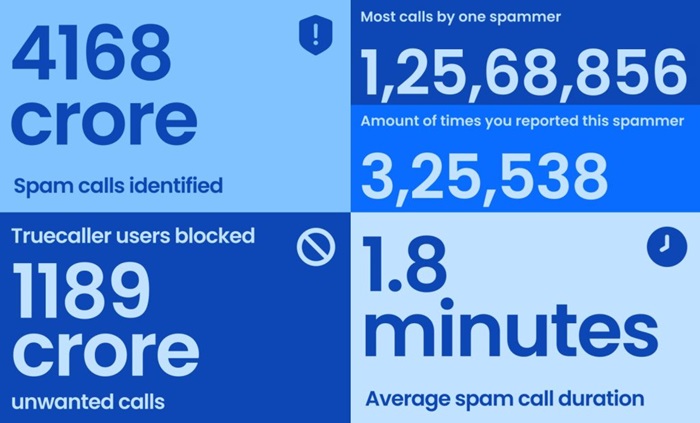
Through community reporting and automated blocking tools, Truecaller users prevented 1,189 crore spam calls from reaching them. This translates into considerable time and attention saved:
Time saved
- 21.7 lakh hours per day
- Over 1.5 million hours per week
- Approximately 250 years of human life are saved every day
Beyond the time savings, the report highlights wider benefits:
- Reduced stress and urgency-driven decision making
- Improving focus and confidence in digital communication
- Lower exposure to financial and emotional damage caused by fraud
Truecaller emphasized that blocking spam protects not only time, but also digital trust and peace of mind.
The report identifies several fraud tactics expected to increase in prominence in 2026, including:
- Identity verification scams
- Impersonation of the institution using banks or known authorities
- Multi-step scam, combining SMS, phone calls and tracking
- AI generated sound tricks
- Migration of scams to platforms like WhatsApp and Telegram
According to Truecaller, future trust signals will increasingly depend on behavioral context, long-term activity patterns and community intelligence, rather than isolated indicators like phone numbers alone.
To reduce exposure to fraud, Truecaller advises users to:
- Be wary of urgent requests related to banking, KYC, account suspension or law enforcement
- Avoid answering calls or messages marked as spam or suspicious
- Never share OTP, PIN, passwords, Aadhaar, PAN or bank details
- Avoid clicking unknown links or installing apps from unverified sources
- Treat surprise offers, refunds or imitation claims with skepticism
- Rely on trusted caller ID tools and community reporting
Speaking on the overview, Rishit Jhunjhunwala, CEO, Truecaller, said, “In a country where connectivity is empowering opportunity at every level, trust has become our most valuable digital asset. Fraud today is not just a technical problem, it’s a human problem. It exploits fear, urgency and uncertainty at the moments when it matters most to stay connected with Indians. The focus at Truecaller is simple: help people stay connected without jeopardizing their security and prevent risk before it turns into loss.