

UPSC Essentials brings to you its initiative for the practice of Mains answer writing. It covers essential topics of static and dynamic parts of the UPSC Civil Services syllabus covered under various GS papers. This answer-writing practice is designed to help you as a value addition to your UPSC CSE Mains. Attempt today’s answer writing on questions related to topics of GS-3 to check your progress.
🚨 Click Here to read the UPSC Essentials magazine for March 2026. Share your views and suggestions in the comment box or at manas.srivastava@indianexpress.com🚨
Discuss the technological features of Dimethyl Ether (DME) production and evaluate its potential in enhancing India’s energy security, affordability, and environmental sustainability.
QUESTION 2
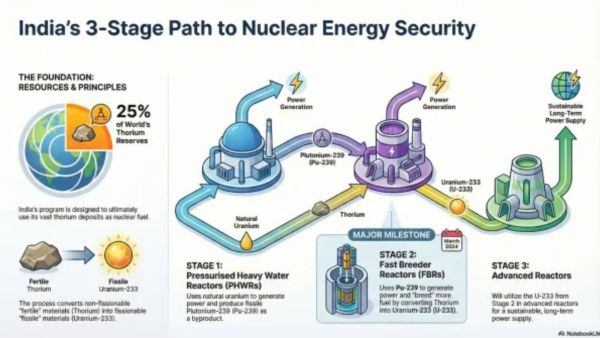
Discuss how India’s three-stage nuclear programme seeks to harness thorium, and what are the challenges in transitioning to a thorium-based energy system.
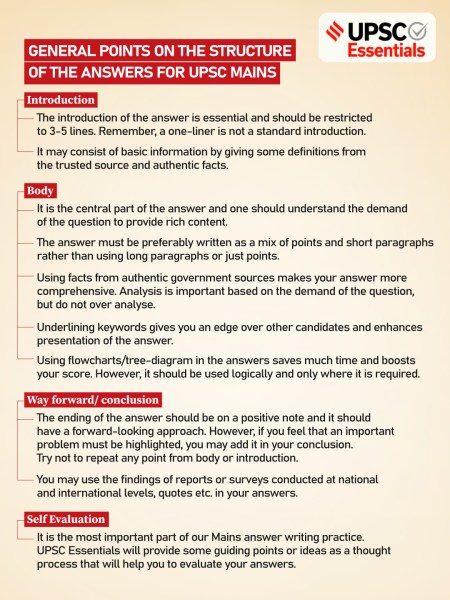
QUESTION 1: Discuss the technological features of Dimethyl Ether (DME) production and evaluate its potential in enhancing India’s energy security, affordability, and environmental sustainability.
Relevance: The topic is linked to energy security & import substitution. It covers emerging clean fuel technologies and low-emission transitions. UPSC can find it relevant for waste-to-energy and coal gasification policies in India.
Note: This is not a model UPSC answer. It only provides you with a thought process which you may incorporate into the answers.
Introduction:
Story continues below this ad
— LPG, a fuel used in most Indian households and industries, is stored in cylinders and primarily consists of propane and butane. However, India’s import dependence as well as fuel price fluctuations pose a serious challenge. This is where DME can step in, which is a “clean-burning fuel with the potential to revolutionise cooking fuel and other sectors”.
— The Dimethyl Ether (DME) technology, which can potentially be blended with Liquefied Petroleum Gas (LPG) as an alternative clean fuel.
Body:
You may incorporate some of the following points in your answer:
Production of DME and how it will enhance India’s energy sustainability?
Story continues below this ad
— This technology was developed by improving both the catalyst or the material used, and the engineering design. CSIR-NCL developed a special catalyst that helps convert methanol into DME quickly and efficiently. Additionally, they designed the process to operate at 10 bar pressure. This allows the DME to be directly filled into cylinders, making it easier to use and transport.
— The technology has already been tested on a semi-pilot scale (about 250 kg per day). This technology was developed over the past few years of research by scientists, focusing on both the catalyst and the process design.
— India currently imports methanol from countries including Iran, which could pose a challenge. However, CSIR-NCL notes that methanol can be produced from several sources available domestically, such as coal, agricultural waste (biomass) or even captured carbon dioxide.
— Methane is the main part of natural gas. It does not directly produce DME, but serves as a starting material. It is first converted into syngas (CO and H2), and then into methanol, which is used to produce DME. Methane can be sourced from both fossil fuels and renewable sources, DME production is flexible and future-ready.
Story continues below this ad
— India can start producing its own methanol and reduce imports. Even in the short term, mixing a small amount of DME, say 8%, with LPG can reduce the amount of LPG India needs to import. In the long run, DME could allow India to reduce its import dependence.
— The cost of developing DME depends chiefly on the price of methanol used to make it. Domestically produced methanol could thus make DME almost as affordable as LPG and even become cheaper over time.
Conclusion:
— The key objective is that cheaper domestic methanol and cheaper DME can help reduce overall fuel costs in the future. DME also brings some extra economic benefits. It can help India save around Rs 9,500 crore every year by reducing LPG imports. Since DME burns cleaner, it can also lead to lower pollution, thereby indirectly saving money and reducing environmental and health-related costs.
(Source: DME Technology: How fuel developed in India may help reduce LPG dependence)
Points to Ponder
Story continues below this ad
How can DME contribute to reducing India’s dependence on imported fossil fuels?
What infrastructural and policy challenges hinder the large-scale adoption of DME in India?
Related Previous Year Questions
How can India achieve energy independence through clean technology by 2047? How can biotechnology can play a crucial role in this endeavour? (2025)
Discuss several ways in which microorganisms can help in meeting the current fuel shortage. (2023)
Story continues below this ad
QUESTION 2: Discuss how India’s three-stage nuclear programme seeks to harness thorium, and what are the challenges in transitioning to a thorium-based energy system.
Relevance: It is directly related to India’s nuclear energy strategy & 3-stage programme. It is also important for long-term energy security using indigenous thorium reserves. The question tests understanding of advanced reactor technology and associated challenges.
Note: This is not a model UPSC answer. It only provides you with a thought process which you may incorporate into the answers.
Introduction:
— The growth of our nuclear generation capacity currently depends heavily on imported uranium. Domestic uranium ores are lean and costly to extract, though this does provide some insulation against supply disruptions.
Story continues below this ad
— The ‘100 GWe by the year 2047’ nuclear energy mission announced by the Government consists largely of thermal reactors, which would require around 18,000–20,000 tonnes of mined uranium annually — roughly a third of current global production.
Body:
You may incorporate some of the following points in your answer:
— Nuclear capacity will need to grow well beyond 2047. Energy demand is perpetual, and fission must play its role, at least until fusion energy arrives at the requisite scale. The solution to uranium supply constraints in once-through mode is nuclear recycling, which increases the energy potential of nuclear fuel 50- to 100-fold. Yet, with a few notable exceptions — France, India, and Russia — most countries have not adopted recycling, citing fears of fissile material diversion for weapons proliferation.
— Shifting to thorium recycling changes this situation: India holds the world’s largest thorium reserves, and thorium use not only offers energy independence but also virtually eliminates proliferation risk. Resolving the remaining challenges of thorium utilisation is therefore urgent and demands a large, multidisciplinary effort with significant scope for innovation.
Story continues below this ad
— India’s three-stage nuclear power programme, designed to leverage thorium resources, envisages fast breeder reactors (FBRs) as the stage beyond thermal reactors. The first 500 MWe Prototype Fast Breeder Reactor is almost ready. Beyond this, metal-fuelled FBRs with associated fuel recycling technology must also be developed to achieve the short doubling times needed to support rapid capacity growth.
Challenges
— India currently lacks facilities for accelerated irradiation testing, but existing international cooperation agreements can be leveraged — preferably as genuine partnerships rather than simple vendor–buyer arrangements.
— On fuel supply, India already imports both natural and enriched uranium; the HALEU supply chain is evolving rapidly, driven by demand from numerous next-generation reactor programmes worldwide.
Conclusion:
— The SHANTI Act 2025 represents a watershed moment for India’s atomic energy programme. It opens the doors of nuclear energy to the public and private sectors, academia and industry alike, fostering an ecosystem that responds to India’s needs and opportunities in this field. There is visible enthusiasm among stakeholders. While legislation is an enabler, a conducive regulatory framework, free from monopolistic tendencies, is equally essential to realise our development goals.
(Source: Expert Explains | How thorium can power India’s 100 GWe by 2047 mission)
Points to Ponder
Can thorium realistically ensure long-term energy security and sustainability for India?
What is the scientific principle behind converting thorium into fissile fuel for nuclear reactors?
Related Previous Year Question
The fusion energy programme in India has steadily evolved over the past few decades. Mention India’s contributions to the international fusion energy project International Thermonuclear Experimental Reactor (ITER). What will be the implications of the success of this project for the future of global energy? (2025)
Previous Mains Answer Practice
UPSC Essentials: Mains answer practice — GS 3 (Week 146)
UPSC Essentials: Mains answer practice — GS 3 (Week 145)
UPSC Essentials: Mains answer practice — GS 2 (Week 146)
UPSC Essentials: Mains answer practice — GS 2 (Week 145)
UPSC Essentials: Mains answer practice — GS 1 (Week 146)
UPSC Essentials: Mains answer practice — GS 1 (Week 145)
Subscribe to our UPSC newsletter and stay updated with the news cues from the past week.
Stay updated with the latest UPSC articles by joining our Telegram channel – IndianExpress UPSC Hub, and follow us on Instagram and X.