

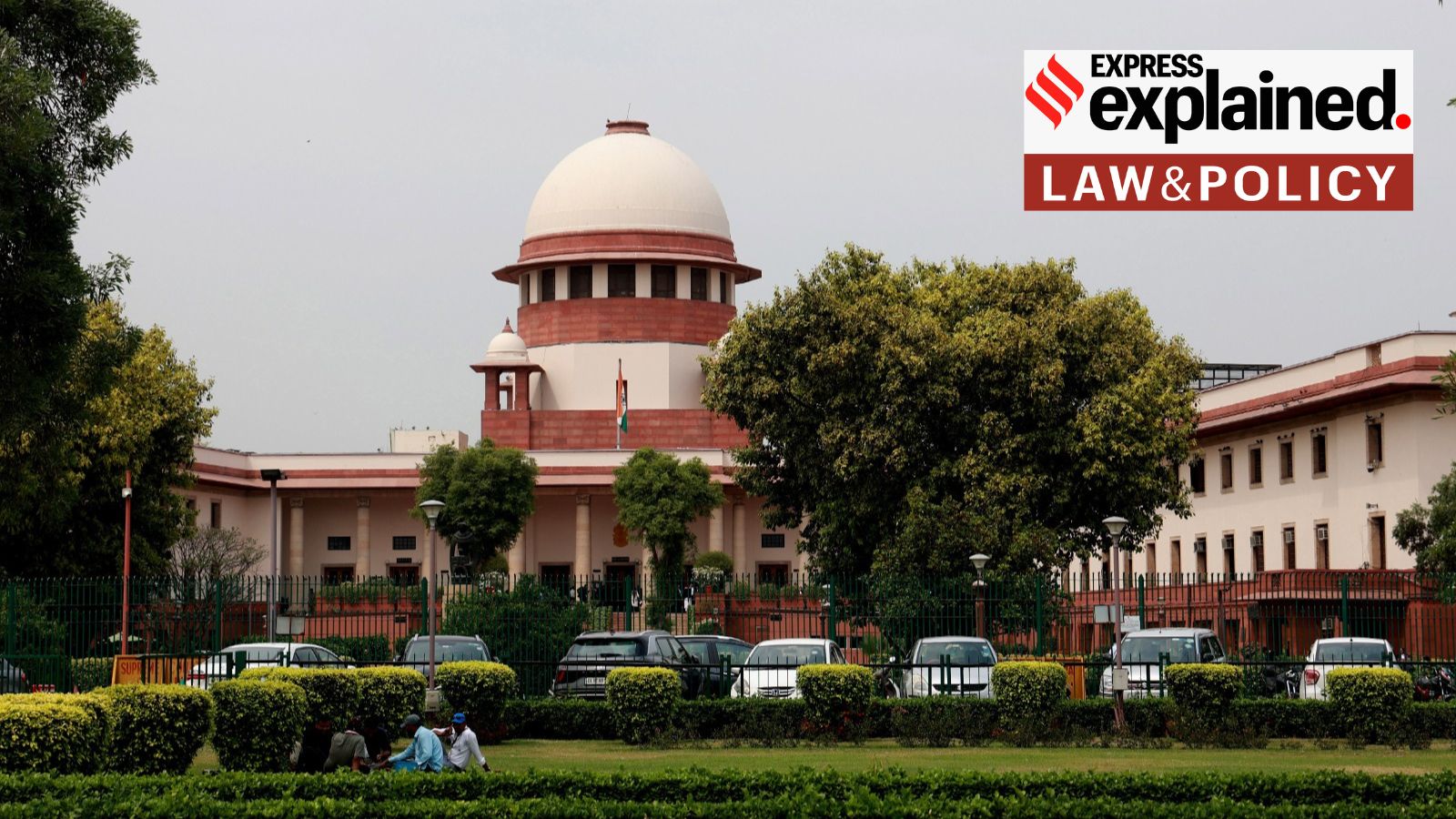
The Supreme Court passed a significant order for preventing road accidents and issued a 13-point directive to the road departments at the centre and state level in its suo motu case, where 34 lives were lost in two separate road accidents in November 2025.
The order, dated April 13, came down heavily on road agencies National Highways Authority of India (NHAI) and state public work departments (PWDs) and said that a road, particularly a high-speed Expressway, must not become a corridor of peril due to administrative lethargy or infrastructural gaps. It also recognised that Article 21 of the Constitution, which deals with protection of life and personal liberty, also includes safety of commuters on road.

“The loss of even a single life to avoidable hazards like illegal parking or black spots etc., represents a failure of the State’s protective umbrella. The ‘Right to Life’ enshrined under Article 21 of the Constitution of India is not merely a guarantee against the unlawful taking of life, but a positive mandate upon the State to ensure a safe environment where human life is preserved and valued,” said the court.
The top court exercised its extraordinary powers under the Article 142 of the Constitution in the matter.
What is the case?
On November 2, 2025, a bus carrying pilgrims rammed into a stationary trailer parked near a dhaba on the Bharatmala Expressway (connecting Jamnagar to Amritsar) near Matora in Phalodi district in Rajasthan. The accident claimed 15 lives and many people were seriously injured. In another incident the next day, in Telangana’s Rangareddy district, a gravel-laden lorry coming from the opposite direction on National Highway 163, reportedly rammed into a State Road Transport Corporation Bus, while trying to avoid a pothole, killing 19 people, including a 40 days old infant.
These two incidents prompted the court to take suo motu cognisance of the issue. It examined the serious problem on the road, where large vehicles, especially trucks, were parked on one side of the main carriageway. This practice often leads to accidents, as drivers at night fail to notice the parked vehicles or misjudge whether they are stationary or moving.
Such incidents also keep on happening because of unauthorised operation of roadside dhabas, where truck drivers and helpers usually cross the railing to take meals after parking their vehicles on the road.
What did the court say?
Story continues below this ad
In its directions, the court has clearly said that no heavy or commercial vehicle shall park or stop on any National Highway carriageway or paved shoulder except at a designated bay, lay-bye, or Wayside Amenity. The court said that the authorities should use Advanced Traffic Management System (ATMS) to track such vehicles, send alerts to police with GPS-timestamped photographic evidence and integrate it with e-Challan.
These directions must be complied within 60 days from the date of the Supreme Court order.
It has also prohibited the construction and operation of any new dhaba, eatery, or commercial structure within the Right of Way (ROW) of any National Highway. The court has ordered that District Magistrates shall enforce the demolition of all new and existing unauthorised structures. State governments shall further issue notifications within 60 days prohibiting change of land use within 40 metres (residential) and 75 metres (commercial) from the mid-point of any National Highway, the court said.
Surveillance, ambulances and black spots
The court has called for the constitution of dedicated highway surveillance teams of state police and transport department personnel like NHAI to ensure round the clock monitoring of highways and its adjacent areas.
Story continues below this ad
It has also asked the NHAI to completely operationalise its ATMS with TMCC cameras, VSDS speed detectors, VIDS cameras, variable message sign boards, and Emergency Call Boxes across all four and six lane highways and expressways.
For quick response in an accident case, the court has directed NHAI to deploy BLS ambulances and recovery cranes at intervals not exceeding 75 km on every National Highway stretch, at toll plazas, Wayside Amenities, or dedicated posts.
To provide parking facilities for heavy vehicles, the court directed NHAI to construct truck lay-bye facilities at intervals of every 75 km on all National Highways, with priority to the Amritsar-Jamnagar Highway. It has also directed the highways agency to identify and publish the accident prone sites within 45 days and install high intensity LED/high-mast lighting, speed enforcement cameras, retro-reflective warning signs, and transverse bar markings.
National Highways constitute approximately 2% of India’s total road length but account for nearly 30% of all road fatalities.


