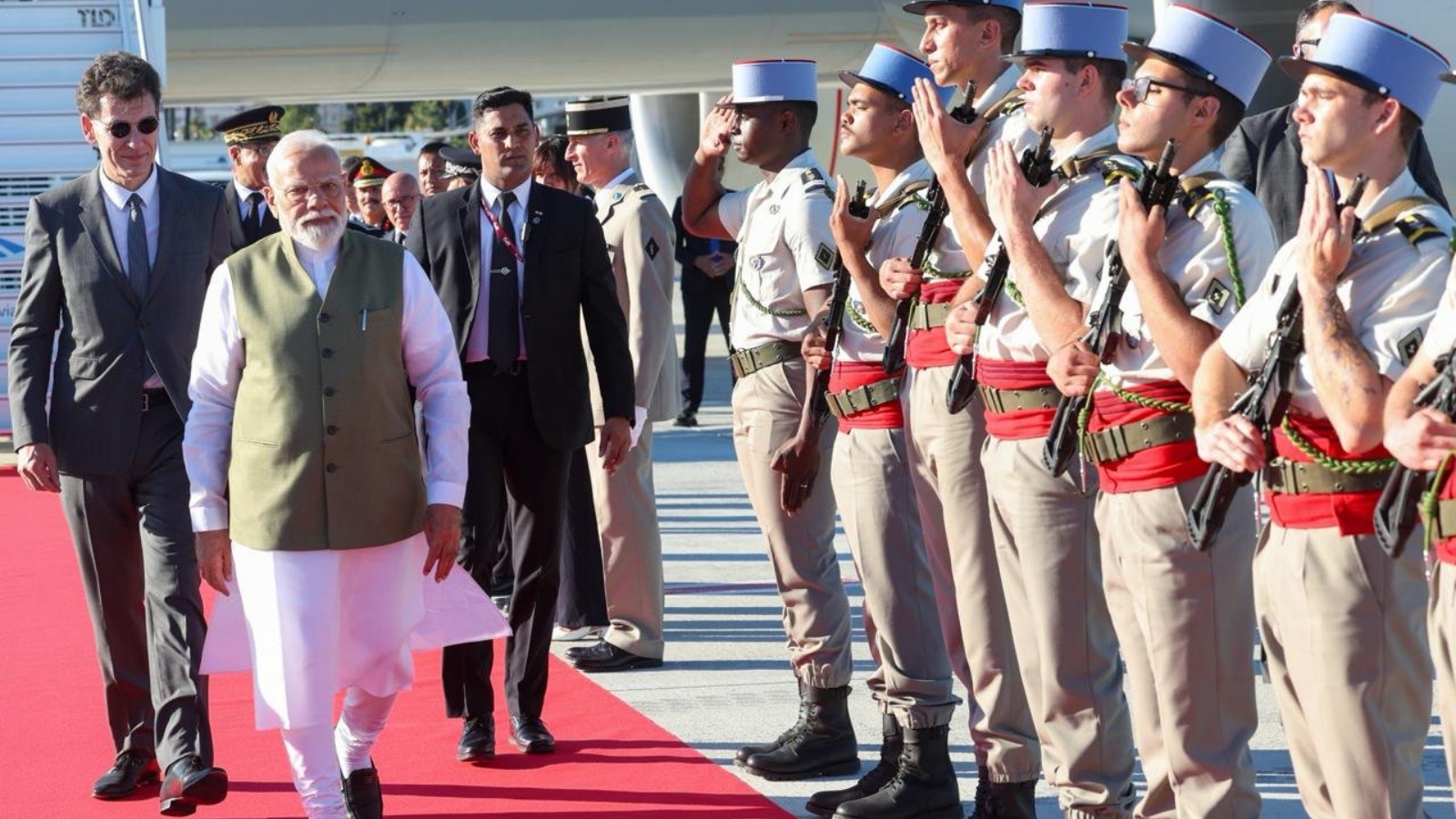
At France’s invitation, Prime Minister Narendra Modi will join world leaders for the G7 Summit at Evian-les-Bains to discuss issues shaping economic power, technological advantage and development.

The G7 is no longer the dominant body it was in the mid-1970s; the rise of emerging economies and the 2008 financial crisis changed that. Yet, it remains influential in setting standards and shaping financial flows, though far less cohesive today. Differences over trade, climate finance, industrial subsidies, energy policy and ties with Russia are evident, especially between the US and others. Evian will involve negotiations as well as coordination amongst G7 members. For India, that creates greater scope for issue-based partnerships.
Bilaterals, especially between PM Modi and US President Donald Trump, will attract intense attention. While leaders will discuss hotspots like West Asia and Ukraine, France has deliberately placed economic imbalances and the risks of fragmentation in the global economy at the centre of the agenda, which will focus on economic security, artificial intelligence, the energy transition, climate finance and development.
As one of the largest economies, a growing energy market and technology hub, India is affected by and increasingly central to these debates. It will bring to the table concerns shared by many emerging and developing economies.
Indian and G7 interests converge on critical minerals. Securing lithium, cobalt, nickel and rare earth supplies is central to the energy transition and advanced manufacturing. India’s efforts complement those of G7 economies to reduce supply-chain dependence on China for clean energy and defence technologies. Its market size and processing capacity make it an important node in emerging mineral partnerships.
Artificial intelligence raises questions of governance, standards, safety and technological leadership. It is also becoming an energy issue since data centres and advanced computing drive electricity demand. India’s experience with digital public infrastructure gives it a credible voice in shaping the debate.
Energy security is another central theme. The clean energy transition is rewriting investment and industrial policy worldwide, yet hydrocarbons still underpin growth. India embodies this duality. It has expanded renewable deployment at scale with its fuel choices guided by affordability and security of supply, not geopolitical pressures. A major energy consumer, India can speak with authority from experience.
On economic security, India’s interest lies in resilience that broadens options rather than narrows them. Security pursued through exclusion produces the fragmentation it seeks to prevent. Advanced economies are increasingly resorting to forced trade: The selective use of leverage, sanctions and coercion to influence with whom, and sometimes at what price, other countries trade. The result is a growing gap between the free-trade principles they once professed and the market-distorting policies they increasingly practise.
Turning to development, much of the Global South faces rising debt obligations and widening financing gaps. Reform of multilateral development banks remains a pressing concern.
On climate finance, developed countries agreed at Baku in 2024 to mobilise at least $300 billion annually by 2035. Even that falls well short of what is needed, while much arrives as loans, not grants. What developing countries lack is not commitment to climate action but the resources to do so. Climate finance has long been part of common but differentiated responsibilities and respective capabilities. India must recall that principled position while sharing its experience in matching climate ambition with overriding development priorities.
A related concern is the EU’s Carbon Border Adjustment Mechanism (CBAM) that now taxes steel, aluminium, cement and fertiliser imports according to emissions embedded in their production. Meant ostensibly to prevent carbon leakage, its impact falls disproportionately on developing-country producers, including India, whose industries remain coal-dependent because the finance and technologies for a faster transition are unavailable. Presented as climate policy, CBAM operates as a trade barrier protecting EU industries. Climate transition cannot be advanced by taxing countries the developed world has committed to help. There is something perverse about first underfunding the green transition and then taxing those unable to afford it.
Standards, frameworks and partnerships being discussed at Evian on technology, supply chains and critical minerals will shape the global environment. India’s interest lies in influencing these debates before outcomes harden into practices that affect the wider world. The G7 Summit participation, months before it hosts the BRICS Summit, reflects multilateral engagement without exclusive alignment.
India should approach Evian as a participant helping shape outcomes. Few countries today can engage comfortably with advanced and developing economies while carrying influence with both. In a world where today’s discussions become tomorrow’s rules, it is far better to help write them than to inherit them.
The writer is a former diplomat