6 min readNew DelhiFeb 19, 2026 08:00 AM IST
In a strongly worded order reflecting growing judicial unease over disruptions in trial courts, the Allahabad High Court has pulled up repeated boycott calls by a local bar association in Ambedkar Nagar district, observing that such actions run directly contrary to binding Supreme Court precedent and may even amount to criminal contempt.
Justice Alok Mathur was hearing a plea of one Vipin Kumar Gaur seeking a direction to the Up-ziladhikari, tehsil Aalapur, district Ambedkar Nagar, to decide his appeal filed under Section 35(2) of the UP Revenue Code and directed the sub-divisional magistrate (Up-Ziladhikari) to decide the appeal that has remained pending since 2024, within one year.

Section 35(2) of the UP Revenue Code, 2006 (as interpreted with mutation proceedings) allows any person aggrieved by an order passed by the tehsildar regarding mutation to file an appeal before the sub-divisional officer.
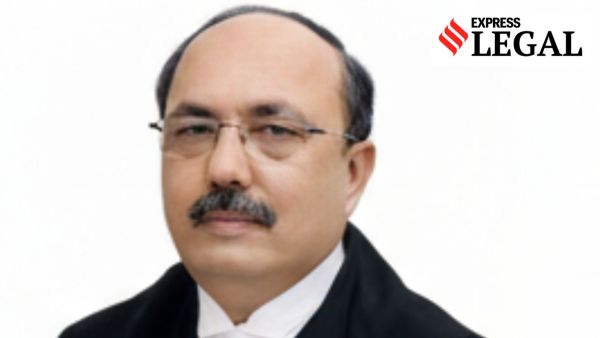 While Allahabad High Court stopped short of initiating contempt proceedings at this stage, it made it clear that the option remains open. (Image enhanced using AI)
Supreme Court can’t be ignored
- Such an action of the local bar association may amount to criminal contempt being a direct conflict with the judgment of Hon’ble Supreme Court and this Court leave it open for the petitioner to invoke the said jurisdiction in case they are so legally advised.
- In its order, the Allahabad High Court referred to the landmark judgment of the Supreme Court in Ex-Captain Harish Uppal v. Union of India (2003) 2 SCC 45, which unequivocally held that lawyers have no right to go on strike or call for a boycott of courts.
- The high court observed that the frequent calls for boycott by the local bar were directly in conflict with the law laid down by the apex court.
- While the court stopped short of initiating contempt proceedings at this stage, it made it clear that the option remains open.
- The Allahabad High Court left liberty to the petitioner to invoke criminal contempt jurisdiction if so advised.
Clear timeline: One year to decide appeal
- Bringing relief to the petitioner, the high court disposed of the writ petition with a specific direction, the Up-Ziladhikari, tehsil Aalapur, district Ambedkar Nagar, must decide the appeal expeditiously, “say, within a period of one year” from the date a certified copy of the order is produced before him, provided there is no legal impediment.
- The Allahabad High Court also recorded an undertaking by the petitioner’s counsel that the petitioner would appear before the authority on every date fixed, irrespective of any call for boycott.
- The court further granted him liberty to approach the high court again by filing a criminal contempt application if anyone creates impediment in his appearance.
Order to be served on Bar association
- The high court directed the petitioner to serve a copy of the order upon the president and secretary of the local bar association for compliance.
- “The petitioner shall serve a copy of this order to the President and Secretary of the local bar association for their compliance,” the court said.
Revenue appeal stalled by boycotts
- The appeal, according to the petitioner, had been pending since last year without any meaningful progress.
- The order sheet dated April 15, 2024, annexed to the petition, revealed that proceedings could not take place because of repeated calls for boycott by the local bar association.
- The Allahabad High Court noted that the record clearly showed that hearings were repeatedly stalled due to abstention from work.
- The high court observed that the situation was not limited to this appeal alone; even mutation applications were not being considered because of the boycott calls .
- For litigants in revenue matters often involving land disputes and livelihood concerns such delays can have serious consequences.
Gauhati High Court Bar Association boycott
- On January 11, amid protests by the Gauhati High Court Bar Association (GHCBA) over the proposed relocation of the high court, the Chief Justice of India, Justice Surya Kant, laid the foundation stone for the Assam government’s proposed “integrated judicial complex” at North Guwahati.
- The Bar issued an appeal to the opposing bar council members, suggesting they maybe “ill-informed”.
- The Gauhati High Court is currently located in the heart of the city, and the site of the proposed relocation is Rangmahal in North Guwahati, located across the Brahmaputra River.
- The Gauahti High Court Bar Association has been opposing this relocation, citing its distance, saying that it would be hard to access for both lawyers and members of the public.
- Earlier, the Bar association had announced a boycott of the foundation stone-laying ceremony.
- Justice Surya Kant presided over the ceremony, where a large number of other guests were present, including Justices Vijay Bishnoi, N Kotiswar Singh, Sandeep Mehta and Ujjal Bhuyan of the Supreme Court; Union Minister of State of Law and Justice Arjun Ram Meghwal; Chief Minister Himanta Biswa Sarma; and the Chief Justice and other judges of the Gauhati High Court.

© IE Online Media Services Pvt Ltd