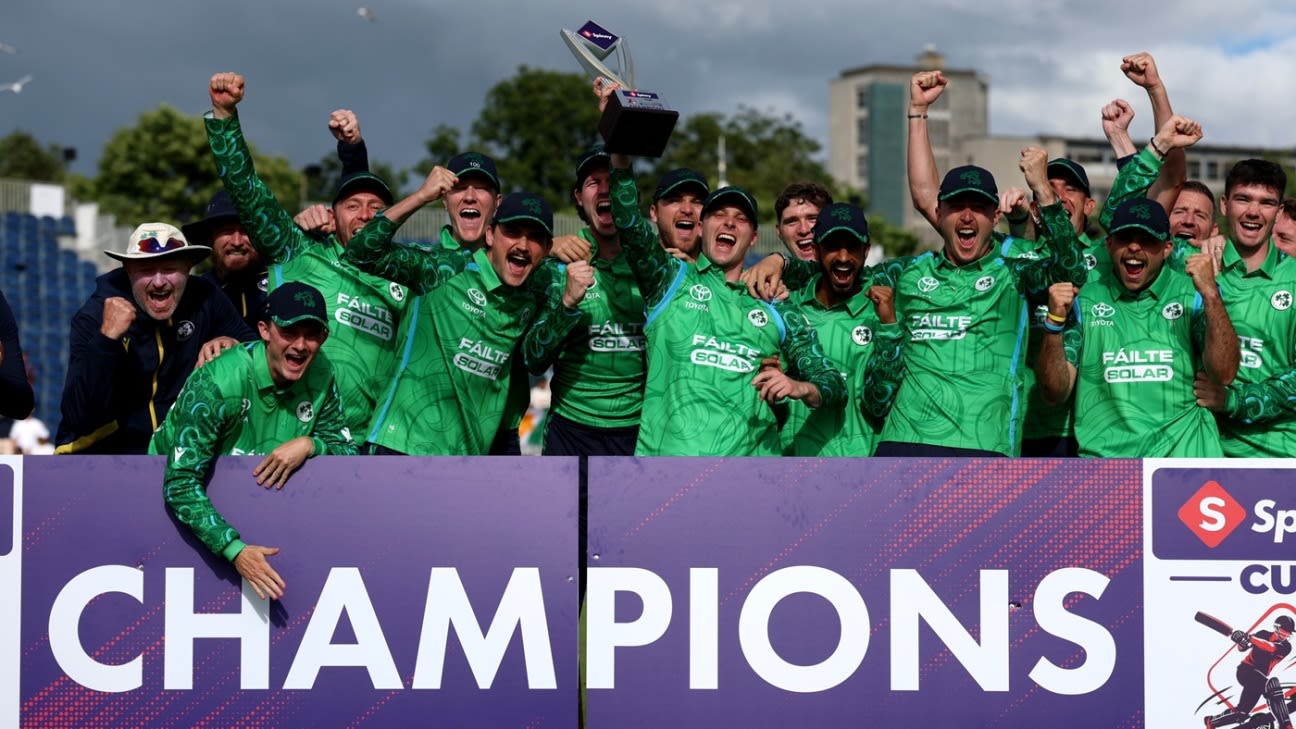
Ireland 154 for 8 (Tector 53, Prince 3-22) beat India 153 for 9 (Tilak 55, Hollard 3-26, Moondra 3-32) by one run
Tector, playing his 100th T20I, was brought to the crease in the second over. His first runs were off the inside edge. The rest were both timely and thought out. He held the innings together for Ireland and in doing so highlighted just why he is a valued member of this side. Tector absorbed the pressure at one end, willing to countenance risk only when the odds were in his favour, like when Suryansh Shedge, in the middle of leaking 22 runs in a over bowled a free hit ball that was full toss. That went for six. Ben Calitz, at the other end, was a little more willing to go for his shots. Their 65-run partnership, off 44 balls, formed the backbone of a total of 154. At that point, Cricinfo’s forecaster only gave Ireland an 18% chance of victory.
Dube’s growing reputation
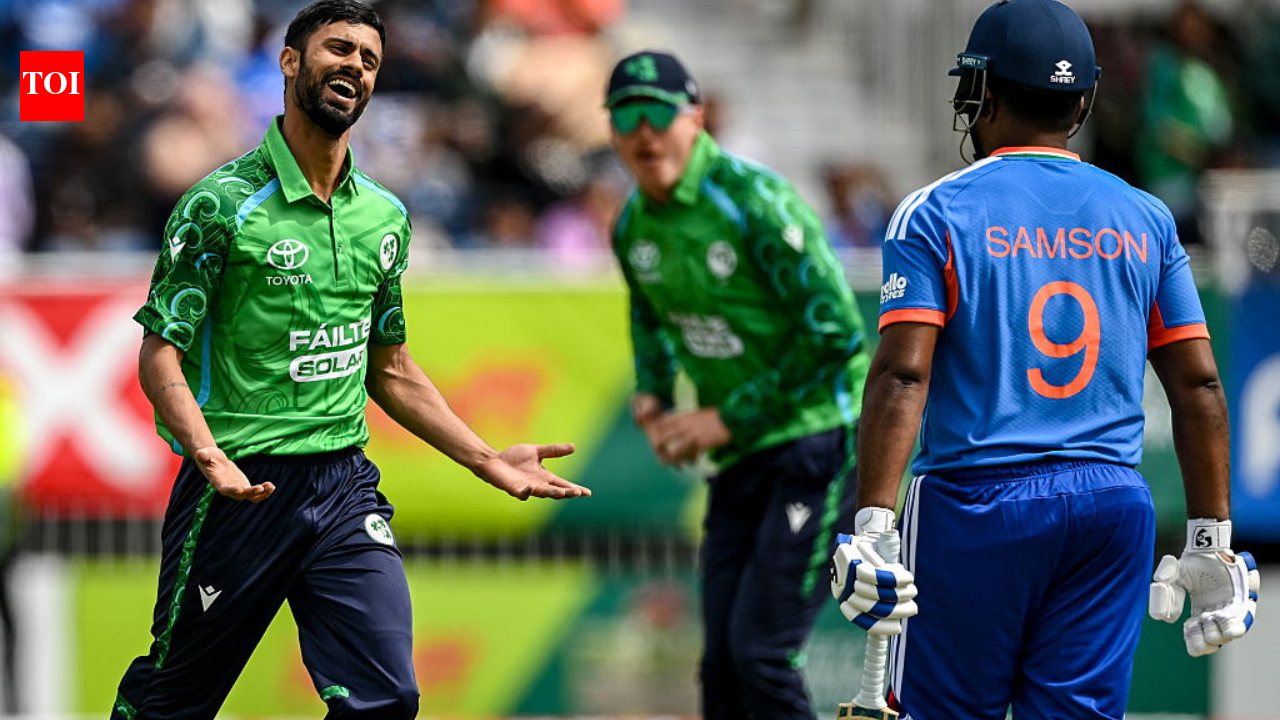
Shivam Dube picked up two wickets in two balls and broke the partnership that was the biggest threat to India. He had Calitz caught at deep point, a wicket created by good process. Dube led the batter to the square boundary which was a lot bigger than the straight one. He also made it harder for Calitz to access his power by bowing wide of off stump and making him reach out. Gareth Delany came out at the fall of that wicket and was undone by a wobble seam delivery that nipped back in and crashed into his stumps. It could’ve been the ball of the series were it not for what Moondra did in the chase.
Picked in place of Prasidh Krishna, and making his T20I debut, Prince picked up three wickets and went for less than run a ball. He was able to do so because he had threat whether he went short and into the pitch or full and into the blockhole. His final two wickets came in the last over of the innings, which he was given ahead of the more established Harshit Rana. One was back of a length to dismiss Tector. The other was a slower ball to topple Liam McCarthy. This varied skillset that he has, on top of the pace he can produce, might just have marked him out as a very real prospect for the 2027 ODI World Cup.
‘You have Boomrah! We have Moondra!
That was a sign in the crowd and it had plenty of airtime as Moondra dismissed Sanju Samson with the first ball of the chase – a venomous inswinger – and added Abhishek Sharma before that over was out. It was only the fourth time in the entire history of T20Is that both openers had fallen for golden ducks.
A modest target might have been helping India hold their nerve with the scoreboard reading 1 for 2 but Moondra kept making it difficult. The left-arm quick highlighted the slowness of the pitch when he had Shreyas Iyer dragging a wide ball back onto his stumps and then was part of an incident that revealed just how much this series has got under the opposition’s skin. He delivered the ball that led to Ishan Kishan’s run-out – off a direct hit by Ross Adair – and the batter left the field wringing his hands at Tilak Varma. India were 35 for 4. Their composure had been shattered.
India went 48 deliveries without a boundary off the bat, between the fifth and 13th overs. This was a function of both the conditions and their sorry state. The Belfast pitch was loathe to let the ball come onto the bat. Also, it was covered with enough grass that any scrambled/wobble seam delivery was getting purchase. Tilak and Axar appreciated the situation they were in and tried to take the game deep. The 12th over though wasn’t that. Matt Hollard dismissed Axar with a bit of extra bounce. Dube came out and even he, who scores a majority of his runs in boundaries, could only find two.
Ireland were brave to pair him up with a left-arm spinner in the death. Matt Humprheys knowing he was at the unfavorable end of the match-up did the only thing he could. He denied the short straight hit. A deliberate ball halfway down the pitch ended up in deep square leg’s hands – the long boundary was used perfectly – and broke India’s chase. Tilak fell seven balls later for 55 off 46 and soon that was that.